
Electric vehicles (EVs) are reshaping the automotive industry by redefining the relationship between transportation, energy storage, and power management. While early EV development mainly focused on extending driving range, improving battery performance, and increasing EV charging speed, modern electric vehicles are evolving beyond simple transportation solutions. With advanced battery systems, intelligent energy management technologies, and innovative EV charging solutions, EVs are becoming flexible energy platforms capable of storing, using, and sharing electricity whenever and wherever it is needed.
One of the most practical breakthroughs in this field is Vehicle-to-Load (V2L) technology, which expands the role of EV batteries beyond vehicle propulsion. Unlike conventional vehicles that only consume stored energy, V2L-enabled electric vehicles can deliver electricity to external devices through built-in power outlets, charging-port adapters, or dedicated power interfaces. By transforming an EV battery into a mobile energy source, V2L creates new opportunities for outdoor recreation, emergency backup power, commercial operations, and everyday energy applications.
When combined with advanced EV charging infrastructure, V2L technology represents a major step toward a smarter and more connected energy ecosystem. Modern EV charging systems not only provide efficient battery replenishment but also support intelligent power management, enabling electric vehicles to become part of future distributed energy networks. As charging technologies continue advancing, features such as bidirectional charging, Vehicle-to-Home (V2H), and Vehicle-to-Grid (V2G) are further expanding the potential of EVs as energy resources.
Whether powering camping equipment, charging electronic devices, operating electric tools at remote worksites, or supplying temporary electricity during power outages, V2L allows electric vehicles to function as mobile power stations. Together with reliable EV charging solutions, this technology enhances the flexibility, convenience, and sustainability of electric mobility while accelerating the transition toward a cleaner energy future.
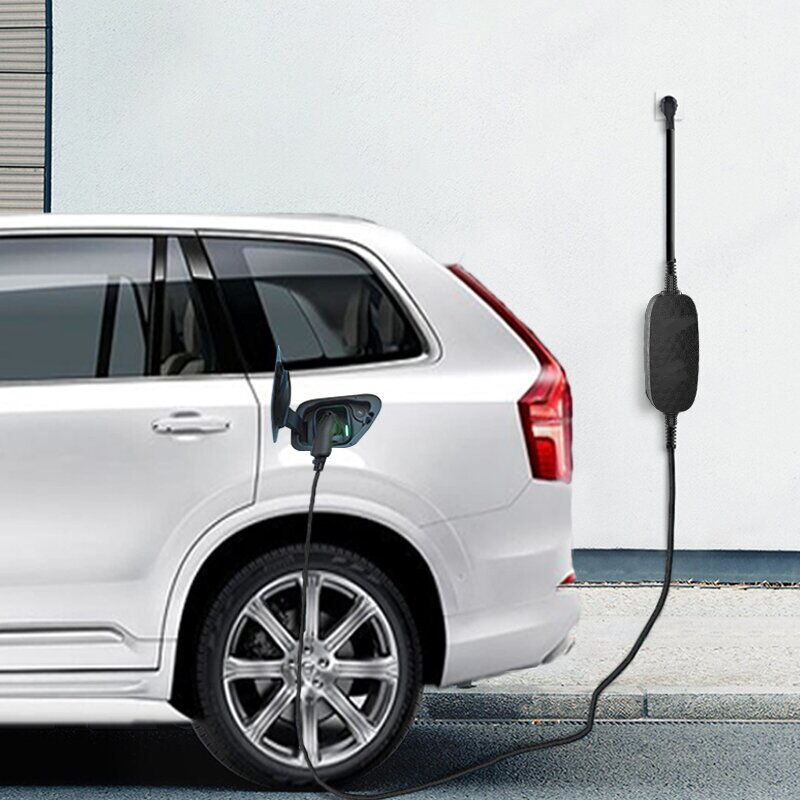
Vehicle-to-Load (V2L) is a technology that allows an electric vehicle to use its onboard battery energy to power external electrical devices. Instead of only receiving electricity from the grid through charging, a V2L-equipped EV can send electricity outward to operate appliances, tools, and other equipment.
In simple terms, V2L enables an electric vehicle to act like a large rechargeable generator.
When the vehicle is parked, stored energy from the high-capacity traction battery can be converted and delivered through:
- A built-in cabin power socket
- An outlet located in the trunk or cargo area
- An external power outlet
- A dedicated V2L adapter connected to the charging port
The concept is straightforward: the EV battery stores electricity, and V2L allows users to access that stored energy whenever external power is required.
Traditional vehicles typically separate transportation and electricity generation. A gasoline-powered vehicle requires a separate generator to produce electricity, while an EV equipped with V2L already contains a large energy storage system. This makes it possible to provide power without carrying additional equipment.
As battery technology continues improving, EV manufacturers are increasingly integrating V2L functionality into passenger cars, SUVs, pickup trucks, and commercial electric vehicles.
Although V2L provides a simple user experience, several advanced electrical systems work together to make it possible.
An electric vehicle battery stores electricity in the form of direct current (DC). However, most household appliances and electronic devices operate using alternating current (AC). Therefore, the stored battery power must be converted before it can be used externally.
The V2L system relies on three major components:
The foundation of V2L technology is the vehicle's battery pack.
Modern electric vehicles commonly use lithium-ion battery systems with capacities ranging from approximately 50 kWh to more than 100 kWh. This energy storage capacity is significantly higher than most portable power stations available on the market.
For example, a 70 kWh EV battery contains enough stored energy to power essential household devices for an extended period, depending on electricity consumption. While the vehicle is primarily designed for driving, a portion of its stored energy can be allocated for external applications.
The large battery capacity gives V2L a major advantage over traditional portable generators and smaller battery power stations.
The inverter is the key component that enables energy conversion.
Because the EV battery produces DC electricity while most devices require AC electricity, the inverter converts DC power into usable AC output.
Depending on the vehicle market and electrical standards, V2L systems typically provide:
- 110V AC power in North America and some regions
- 220V–240V AC power in many international markets
The inverter also manages electrical safety by controlling voltage stability, preventing overload conditions, and protecting connected equipment.
After electricity is converted, it must be delivered to external devices.
Manufacturers provide different V2L connection methods depending on vehicle design:
- Built-in AC outlets inside the vehicle
- Cargo-area power sockets
- External outlets for outdoor applications
- Charging-port V2L adapters
These interfaces usually include safety features such as:
- Overcurrent protection
- Short-circuit protection
- Temperature monitoring
- Electrical isolation protection
Power output capacity depends on the EV model. Most passenger electric vehicles provide approximately 1.5 kW to 3.6 kW of output power, while larger electric trucks and commercial vehicles may offer higher power capabilities.
A V2L adapter is a specialized accessory that allows an electric vehicle's charging port to function as an external power outlet.
Under normal conditions, an EV charging port is designed only to receive electricity from a charging station. A V2L adapter changes this function by communicating with the vehicle and enabling power discharge from the battery.
Once connected, the adapter provides a standard household-style outlet where users can plug in electrical devices.
V2L adapters are especially useful for outdoor and professional applications because they allow power delivery away from the vehicle cabin.
Common uses include:
- Camping appliances
- Electric grills
- Portable refrigerators
- Worksite tools
- Lighting equipment
- Laptops and communication devices
Some electric vehicles also include built-in outlets inside the cabin or cargo area. These integrated solutions are convenient because no additional accessory is required. However, their location may limit flexibility, especially when powering equipment outside the vehicle.
For applications requiring longer-distance power access, the charging-port adapter provides greater versatility.
With the growth of mobile energy solutions, many consumers compare V2L technology with portable battery power stations.
The biggest difference is energy capacity.
Most portable power stations typically store between 1 kWh and 3 kWh of energy, although premium models may exceed 5 kWh or even 10 kWh.
By comparison, modern EV batteries commonly store between 60 kWh and 100 kWh of energy.
This means an electric vehicle can provide significantly more stored energy than most portable systems.
Higher energy capacity
An EV battery can support larger devices and longer operating periods compared with small portable batteries.
No additional battery purchase required
Vehicle owners already have access to the energy stored in their EV battery.
Higher output capability
Many V2L systems can operate equipment that requires more power than typical portable units can provide.
Emergency preparedness
An EV can provide temporary electricity during blackouts or natural disasters.
However, portable power stations still have important advantages.
Easy transportation
A portable battery can be carried anywhere, while V2L requires the vehicle to remain nearby.
Independent operation
Users do not need access to an EV.
Suitable for remote locations
For activities far away from parking areas, portable power stations remain more practical.
Therefore, V2L and portable power stations serve different purposes. V2L is ideal when high-capacity power is needed near the vehicle, while portable systems are better for lightweight mobile energy needs.
Using V2L is designed to be simple for everyday users.
Most vehicles activate V2L through one of two methods:
Some EVs allow drivers to enable V2L through the vehicle's touchscreen display.
Typical steps include:
- Enter the vehicle energy settings
- Select the V2L function
- Activate external power output
- Connect electrical devices
Some vehicles automatically activate V2L when a compatible adapter is connected.
Other systems include a physical switch located on the adapter itself.
After activation, using V2L is similar to using a household electrical outlet. Users simply plug in their devices and begin drawing power.
However, safety requirements must always be followed.
The vehicle generally needs to be:
- Parked
- In a stationary position
- With the parking brake applied
V2L is designed for parked operation only. It is not intended to power devices while the vehicle is moving.
The versatility of V2L has created numerous applications across consumer, commercial, and emergency sectors.
Camping is one of the most popular applications for V2L.
Electric vehicles equipped with external power output can replace traditional fuel-powered generators for many outdoor activities.
Users can power:
- Camping lights
- Coffee makers
- Cooking equipment
- Portable heaters
- Refrigerators
- Entertainment systems
Because EVs operate quietly, V2L provides electricity without the noise and emissions associated with gasoline generators.
V2L can provide temporary electricity during power interruptions.
Although it is not a replacement for full home energy systems such as Vehicle-to-Home (V2H), it can support essential devices including:
- Mobile phones
- Internet equipment
- Medical electronics
- Small appliances
- Emergency lighting
During extreme weather events, an EV with V2L capability can become a valuable emergency energy resource.
Electric trucks and commercial EVs equipped with V2L can support remote work operations.
Applications include:
- Powering electric tools
- Running inspection equipment
- Supporting maintenance operations
- Providing temporary job-site electricity
This reduces dependence on portable generators and improves workplace efficiency.
Even outside specialized situations, V2L can improve everyday convenience.
Drivers can use their EVs to:
- Charge personal electronics
- Power outdoor events
- Support tailgate activities
- Run household equipment temporarily
Despite its advantages, V2L technology also has several limitations.
The biggest concern is the impact on driving range.
Using electricity for external devices reduces the remaining battery energy available for transportation.
Most manufacturers include battery protection settings that stop V2L operation when the battery reaches a minimum state of charge.
Many systems maintain approximately 15%–20% battery capacity to ensure drivers have enough remaining range to reach a charging station.
Although EV batteries store large amounts of energy, V2L output power is still limited.
Most passenger vehicles cannot replace high-power electrical systems used in industrial environments.
Devices with extremely high power requirements may exceed V2L capability.
Unlike a portable battery, V2L requires access to the vehicle.
If the EV is far away from the required location, the technology becomes less practical.
As electric vehicle technology continues evolving, V2L is expected to become increasingly common.
Future improvements may include:
- Higher power output
- Improved energy management systems
- Greater compatibility with home energy systems
- Integration with renewable energy solutions
- Advanced smart grid communication
V2L is also an important step toward broader bidirectional charging technologies, including Vehicle-to-Home (V2H) and Vehicle-to-Grid (V2G).
While V2L focuses on powering external devices, V2H enables EVs to support residential energy needs, and V2G allows vehicles to interact directly with electricity grids.
Together, these technologies represent a future where electric vehicles are not only transportation tools but also flexible energy resources.
Vehicle-to-Load technology represents a significant evolution in the role of electric vehicles. By allowing EV batteries to supply electricity to external devices, V2L transforms electric cars into mobile energy platforms capable of supporting recreation, emergency situations, professional applications, and daily convenience.
With high-capacity batteries, advanced inverter systems, and intelligent energy management, V2L provides a practical alternative to traditional portable generators while expanding the overall value of electric mobility.
As EV adoption continues worldwide, technologies like V2L will help redefine how energy is stored, distributed, and consumed—bringing transportation and energy systems closer together in a smarter, more sustainable future.