
The rapid growth of electric vehicles has transformed the global automotive industry over the past decade. Governments worldwide are promoting zero-emission transportation, automakers are investing billions of dollars in electrification, and consumers are increasingly embracing battery-powered mobility. However, despite these remarkable developments, one major challenge continues to hinder widespread EV adoption: charging time.
While modern electric vehicles can offer driving ranges comparable to gasoline-powered cars, recharging a depleted battery often requires significantly more time than refueling a conventional vehicle. Even the latest generation of ultra-fast DC chargers typically requires 20 to 40 minutes to provide a substantial charge, forcing drivers to adjust their travel habits and plan around charging stops.
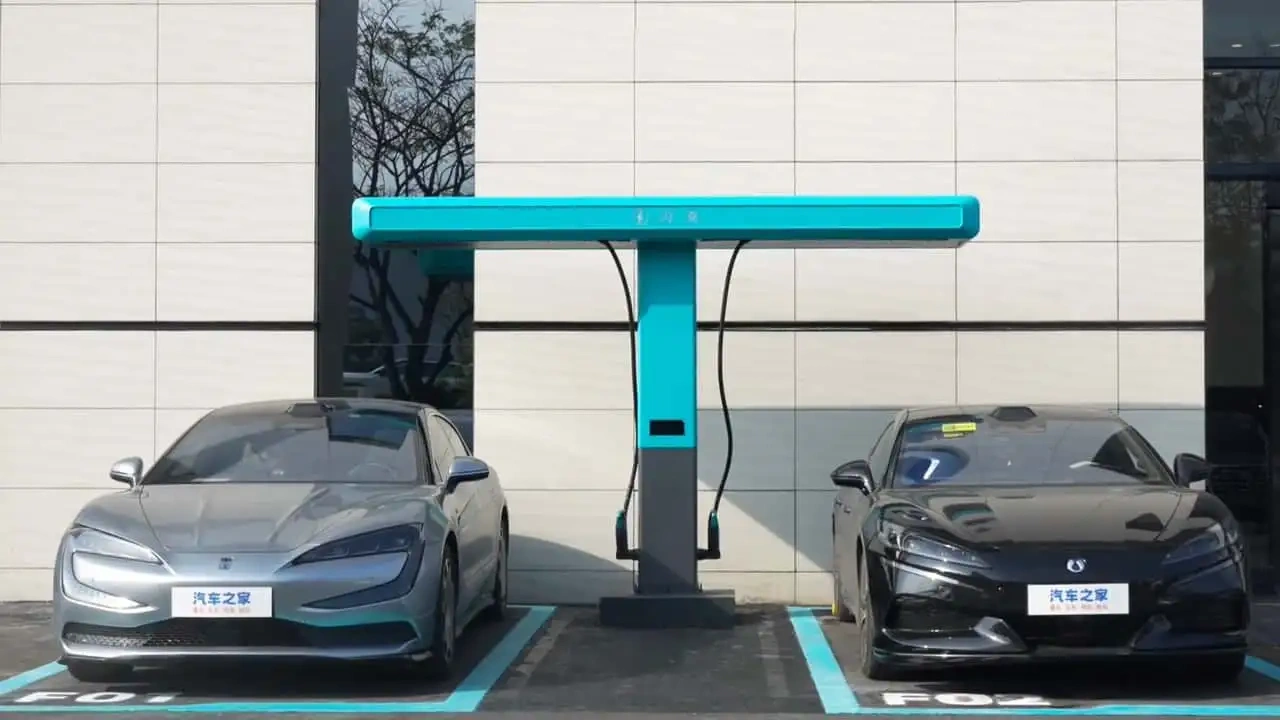
Recognizing this challenge, BYD has unveiled one of the most ambitious charging solutions ever introduced to the market: the BYD Flash Charging System. Combining cutting-edge battery technology, a revolutionary high-voltage vehicle architecture, and an ultra-high-power charging network, BYD aims to make EV charging as convenient and effortless as filling a gasoline tank.
At the heart of this innovation is a remarkable charging capability of up to 1,500 kW, making it one of the most powerful public charging systems ever developed. According to BYD, vehicles equipped with the technology can recharge from 10% to 97% state of charge in approximately nine minutes under normal conditions. Even in extremely cold environments reaching -30°C, charging from 20% to 97% requires only 12 minutes.
The announcement marks a significant milestone not only for BYD but also for the entire electric vehicle industry.
One of the most common concerns among potential EV buyers remains charging convenience. While home charging satisfies the needs of many daily commuters, long-distance travelers often depend on public charging infrastructure.
Current charging technologies generally fall into three categories:
Level 1 charging uses standard household electrical outlets and can require more than 24 hours for a full battery recharge.
Level 2 chargers are common in homes, workplaces, and public locations. Charging times typically range from four to ten hours depending on battery size and charger output.
DC fast chargers significantly reduce charging times, often replenishing a battery from 20% to 80% within 20 to 40 minutes. The most advanced systems currently available generally deliver between 250 kW and 350 kW.
Although these technologies have enabled the rapid growth of electric mobility, many drivers still compare charging experiences to gasoline refueling, which typically takes less than five minutes.
BYD's Flash Charging initiative directly targets this comparison by narrowing the convenience gap between electric and conventional vehicles.
BYD Flash Charging is the company's proprietary ultra-high-power public charging solution capable of delivering up to 1,500 kW of charging power.
Unlike conventional charging systems that focus primarily on improving charger output, BYD has developed a comprehensive ecosystem in which battery technology, vehicle architecture, thermal management, charging hardware, and software are designed to work together as a unified system.
This integrated approach enables charging speeds that were previously considered impractical for mass-produced passenger vehicles.
The company describes Flash Charging as a technology capable of adding hundreds of kilometers of driving range in just a few minutes, fundamentally changing how drivers interact with electric vehicles.
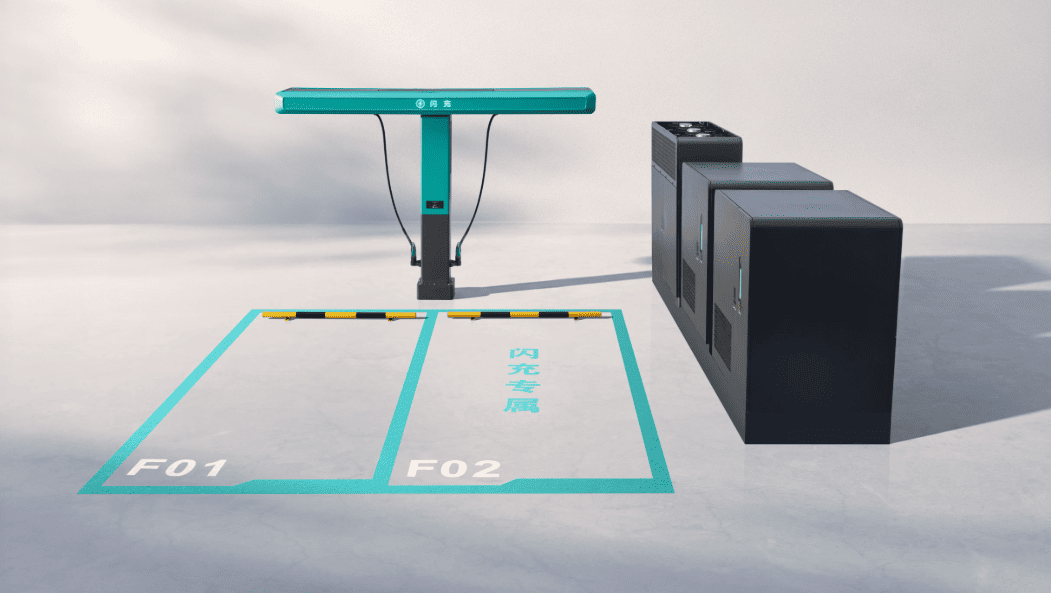
Achieving 1,500 kW charging power requires several major technological breakthroughs working simultaneously.
Three key innovations make the system possible:
- Next-generation Blade Battery technology
- BYD Super e-Platform
- Advanced charging station infrastructure
Each component plays a critical role in enabling unprecedented charging performance.
The battery is arguably the most important component in any electric vehicle.
Traditional lithium-ion batteries face limitations regarding charging speed because excessive charging currents can generate heat, accelerate degradation, and compromise safety.
BYD's second-generation Blade Battery addresses these concerns through multiple innovations.
The new battery utilizes a "Short Blade" architecture that improves current distribution and thermal management throughout the battery pack.
Compared with traditional cell structures, the design reduces internal resistance and enhances heat dissipation.
These improvements allow the battery to accept significantly higher charging currents without excessive temperature increases.
BYD engineers have also optimized the battery's cathode materials through a multi-level particle architecture.
This structure facilitates faster lithium-ion movement during charging and discharging cycles, improving both charging speed and energy efficiency.
Another major advancement involves the use of silicon-carbon anodes.
Silicon-based materials can store more lithium ions than conventional graphite anodes, increasing charging capability while maintaining high energy density.
The result is a battery capable of handling an impressive 8C charging rate.
The term "8C" refers to a charging rate eight times greater than the battery's capacity.
For example, a 100 kWh battery charging at 8C can theoretically accept 800 kW of power.
Most EV batteries today operate at charging rates between 2C and 4C.
Moving to 8C represents a dramatic leap in charging performance and requires extensive advancements in battery chemistry, cell design, cooling systems, and power electronics.
This capability forms the foundation for BYD's Flash Charging system.
The second major breakthrough is BYD's newly developed Super e-Platform.
Traditional electric vehicles typically operate on electrical architectures ranging from 400V to 800V.
BYD has increased system voltage to 1,000V.
This may appear to be a simple numerical increase, but the engineering benefits are substantial.
Electrical power equals voltage multiplied by current.
To achieve higher charging power, manufacturers can either increase voltage, increase current, or both.
However, increasing current creates significant challenges:
- Greater heat generation
- Larger cables
- Higher energy losses
- Increased component stress
By increasing voltage to 1,000V, BYD can deliver massive charging power while maintaining manageable current levels.
For example:
- 1,500 kW at 1,000V requires approximately 1,500A.
- 1,500 kW at 400V would require approximately 3,750A.
The latter would be extremely difficult to manage using current connector and cable technologies.
The 1,000V architecture therefore provides a practical pathway toward megawatt-class charging.
Ultra-fast charging inevitably generates heat.
Without proper thermal management, battery temperatures could rise rapidly, reducing performance and potentially affecting battery lifespan.
BYD has developed sophisticated cooling systems that continuously regulate temperatures throughout the charging process.
These systems monitor:
- Battery cells
- Charging cables
- Connectors
- Power electronics
- Charging station components
By maintaining optimal temperatures, the system ensures safety while preserving charging speed.
One of the most impressive aspects of the Flash Charging platform is its performance in extreme cold.
Cold temperatures typically reduce battery efficiency and charging capability.
Many EV owners in northern climates experience significantly longer charging sessions during winter months.
BYD claims its Flash Charging system can charge a battery from 20% to 97% in just 12 minutes at temperatures as low as -30°C.
This achievement addresses one of the industry's most persistent challenges and could significantly improve EV adoption in colder regions.
Some observers have questioned why BYD specifies charging from 10% to 97% rather than 100%.
According to company representatives, including Chairman Wang Chuanfu, maintaining a small reserve provides important benefits.
Approximately 3% of battery capacity remains available for regenerative braking.
This allows vehicles to continue capturing energy during deceleration immediately after charging, maximizing efficiency and preserving driving performance.
The approach also helps optimize battery health and charging consistency.
BYD's vision extends beyond charging stations alone.
The company is developing integrated energy ecosystems that combine:
- Flash Charging stations
- Battery energy storage systems
- Renewable energy generation
- Smart grid management
This integrated strategy can help mitigate the significant power demands associated with 1,500 kW charging infrastructure.
Energy storage systems can accumulate electricity during off-peak periods and release it during charging sessions, reducing strain on local grids.
Technology alone cannot transform transportation.
Infrastructure deployment is equally important.
BYD has announced plans to install approximately 20,000 Flash Charging stations across China by the end of 2026.
This ambitious rollout represents one of the largest ultra-fast charging deployments ever undertaken.
The network will target:
- Major cities
- Highway corridors
- Commercial centers
- Logistics hubs
- Transportation hubs
The goal is to provide comprehensive coverage that supports both urban commuting and long-distance travel.
For consumers, the benefits are substantial.
Reduced Charging Time
Charging sessions lasting under ten minutes dramatically improve convenience.
Improved Travel Flexibility
Drivers can make shorter stops during long journeys.
Greater Confidence
Reduced charging times help alleviate range anxiety.
Better Winter Performance
Reliable charging in extreme cold increases practicality in northern climates.
Enhanced Ownership Experience
Charging becomes less of a planning exercise and more comparable to conventional refueling.
Commercial vehicle operators may benefit even more than private drivers.
Fleet utilization is heavily influenced by downtime.
Ultra-fast charging can significantly improve:
- Delivery operations
- Taxi services
- Ride-hailing fleets
- Public transportation
- Corporate vehicle fleets
Less time charging means more time generating revenue.
This improvement could accelerate electrification across commercial transportation sectors.
BYD's announcement raises the bar for the entire industry.
Major automakers and charging providers are pursuing faster charging technologies, but few have demonstrated a fully integrated commercial solution approaching 1,500 kW.
The development could influence future investments in:
- Battery chemistry
- Vehicle architectures
- Charging infrastructure
- Grid modernization
- Energy storage systems
Manufacturers may increasingly adopt higher-voltage platforms to remain competitive.
Despite its impressive capabilities, Flash Charging faces several challenges.
Infrastructure Costs
Megawatt-class charging equipment requires substantial investment.
Grid Capacity
Local electrical networks may require upgrades to support widespread deployment.
Standardization
Industry standards must evolve to accommodate increasingly powerful charging systems.
Vehicle Compatibility
Only vehicles specifically engineered for ultra-high-power charging can fully utilize the technology.
Addressing these challenges will require collaboration among automakers, utilities, charging operators, and regulators.
The electric vehicle industry has reached a point where charging speed is becoming as important as driving range.
Consumers increasingly expect EVs to offer convenience comparable to gasoline vehicles.
BYD's Flash Charging technology represents one of the most significant steps toward achieving that goal.
As battery technology continues advancing and charging networks expand, charging sessions measured in hours may become a relic of the past.
Future charging systems could routinely deliver hundreds of kilometers of range within minutes, fundamentally changing public perceptions of electric mobility.
BYD's Flash Charging system represents a major breakthrough in electric vehicle infrastructure. Through the combination of second-generation Blade Battery technology, an advanced 1,000V Super e-Platform, sophisticated thermal management, and a powerful 1,500 kW charging network, BYD has demonstrated that ultra-fast charging is becoming a practical reality rather than a distant vision.
With the ability to recharge from 10% to 97% in just nine minutes and maintain exceptional performance even at temperatures as low as -30°C, the technology addresses many of the concerns that have historically limited EV adoption. Combined with plans to deploy 20,000 charging stations across China and expand internationally, BYD is positioning itself at the forefront of the next phase of electric transportation.
As the global automotive industry moves toward an electrified future, innovations such as Flash Charging may prove to be as transformative as the development of the electric vehicle itself, bringing the world closer to an era where charging an EV is as fast, convenient, and accessible as refueling a conventional automobile.