
As electric vehicles (EVs) continue their rapid global adoption, charging infrastructure is evolving just as quickly. Today's EV owners expect faster charging, smarter energy management, and future-proof hardware that can keep up with new battery technologies. Among the most significant developments in AC charging is the rise of the 22 kW wallbox EV charger, a high-power solution bridging the gap between conventional home chargers and costly DC fast chargers.
Across Europe and increasingly in other regions, the 22 kW AC EV charger is becoming a preferred choice for commercial facilities, fleet operators, and even high-end residential users. It offers a compelling mix of charging speed, affordability, installation flexibility, and long-term value. Yet for many users and businesses, one important question remains: What does it take to install a 22 kW charger—and is it worth it?
This industry news report explores the technical requirements, installation considerations, market trends, and strategic benefits of deploying 22 kW wallbox EV chargers. Whether you're a homeowner considering an upgrade, a commercial developer planning EV-ready infrastructure, or a fleet manager aiming to optimize operations, understanding the capabilities of 22 kW charging is crucial for informed decision-making.
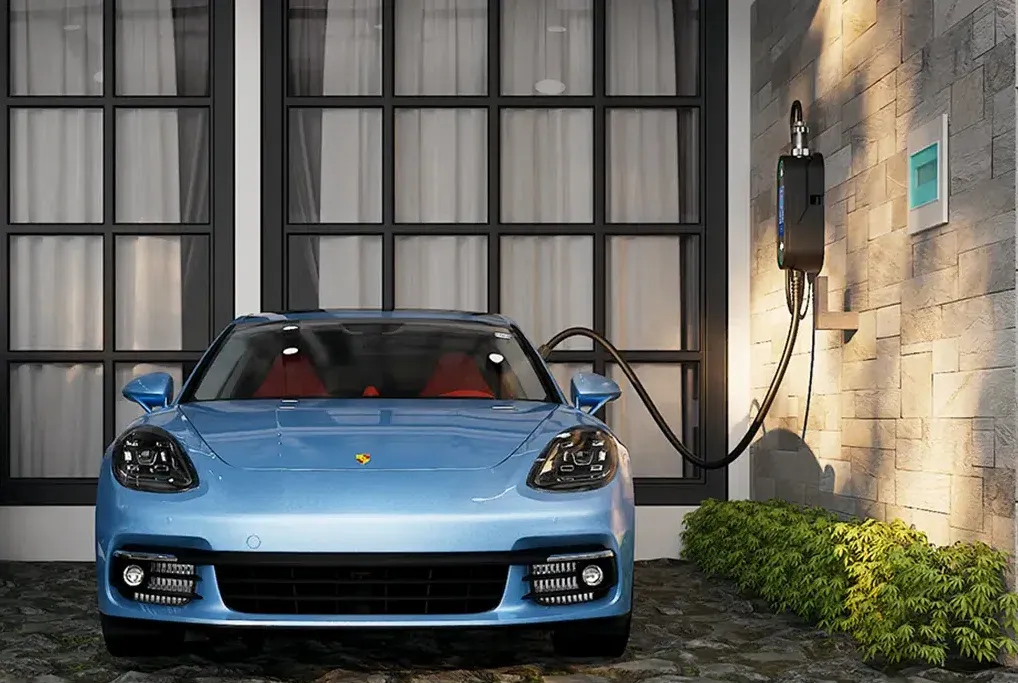
Unlike basic 7 kW home chargers, the installation of a 22 kW EV charger requires careful electrical planning. The process goes far beyond plugging into an outlet—it involves ensuring sufficient electrical supply, compatibility with local infrastructure, and compliance with safety and building standards.
The single biggest requirement for a 22 kW AC charger is access to three-phase electrical power. This setup is standard across Europe and many parts of Asia, making 22 kW charging widely accessible in those regions. However, in North America, most homes rely on single-phase systems, which complicate installation.
A simple analogy helps explain the difference:
Single-phase = a one-lane road
Can handle moderate traffic (up to 7.4–11 kW) but becomes congested beyond that.
Three-phase = a three-lane highway
Capable of carrying substantially more electrical “traffic” without overload.
The majority of 22 kW chargers draw:
- 32A per phase,
- Totaling 22 kW on a 400V three-phase supply.
If your property only has single-phase supply, upgrading to three-phase may involve:
- Coordination with the utility provider,
- Upgrading wiring and meter equipment,
- Installing a larger-capacity service connection.
This process can be costly—ranging from a few hundred to several thousand dollars depending on the region.
A 22 kW charger places significantly more demand on a building's electrical system than its 7 kW or 11 kW counterparts. Before installation, electricians must assess whether the main panel can handle the increase.
A panel upgrade may be required if:
- The existing panel is below 100–150A,
- The building contains other high-load appliances,
- Load balancing or energy management systems are not in place.
Modern 22 kW chargers often include:
- Dynamic load balancing,
- Smart energy management,
- OCPP (Open Charge Point Protocol) network compatibility,
allowing the system to reduce charging power automatically when other appliances are active. This prevents tripping breakers and maximizes energy stability.
The total installation cost of a 22 kW charger depends on:
- Electrical distance from panel to charger,
- Conduit and cabling needs,
- Network integration or software setup,
- Whether a three-phase upgrade is required.
Typical costs:
- With existing 3-phase supply: $300–$1,500
- With 3-phase service upgrade: $2,000–$8,000+
- Commercial-scale deployments: Highly variable based on site design
Because of these considerations, many users evaluate whether a 22 kW charger's benefits justify the additional installation investment.
Despite its more demanding setup, the 22 kW wallbox offers several compelling advantages that make it a top-tier choice for both commercial and high-end residential use.
The defining benefit of a 22 kW charger is speed. It provides the fastest possible charging rate available for AC systems before moving to DC fast charging.
Key performance metrics:
- Up to 120 km of range added per hour (vehicle-dependent),
- 2× faster than 11 kW chargers,
- 3× faster than 7.4 kW single-phase chargers.
This level of performance is especially valuable for:
- Commercial parking lots with rotating visitors,
- Workplace charging where employees charge during work hours,
- Hospitality and retail environments where fast turnover increases satisfaction,
- High-end residential use where premium EVs have large batteries.
Vehicles that benefit most include:
- Audi e-tron,
- Mercedes EQ Series,
- Porsche Taycan AC-capable models,
- Tesla Model S/X with optional 16.5–22 kW onboard chargers.
For users with long commutes or unpredictable schedules, higher AC charging speed significantly reduces downtime.
Even if your current EV can only accept 7 kW or 11 kW AC input, installing 22 kW infrastructure ensures readiness for next-generation vehicles.
The global EV trend is shifting toward:
- Larger battery packs,
- Faster onboard AC chargers,
- Smarter load management systems.
By installing a 22 kW wallbox today, you:
- Avoid future electrical upgrades,
- Enhance property value,
- Support long-term energy transition goals,
- Future-proof your site against increasing EV penetration.
For businesses, this is particularly important. Commercial developers, office buildings, and residential communities are now required in many regions to include EV-ready infrastructure. Deploying 22 kW chargers ensures long-term compliance and competitiveness.
A 22 kW AC charger provides a sweet spot between the slow pace of low-power AC chargers and the high infrastructure cost of DC fast chargers.
Charger Type | Power | Typical Cost | Installation | Use Case |
7–11 kW AC | Slow/Moderate | Low | Simple | Home charging |
22 kW AC | Fast | Medium | Requires 3-phase | Homes & commercial |
30–360 kW DC | Ultra-fast | High | Very complex | Public charging |
For most businesses, DC chargers are financially burdensome unless traffic is high. The 22 kW AC charger offers excellent performance at a fraction of the infrastructure and maintenance cost.
Selecting between an 11 kW and 22 kW charger is not simply a matter of budget—it's about aligning the charging capability with your long-term EV usage.
If your site already has a 400 V three-phase system, installing a 22 kW charger is often the most strategic decision. Its major benefits include:
Double the Charging Speed
This reduces:
- Parking lot congestion,
- Charging wait times,
- Fleet turnover cycles.
Superior ROI for Businesses
Higher charging power supports:
- Increased user throughput,
- Higher utilization rates,
- Greater revenue potential for paid charging scenarios.
No Need for Future Upgrades
For commercial properties expecting more EV users over time, 22 kW chargers prevent costly retrofits.
Ideal for:
- Corporate office buildings,
- Logistics and delivery hubs,
- Hotels and shopping malls,
- Public parking facilities.
For locations with single-phase supply, an 11 kW charger is often the most cost-effective option, delivering reliability without major electrical upgrades.
Best suited for:
- Residential homes,
- Small businesses,
- Multi-family apartments,
- Overnight fleet charging with low daily turnover.
Key advantages:
- Lower installation costs,
- Sufficient charging speed for overnight use,
- High compatibility with most EVs (many are limited to 11 kW AC anyway).
The surge in EV adoption is accelerating demand for faster AC charging solutions. Several trends support the growth of 22 kW chargers:
As more EVs exceed 80–100 kWh, slow chargers become impractical for frequent users.
Companies are adding EV charging as an employee benefit, requiring faster speeds to accommodate rotating vehicles throughout the day.
Electric taxis, ride-share operators, and delivery vans require fast, reliable AC charging to optimize downtime.
Many regions now mandate:
- Pre-installed EV conduits,
- Minimum charging capacity per parking space,
- Use of smart metering and energy management.
22 kW chargers meet these regulations while offering scalability and future-readiness.
As manufacturers scale production, the cost of high-power AC chargers continues to fall, making 22 kW units more accessible.
Before installing a 22 kW wallbox EV charger, users should evaluate the following factors:
Many EVs accept only 7–11 kW AC.
High-end and European models often support 22 kW.
Existing three-phase supply makes installation straightforward.
Single-phase supply may require expensive upgrades.
High daily mileage or multiple drivers benefit from faster charging.
Overnight charging users may not need 22 kW.
Businesses should consider:
- Projected EV adoption,
- Charging demand,
- Future property value.
Higher power chargers may increase:
- Peak demand charges,
- Electricity costs during peak hours.
Smart charging features can mitigate this.
The rise of the 22 kW wallbox EV charger represents a major milestone in the evolution of AC charging. Offering high-speed performance, commercial-grade reliability, and future-ready design, it stands as one of the most versatile charging solutions for today's fast-growing EV landscape. Although installation requirements—especially the need for three-phase power—can be a barrier for some locations, the long-term benefits often outweigh the upfront challenges.
For businesses, a 22 kW charger delivers higher throughput, improved customer satisfaction, and better ROI. For homeowners with compatible electrical systems, it offers unmatched charging speed and future-proof convenience. And for property developers, it aligns with global trends toward smarter, greener, EV-ready building standards.
As EV technology continues advancing, the demand for intelligent, high-capacity charging infrastructure will only grow. The 22 kW wallbox sits at the center of this transition—an ideal balance between performance, cost, and long-term value.