
Electric vehicles (EVs) are no longer a niche product reserved for early adopters. They have entered the mainstream and are reshaping mobility, consumer expectations, and infrastructure planning across the globe. As governments set aggressive electrification targets and automakers transition their fleets toward zero-emission technologies, consumers are increasingly shifting to EV ownership. However, for millions of Americans who live in multifamily housing—apartment buildings, condominiums, townhome communities, and other multi-unit dwellings—the lack of accessible charging infrastructure remains a significant barrier preventing widespread adoption.
Multifamily housing owners and property managers face a unique landscape. Unlike single-family homeowners, whose EV charging needs can be met with a simple home charger installation, multifamily residents depend on property-level infrastructure. They need charging stations near their assigned or shared parking spaces, transparent billing systems, and a reliable way to charge at home without competing for limited resources. For property owners, installing EV charging stations presents a strategic opportunity, but also a series of logistical considerations: electrical capacity, parking allocation, permitting requirements, cost recovery, and long-term scalability.
In this evolving environment, EV charging stations are quickly transforming from a luxury amenity into an essential utility—one that influences residential choice, property competitiveness, and long-term asset value. This industry news article explores the rapidly rising demand for multifamily EV infrastructure, the challenges property owners face, and how turnkey partners like LiCB Charge help streamline the adoption of smart, scalable charging solutions.
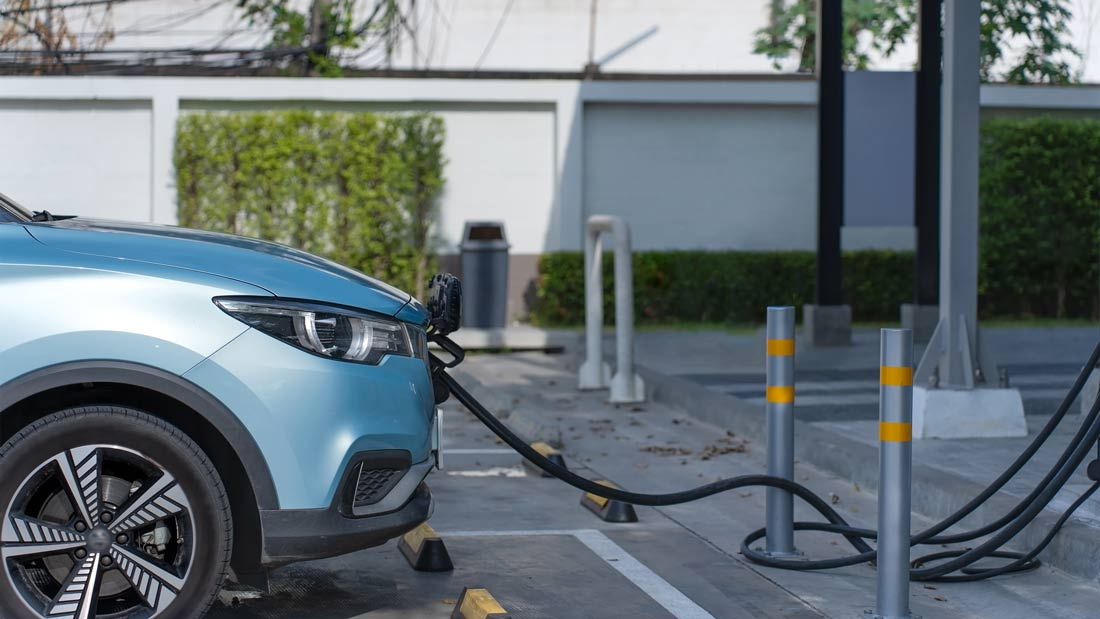
The adoption of electric vehicles is accelerating at a pace that few could have predicted a decade ago. According to 2026 market reports, U.S. EV sales have reached new highs, and consumer awareness of electrification continues to strengthen. However, charging inequality persists—especially in multifamily settings.
A recent 2026 study revealed several compelling insights:
- 82% of non-EV drivers living in multifamily buildings report no access to EV charging at their residence.
- 67% said that having EV chargers at their building would make them consider buying an EV.
Among current EV owners who live in multifamily buildings, many rely on slow, informal charging solutions or public stations, which are often inconvenient or expensive.
These data points highlight the biggest blocker for multifamily residents: access. Unlike single-family homes, where installing a Level 2 charger is relatively straightforward, multi-unit properties require coordinated infrastructure planning, electrical assessments, and shared resources.
As the EV transition accelerates, the number of residents who expect on-site charging will only continue to grow. Renters and condo owners are increasingly prioritizing sustainability, and they want homes that support their evolving lifestyle—and their next vehicle purchase.
This shift represents a significant opportunity for property owners. Multifamily housing communities able to offer reliable charging access are positioned to capture a swelling segment of environmentally conscious residents.
EV charging has rapidly become a signal amenity—an indicator that a property is modern, forward-thinking, and committed to meeting the needs of current and future residents. Much like high-speed internet or smart home features, EV charging is no longer viewed as optional. In competitive rental and condominium markets, the presence of EV charging can meaningfully influence occupancy rates and property value.
Properties equipped with EV charging infrastructure appeal to a growing population of EV drivers and sustainability-focused renters. Prospective tenants often filter search results by amenities, and EV charging is increasingly among their top criteria. Communities that are early adopters of charging infrastructure report measurable improvements in:
- Online engagement and inquiry rates
- Faster lease fulfillment
- More visibility on rental platforms and real estate listings
Simply put, EV charging makes a building easier to market.
Tenants who purchase an EV after moving in are far more likely to stay long-term if chargers are available. A lack of charging infrastructure often forces EV-owning residents to move elsewhere or rely on inconvenient public charging stations. Installing EV chargers preserves resident satisfaction and reduces turnover, which translates to predictable occupancy and lower operating costs for property owners.
Commercial real estate ownership groups increasingly prioritize Environmental, Social, and Governance (ESG) goals. Implementing EV charging helps support these initiatives and provides tangible results that can be included in sustainability reporting. Benefits include:
- Reduced building emissions through resident electrification
- Alignment with municipal clean energy targets
- Improved green certifications and real estate portfolio scores
Charging stations can even be integrated with renewable energy systems, such as rooftop solar or energy storage, for enhanced environmental impact.
Experts agree that EV infrastructure will eventually become a baseline requirement for multifamily properties. Being early ensures that owners avoid costly retrofits later, secure access to rebates or incentive programs, and position their properties as future-ready investments.
In summary, EV charging strengthens the property's competitive posture while meeting operational and sustainability objectives.
Developing a successful EV charging strategy requires careful planning, technical expertise, and an understanding of both current demand and future expansion requirements. Using an experienced turnkey provider like LiCB Charge enables property owners to simplify this process, reduce project risk, and maximize cost-effectiveness.
LiCB Charge follows a proven four-step approach to deliver fully integrated, scalable EV charging solutions—from initial site analysis to installation and ongoing support.
Every multifamily property is different. Factors such as parking layouts, electrical capacity, building age, and resident demographics directly influence what type of charging infrastructure is most appropriate.
LiCB Charge begins with a detailed assessment that includes:
Parking Lot Configuration and Space Allocation
- Reviewing assigned vs. shared parking
- Analyzing proximity to electrical rooms or panels
- Identifying optimal charger placement to reduce wiring and trenching needs
- Preparing for ADA-compliant accessible charging spaces
Electrical System Capacity and Load Management
One of the biggest hurdles for multifamily EV charging is existing electrical capacity. LiCB Charge evaluates:
- Main service panel limitations
- Transformer load
- Subpanel availability
- Need for electrical upgrades
Smart load management options are explored early to avoid expensive infrastructure upgrades, allowing properties to scale charging without overloading the system.
Aesthetics and Resident Experience
Charging stations should be functional, safe, and visually integrated with the property's architecture. LiCB Charge considers:
- Concealed conduit routes
- Protective bollards
- Cable management solutions
- Weather-resistant housings
Rebate, Incentive, and Funding Opportunities
Many state, city, and utility programs subsidize the installation of EV charging stations—sometimes covering nearly all project costs. LiCB Charge helps identify:
- Federal tax credits
- State EVSE incentives
- Local rebates
- Utility demand response programs
- Multi-unit dwelling-specific grant programs
Scalability for Future Needs
A well-designed system allows expansion over time without redoing infrastructure. LiCB Charge evaluates long-term resident demand trends to build a future-ready plan.
This stage ensures property owners have a complete understanding of project feasibility, cost expectations, and the best strategy moving forward—without surprises.
After completing the initial evaluation, LiCB Charge's engineering team develops a detailed site plan tailored specifically to the property's operational and resident needs.
Personalized Charger Selection
Different properties require different charging levels:
- Level 2 AC chargers (7kW–22kW) for overnight or extended charging
- DC fast chargers (20kW–60kW) for quick turnover in high-demand communities
- Smart chargers with software to manage access, billing, and load balancing
LiCB Charge helps determine the ideal charger mix based on resident profiles and parking usage patterns.
Electrical Design
Engineers create:
- One-line electrical diagrams
- Conduit routing maps
- Panel load calculations
- Grounding and safety plans
- Network connectivity plans
This ensures compliance with local building codes, EVSE regulations, and industry standards.
Charger Placement Strategy
Effective design minimizes installation cost and maximizes convenience:
- Locating chargers close to power sources
- Avoiding unnecessary trenching
- Ensuring easy ingress and egress for drivers
- Providing adequate lighting and safety features
Clear signage and markings are included in the design for a professional, resident-friendly charging environment.
Navigating local permitting requirements can be one of the most time-consuming aspects of installing EV charging stations. Regulations vary significantly depending on the city, municipality, or utility district.
LiCB Charge manages this entire process for property owners.
Permit Coordination
LiCB handles:
- Building permits
- Electrical permits
- Utility interconnection or load assessment requirements
- Fire marshal or safety approvals
- Environmental or zoning considerations (if applicable)
This ensures the project progresses efficiently with minimal administrative burden for property managers.
Rebate and Incentive Maximization
LiCB Charge often secures incentives that cover up to 100% of installation costs for many clients.
They prepare and submit all necessary documentation, such as:
- Rebate applications
- Proof of compliance
- Load studies
- Equipment certification documentation
- Post-installation verification
This drastically reduces upfront costs for property owners and accelerates return on investment.
Once approvals are secured, LiCB Charge proceeds with the full installation and commissioning of the EV charging system.
Efficient and Non-Disruptive Installation
LiCB coordinates:
- Site preparation
- Electrical infrastructure installation
- Charger mounting
- Network integration
- Safety inspections
Most installations can be completed in two weeks or less, minimizing disruption to residents and daily property operations.
Wireless Network Deployment
Modern chargers require stable connectivity for:
- Payment processing
- Real-time monitoring
- Data analytics
- Load management
LiCB Charge builds a secure wireless network specifically for the charging system.
Thorough System Testing
Before the station goes live, LiCB performs:
- Electrical testing
- Network diagnostics
- Charging sessions under different load conditions
- Safety and compliance checks
This ensures the infrastructure is reliable, safe, and ready for resident use.
Training and Handover
Property managers and maintenance teams receive training on:
- Charger operation
- Access control
- Billing management
- Troubleshooting procedures
LiCB also provides ongoing technical support and monitoring.
The transition to electric vehicles is reshaping residential expectations, urban planning, and real estate investment strategies. Multifamily housing communities, once overlooked in early EV planning, are now central to achieving widespread adoption. As more residents express interest in driving electric—and as public policy continues to incentivize cleaner transportation—the demand for accessible EV charging will only intensify.
Multifamily properties that invest in EV infrastructure today position themselves ahead of the curve, attracting eco-conscious residents, improving retention, boosting property value, and strengthening ESG initiatives. By partnering with experienced turnkey providers like LiCB Charge, property owners can simplify the complex process of evaluation, design, permitting, and installation—ensuring a smooth transition to smart, scalable, future-ready EV charging solutions.