
As electric vehicles (EVs) continue to gain momentum across North America, the charging ecosystem supporting them is evolving just as rapidly. With millions of EVs now on the road and adoption accelerating annually, drivers rely on a growing network of public and private charging stations to power their daily mobility. Yet despite large-scale infrastructure investments, one challenge remains persistent: not all chargers use the same connector. This is where EV charging adapters have emerged as essential tools, providing convenience, certainty, and compatibility in an increasingly diverse charging environment.
EV charging adapters play a surprisingly important role in EV ownership. While small and simple, they eliminate the frustrations that arise when your vehicle's charging port doesn't match the plug at a charging station. They act as a bridge—connecting one standard to another—and ensure that drivers can confidently access charging options regardless of regional variations, manufacturer preferences, or the gradual evolution of standards.
In the context of North America's fragmented charging landscape, adapters have become a form of "mobility insurance." They help EV owners avoid unexpected roadblocks during long-distance travel and support the transition to emerging new standards like the North American Charging Standard (NACS). As automakers, charging networks, policymakers, and suppliers gradually align on future technologies, adapters serve as a critical transitional tool that keeps drivers moving without interruption.
This industry news feature explores the role of EV charging adapters, the major AC and DC charging standards, their market adoption, the technical considerations behind using adapters, and why these devices will remain important even as the industry moves toward standardization.
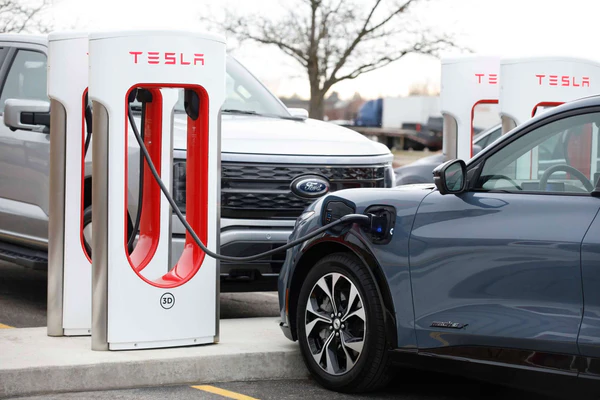
While the long-term vision for EV charging is seamless interoperability, the current landscape includes multiple competing connector types. Historically, automakers made independent decisions about which charging interface to support, while charging networks developed their infrastructure using different technologies. As a result, North American highways, cities, apartment complexes, and workplaces now feature a mix of AC and DC charging solutions that require flexibility.
Different charging connectors were designed with different philosophies and capabilities. EV owners quickly discovered that a car compatible with one connector might not be compatible with another, even if the charging station was technically capable of delivering the required power.
Public charging networks—including Electrify America, EVgo, ChargePoint, FLO, Blink, Shell Recharge, and others—often host different connector types depending on location, installation year, and infrastructure investments.
With Tesla opening its North American Charging Standard in 2022, and major automakers announcing adoption in 2023–2025, the market is currently in a transition phase. Until all EVs and chargers support NACS natively, adapters will remain vital.
The U.S. and Canada are aligned in many ways, but vehicle imports, early EVs, and certain regional networks maintain distinct connector setups.
Some drivers arrive at a charger only to find that the connector available does not match their vehicle. Adapters prevent these "stranded" moments.
Because of these dynamics, EV charging adapters are no longer accessories—they are essential mobility tools, similar to emergency tire repair kits or portable phone chargers.
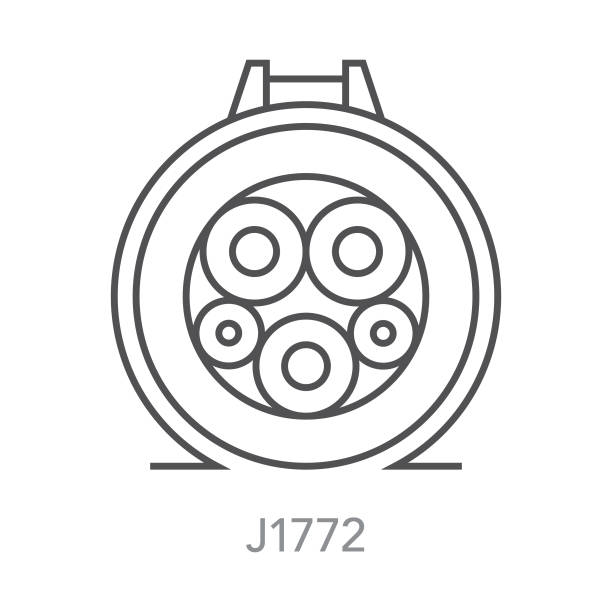
AC charging forms the backbone of everyday EV use. Home charging and workplace charging rely primarily on AC power, making compatibility essential. North America primarily uses two core standards for AC charging.
For many years, the J1772 connector has been the dominant AC charging standard across the U.S. and Canada. Developed by the Society of Automotive Engineers (SAE), it became widely adopted by automakers building EVs for the North American market.
Key Characteristics
- Universally used by most EVs prior to the rise of NACS
- Compatible with nearly all Level 1 and Level 2 AC chargers
- Provides power for home, destination, and commercial locations
- Supported by thousands of public AC charging stations
Why It Mattered
J1772 served as the backbone of EV charging adoption during the industry's early years. Reliable, standardized, and widely available, it ensured that drivers had consistent AC charging access when longer-distance fast charging was still in early development.
J1772 Adapters
As Tesla emerged with a proprietary connector, J1772-to-Tesla adapters—and Tesla-to-J1772 adapters—became widely sold. These adapters prevented fragmentation and helped both Tesla and non-Tesla drivers access millions of chargers nationwide.
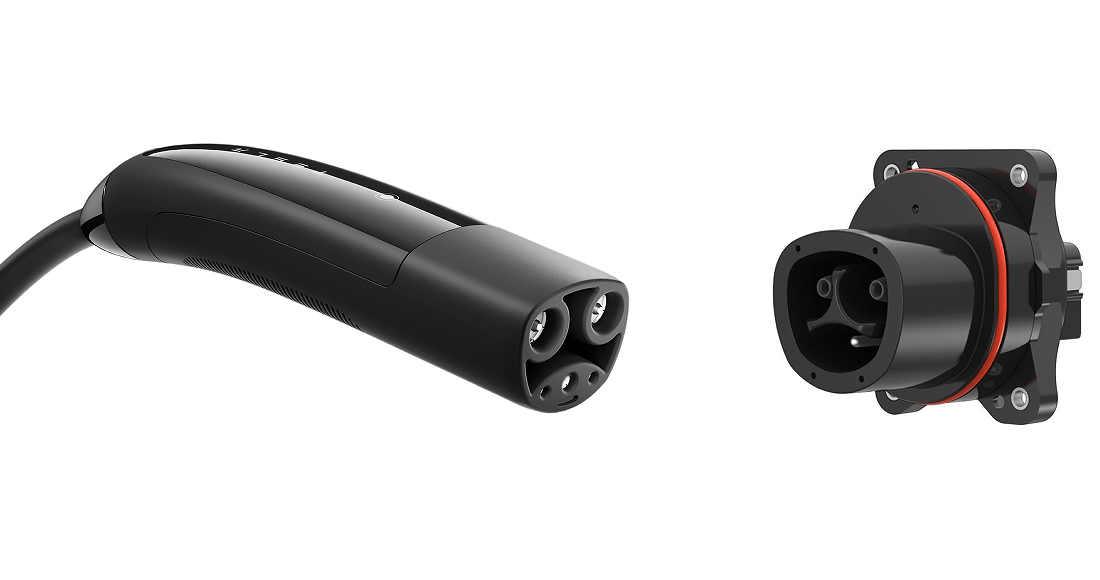
Originally developed as Tesla's proprietary connector, NACS became an industry-changing standard when Tesla opened it to other companies. Lightweight, compact, and supporting both AC and DC charging, the NACS connector is becoming the default standard for the future.
Key Characteristics
- Supports both Level 2 AC and DC fast charging
- Physically smaller and easier to handle than CCS
- Backed by Tesla's Supercharger and Destination Charger networks
- Increasingly adopted by nearly all major automakers
By 2024–2026, most new EVs in North America are shifting to NACS ports, and charging networks are integrating NACS connectors alongside existing CCS plugs.
Adapters Driving the Transition
Because this transition spans several years, adapters are critically important:
- CCS-to-NACS adapters allow current EV owners to plug into NACS chargers
- Tesla owners use J1772 adapters for legacy infrastructure
- NACS-to-J1772 adapters ensure compatibility with older AC stations
Adapters will remain essential until all vehicles and chargers support NACS directly, which may take a decade.
While AC charging supports daily mobility, DC fast charging enables long-range road trips and rapid top-ups. Here, connectors vary more significantly, and adapter solutions are more technically complex due to high power levels.
The CCS (Combined Charging System) standard integrates the J1772 AC connector with two additional large DC pins. Since it was designed collaboratively by major automakers, it became the primary DC charging solution for non-Tesla EVs.
Key Traits
- The most widely available fast-charging connector
- Adopted by Ford, GM, Hyundai, Volkswagen Group, Mercedes-Benz, BMW, and more
- Supports high power delivery, often 150–350 kW
- Common across Electrify America, EVgo, ChargePoint, and other fast-charging networks
CCS fast charging dramatically expanded long-distance EV travel over the past decade.
CCS and Adapters
As automakers transition to NACS, CCS-to-NACS adapters are emerging to ensure existing EVs can still benefit from the rapidly expanding NACS charging network.
Once a leading global fast-charging standard—especially in Japan—CHAdeMO has steadily declined in North America.
Common Use Cases
- Historically used by the Nissan LEAF and early Japanese EVs
- Supported by select charging stations installed before 2020
- Still usable through adapters in some cases, though support is fading
As newer EVs shift to CCS or NACS, CHAdeMO infrastructure is gradually being phased out. However, adapters allow remaining CHAdeMO vehicles to continue accessing certain charging networks during the transition.
Charging adapters are far more than passive accessories. They directly impact the user experience, especially during public charging.
A driver arrives at a workplace parking lot equipped with J1772 wall-box chargers. Their Tesla includes a J1772 adapter, allowing seamless charging.
With more Superchargers opening to non-Tesla vehicles, a CCS-to-NACS fast-charging adapter allows the driver access to one of the strongest charging networks in the world.
A traveler using PlugShare or Google Maps may find that the only available charger nearby uses a different connector type. With the right adapter, the station becomes usable.
In remote regions, charging options may be limited. A single charging station may support only J1772, or only NACS. Drivers equipped with adapters enjoy complete flexibility.
Some residential complexes offer only limited EV infrastructure. Adapters enable residents to use chargers regardless of which connector is provided.
Not all adapters are the same. Safety, certification, and compatibility are essential factors.
- AC adapters typically support Level 1 and Level 2 charging
- DC fast-charging adapters must handle 100–500 amps and high voltage
High-power adapters must meet rigorous engineering requirements.
Modern EV charging relies on digital communication:
- Power negotiation
- Vehicle charging status
- Safety monitoring
Adapters must support these communication protocols to ensure safe operation.
Reliable adapters should comply with:
- UL standards (North America)
- SAE standards
- FCC compliance
Cheap, uncertified adapters pose risks such as overheating or communication failure.
Outdoor charging requires durable, weatherproof construction:
- IP-rated casings
- Reinforced insulation
- UV protection
Some advanced adapters—particularly for DC fast charging—require periodic firmware updates to maintain compatibility with new charging networks.
The shift toward NACS adoption is reshaping the industry and redefining the role of adapters.
Automakers
Most major automakers have committed to transitioning to NACS by 2025–2026, including:
- Ford
- General Motors
- Rivian
- Mercedes-Benz
- Volvo
- Polestar
- Lucid
- Honda
- Jaguar
- Volkswagen Group (announced transition plan)
Many will provide NACS adapters to existing customers during the transition period.
Charging Networks
Charging providers are installing NACS connectors alongside CCS, including:
- Electrify America
- EVgo
- ChargePoint
- FLO
- Blink
- Shell Recharge
This shift reduces reliance on adapters over time but does not eliminate the need for them.
Fleet operators—including delivery companies, municipal fleets, and corporate campuses—also rely on adapters.
Key Fleet Benefits
- Standardizing mixed fleets
- Simplifying charger deployment
- Reducing downtime
- Maximizing charger utilization
Because fleet vehicles vary widely in make and model, adapters help maintain operational efficiency.
While beneficial, adapters also come with limitations.
Many adapters only work with AC charging. High-power DC adapters are more complex and less widely available.
Some EVs restrict fast charging when using adapters due to safety protocols.
Large connectors combined with long cables may create mechanical stress on the vehicle port.
As more EVs and chargers adopt NACS, some adapters may become obsolete over time.
While the industry is moving toward standardization, the transition will take years. Adapters will play a significant role throughout:
- Legacy vehicles will remain on the road for 10–20 years
- Existing public charging infrastructure will also remain operational for decades
- Global variations (Europe's Type 2 and CCS2; China's GB/T) will continue
- Adapters will bridge these gaps for travelers, imports, and commercial fleets
Ultimately, adapters support a smoother transition toward universal interoperability.
EV charging adapters have become indispensable tools in North America's dynamic and evolving charging landscape. As the industry moves toward a widely accepted standard—led by the widespread adoption of NACS—charging infrastructure and vehicle technology continue to coexist in various stages of development. Adapters ensure that EV drivers remain flexible, prepared, and confident when navigating public charging stations, regardless of connector type or standard.
By connecting diverse charging systems, adapters empower drivers, support infrastructure growth, and create a smoother, more accessible path toward widespread electrification. In a market undergoing significant transformation, these compact devices play an outsized role—protecting mobility, reducing uncertainty, and enabling seamless access to the rapidly expanding world of electric mobility.
