
As electric vehicles continue to reshape the global transportation industry, charging technology has become one of the most important factors influencing EV adoption. Drivers today expect faster charging times, greater convenience, and broader charging availability, especially for long-distance travel and commercial fleet operations. Among all charging technologies, Level 3 charging—commonly known as Direct Current Fast Charging (DC Fast Charging or DCFC)—stands out as the fastest and most powerful charging solution available for modern electric vehicles.
Unlike slower residential charging systems, Level 3 charging can replenish a large portion of an EV battery in minutes rather than hours. This capability has transformed how drivers use electric vehicles, making EV ownership more practical for highway travel, logistics, ride-sharing services, public transportation, and commercial fleets.
To fully understand Level 3 charging, it is important to first understand the difference between alternating current (AC) and direct current (DC), as well as the technologies, connector standards, infrastructure requirements, and future developments shaping the EV charging industry.
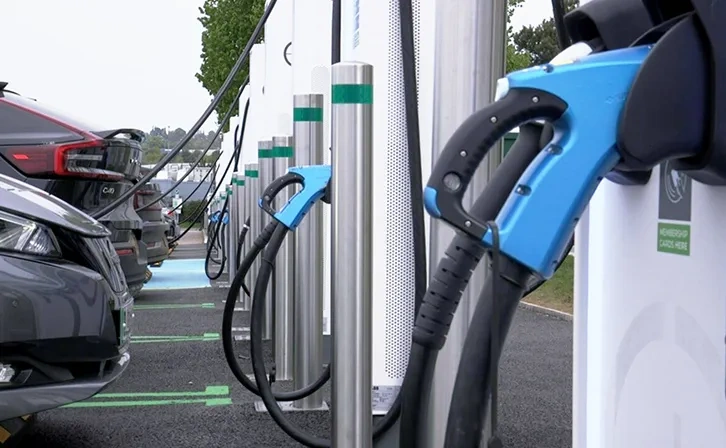
Electricity delivered through the power grid is primarily alternating current (AC). However, electric vehicle batteries can only store electricity in direct current (DC) form. Because of this difference, electrical energy must be converted before it can charge an EV battery.
In Level 1 and Level 2 charging systems, AC power flows from the electrical grid to the vehicle. Inside the vehicle is an onboard charger responsible for converting AC electricity into DC electricity suitable for battery storage. Although this method is effective, the charging speed is limited by the capacity and thermal constraints of the onboard charging hardware.
Level 3 charging works differently. Instead of sending AC power to the vehicle for conversion, DC fast chargers perform the conversion externally within the charging station itself. The charger then delivers high-voltage DC electricity directly to the battery pack. Because the conversion equipment is located outside the vehicle and can be significantly larger and more powerful, charging speeds increase dramatically.
This is why Level 3 charging can provide hundreds of kilometers of driving range in a relatively short period of time.
Level 3 charging refers to high-power DC charging systems designed to rapidly recharge electric vehicle batteries. These chargers generally operate at power levels ranging from 50 kW to over 350 kW, with some next-generation commercial systems exceeding 1 megawatt (MW).
Compared to Level 1 and Level 2 charging, Level 3 charging offers several major advantages:
- Extremely fast charging speeds
- Reduced downtime for drivers and fleets
- Improved long-distance travel convenience
- Better support for commercial transportation
- Enhanced public charging accessibility
Most modern EVs can charge from 10% to 80% battery capacity within approximately 20 to 40 minutes using a high-power DC fast charger, depending on battery size, vehicle compatibility, and charging conditions.
Level 1 charging uses a standard household electrical outlet, typically 120V in North America. It is the slowest charging method and generally provides only 3 to 5 miles of driving range per hour of charging.
Level 1 charging is mainly suitable for:
- Overnight home charging
- Plug-in hybrid vehicles
- Emergency charging situations
- Low daily driving distances
Level 2 charging typically uses 208V or 240V electrical systems and is widely installed in homes, workplaces, parking garages, hotels, and commercial properties.
Charging speeds usually range from 7 kW to 22 kW depending on the charger and vehicle.
Level 2 charging is ideal for:
- Daily residential charging
- Workplace charging
- Destination charging
- Fleet depots
- Public parking areas
Level 3 charging uses high-voltage DC electricity delivered directly to the battery.
Power outputs commonly include:
- 50 kW
- 100 kW
- 150 kW
- 250 kW
- 350 kW+
Level 3 charging is primarily installed along highways, transportation corridors, fleet depots, commercial hubs, and urban fast-charging stations.
The operation of a DC fast charger involves several advanced electrical systems working together simultaneously.
The charger first receives AC electricity from the utility grid. Internal power electronics convert this AC electricity into high-voltage DC power suitable for EV battery charging.
Before charging begins, the charger communicates with the electric vehicle to determine:
- Battery state of charge
- Maximum charging capability
- Battery temperature
- Voltage compatibility
- Safety parameters
This communication ensures safe and efficient charging.
The charger dynamically adjusts voltage and current during the charging session. Charging speeds are usually highest when the battery is at a lower state of charge and gradually decrease as the battery approaches full capacity.
This process protects battery health and prevents overheating.
Although Level 3 charging is extremely fast, actual charging speed depends on multiple variables.
Every electric vehicle has a maximum DC charging limit. For example:
- Some vehicles support only 50 kW charging
- Others support 150 kW
- Premium EVs may support 250 kW or higher
Even if a charger is capable of 350 kW output, the vehicle itself determines the maximum charging speed it can accept.
Battery temperature significantly affects charging performance. Cold batteries charge more slowly because the chemical reactions inside lithium-ion cells become less efficient at low temperatures.
Many EVs now include battery preconditioning systems that warm the battery before arriving at a fast charger.
Charging is fastest at lower battery levels. Once the battery reaches around 80% capacity, charging speeds typically slow down considerably to protect battery longevity.
Different charging stations offer different power levels. Older stations may provide only 50 kW, while newer ultra-fast chargers can exceed 350 kW.
The electrical infrastructure supplying the charging station must be capable of handling large energy loads. Insufficient grid capacity can limit charging performance.
Several charging connector standards dominate the global EV market. These standards determine compatibility between vehicles and charging stations.
The North American Charging Standard (NACS), standardized as SAE J3400, has rapidly become the dominant charging interface in North America.
Originally developed by Tesla, NACS gained widespread industry acceptance because of:
- Compact connector design
- High charging power capability
- Improved reliability
- Simplified user experience
Major automakers adopting NACS include:
- Ford
- General Motors
- Toyota
- Rivian
- Volvo
- Mercedes-Benz
- Nissan
- Honda
NACS chargers already support charging outputs exceeding 250 kW and are expected to remain highly scalable for future EV technologies.
The growing adoption of NACS is accelerating the standardization of charging infrastructure across North America.
The Combined Charging System (CCS) is one of the most globally recognized EV charging standards.
CCS1
CCS1 is primarily used in North America. It combines traditional AC charging pins with two additional high-current DC pins in a single connector design.
However, CCS1 is gradually losing market dominance in North America as NACS adoption increases.
CCS2
CCS2 is the leading charging standard throughout Europe and many international markets.
Key advantages include:
- Three-phase AC charging support
- High-power DC charging capability
- Strong regulatory support in Europe
- Broad international compatibility
CCS2 remains the preferred charging standard for much of the global EV industry outside North America.
CHAdeMO was one of the earliest DC fast charging standards and originated in Japan.
It was widely used by earlier EV models such as:
- Nissan Leaf
- Mitsubishi i-MiEV
Although CHAdeMO played an important role in early EV adoption, it has gradually declined due to:
- Slower technological development
- Larger connector size
- Limited scalability
- Reduced automaker support
Many new charging stations no longer include CHAdeMO connectors except to support legacy vehicles.
The Megawatt Charging System (MCS) represents the next generation of ultra-high-power charging for heavy-duty commercial vehicles.
MCS is designed for:
- Electric trucks
- Freight transportation
- Commercial buses
- Industrial logistics
- Mining equipment
- Large-scale fleet operations
Charging capacities can exceed 1 MW, dramatically reducing charging times for large battery systems.
MCS is expected to become essential for electrifying long-haul trucking and industrial transportation sectors.
Fast charging stations located along highways enable long-distance EV travel by minimizing charging stops.
These stations are critical for:
- Intercity travel
- Tourism
- Road trips
- Commercial transportation
Cities are increasingly deploying DC fast chargers in:
- Shopping centers
- Parking garages
- Transit hubs
- Retail locations
- Fuel station replacements
Urban fast charging improves convenience for drivers without home charging access.
Fleet operators depend heavily on fast charging to maximize vehicle uptime.
Industries benefiting from Level 3 charging include:
- Delivery services
- Ride-sharing platforms
- Municipal transportation
- Public transit
- Taxi operators
- Logistics companies
Electric buses often rely on high-power DC charging systems to maintain operational schedules throughout the day.
Opportunity charging systems can rapidly recharge buses during short stops.
Reduced Charging Time
The most obvious advantage is dramatically faster charging speeds.
Drivers can quickly add substantial driving range without extended waiting periods.
Improved Long-Distance Travel
Fast charging networks eliminate much of the range anxiety associated with EV ownership.
Drivers can travel across regions and countries with greater confidence.
Higher Fleet Efficiency
Commercial fleets can reduce downtime and improve operational productivity through rapid charging.
Support for Larger Batteries
As EV battery capacities continue increasing, Level 3 charging becomes increasingly important for maintaining practical charging times.
Better Public Accessibility
DC fast charging stations support drivers who lack residential charging options.
Despite its advantages, Level 3 charging also faces several challenges.
High Infrastructure Costs
DC fast charging stations are significantly more expensive than Level 1 or Level 2 systems.
Costs include:
- High-power electrical equipment
- Utility upgrades
- Installation labor
- Cooling systems
- Grid connection fees
Electrical Grid Demand
High-power chargers place major demands on local electrical infrastructure.
Large charging hubs may require:
- Transformer upgrades
- Energy storage systems
- Smart load management
- Renewable energy integration
Battery Stress
Frequent ultra-fast charging can generate more heat and potentially accelerate battery degradation over time if not properly managed.
Battery management systems help minimize these effects.
Charging Standard Competition
The coexistence of multiple charging standards has historically created compatibility challenges.
However, growing industry consolidation around NACS and CCS is improving interoperability.
Battery innovation is closely tied to the evolution of Level 3 charging.
Modern battery improvements include:
- Enhanced thermal management
- Silicon-based anodes
- Solid-state battery development
- Higher energy density
- Faster ion transport chemistry
Future battery technologies are expected to support:
- Faster charging speeds
- Longer driving ranges
- Improved safety
- Lower degradation rates
Some next-generation EVs may eventually achieve charging times comparable to traditional gasoline refueling.
Modern DC fast charging stations increasingly incorporate intelligent energy management systems.
These technologies include:
- Dynamic load balancing
- Grid-responsive charging
- Renewable energy integration
- Battery energy storage systems
- AI-driven energy optimization
Smart charging helps reduce:
- Peak electricity demand
- Grid instability
- Operating costs
- Energy waste
Many charging operators are integrating renewable energy sources into charging infrastructure.
Examples include:
- Solar-powered charging stations
- Wind energy integration
- On-site battery storage
- Microgrid charging systems
Renewable integration supports global sustainability goals while improving grid resilience.
The future of Level 3 charging is expected to involve major technological advancements.
Ultra-Fast Charging Expansion
Charging speeds will continue increasing as battery and power electronics improve.
Future systems may routinely deliver:
- 500 kW charging
- 1 MW charging
- Sub-10-minute charging sessions
Wider Standardization
The industry is moving toward more unified charging ecosystems, particularly with growing NACS adoption in North America.
Standardization improves:
- User convenience
- Infrastructure efficiency
- Market growth
- International compatibility
Autonomous Charging
Robotic charging systems and autonomous vehicle integration may reduce the need for human interaction during charging.
Vehicle-to-Grid (V2G) Technology
Future EVs may not only consume electricity but also return power to the electrical grid during peak demand periods.
V2G systems could improve:
- Grid stability
- Renewable energy utilization
- Emergency backup power
Heavy-Duty Electrification
Megawatt charging infrastructure will play a central role in electrifying:
- Freight transportation
- Ports
- Industrial logistics
- Public transit systems
Governments and private companies worldwide are investing heavily in EV charging infrastructure.
Major investments are occurring across:
- North America
- Europe
- China
- Japan
- Southeast Asia
Policy support includes:
- Infrastructure funding
- Emissions regulations
- EV incentives
- Renewable energy mandates
As EV adoption accelerates, demand for fast charging infrastructure will continue growing rapidly.
Level 3 charging has become one of the most important technologies driving the widespread adoption of electric vehicles. By delivering high-voltage DC electricity directly to EV batteries, DC fast charging dramatically reduces charging times and enables practical long-distance travel, commercial fleet electrification, and large-scale public charging deployment.
The industry continues evolving through advancements in charging standards such as NACS, CCS, and MCS, along with innovations in battery technology, smart energy management, and renewable energy integration. Although challenges such as infrastructure costs and grid demand remain, ongoing investment and technological progress are rapidly improving charging accessibility and performance worldwide.
As electric mobility continues expanding across passenger vehicles, public transportation, and commercial logistics, Level 3 charging will remain a foundational component of the global transition toward cleaner, more efficient, and more sustainable transportation systems.