
The global transition toward electric mobility is accelerating at an unprecedented pace. Governments, automakers, and energy providers are aligning to reduce carbon emissions, improve air quality, and promote sustainable transportation. At the center of this transformation lies a critical piece of infrastructure: electric vehicle (EV) charging systems. As EV adoption grows across residential, commercial, and industrial sectors, understanding the different types of chargers, their power capacities, and installation requirements becomes increasingly important.
For homeowners, businesses, and infrastructure developers, selecting the right charging solution is not just about convenience—it directly impacts energy efficiency, charging speed, long-term costs, and overall user experience. This article explores the different types of EV chargers and their wattage, examines their applications, and provides a comprehensive overview of home EV charger installation, highlighting current industry trends and best practices.
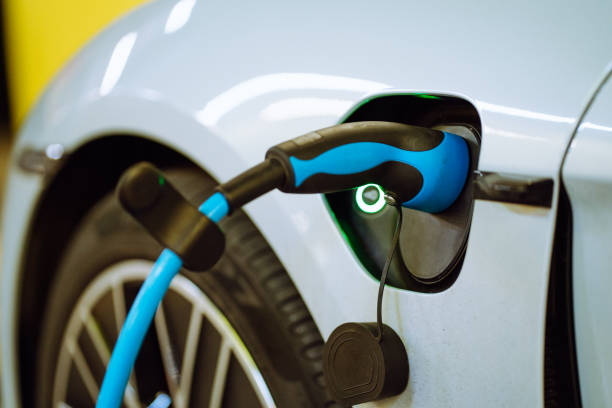
Electric vehicle charging has evolved significantly over the past decade. Early EV users relied heavily on basic charging solutions that were slow and often impractical for daily use. Today, advancements in power electronics, smart grid integration, and battery technology have enabled faster, safer, and more efficient charging systems.
Modern EV chargers are designed to meet diverse needs—from slow overnight home charging to ultra-fast highway charging stations capable of delivering hundreds of kilometers of range in minutes. This evolution reflects the growing demand for flexible charging infrastructure that supports both urban commuting and long-distance travel.
Electric vehicle chargers are generally categorized into three main levels based on voltage, power output, and charging speed: Level 1, Level 2, and DC Fast Chargers (Level 3). Each serves a distinct purpose and is suited for different environments.
Level 1 chargers represent the most basic form of EV charging. These chargers operate on a standard 120-volt household outlet, making them widely accessible without requiring specialized installation.
Typically, Level 1 chargers deliver between 1.4 kW to 1.9 kW (1,400 to 1,900 watts) of power. This translates to approximately 3 to 5 miles (5 to 8 kilometers) of driving range per hour of charging, depending on the vehicle model and battery efficiency.
Advantages:
- No installation cost in most cases
- Compatible with standard residential outlets
- Ideal for emergency or occasional use
Limitations:
- Extremely slow charging speed
- Not suitable for daily use for most drivers
- Long charging times (often 24–48 hours for a full charge)
Level 1 charging is best suited for plug-in hybrid electric vehicles (PHEVs) or EV owners with very short daily commutes. While convenient, it is generally considered a temporary or supplementary solution rather than a primary charging method.
Level 2 chargers are the most common solution for both residential and public charging. Operating on a 240-volt power supply, these chargers offer significantly faster charging speeds compared to Level 1 systems.
Power output typically ranges from 3.3 kW to 19.2 kW (3,300 to 19,200 watts), depending on the charger specifications and the vehicle's onboard charging capacity.
A standard 7.2 kW home charger can fully recharge many EVs in approximately 8 to 10 hours, making it ideal for overnight charging.
Advantages:
- Faster charging suitable for daily use
- Widely available in homes, workplaces, and public areas
- Compatible with most EV models
- Balanced cost and performance
Limitations:
- Requires professional installation
- Higher upfront cost compared to Level 1
- Charging speed depends on vehicle limitations
Level 2 chargers are widely regarded as the optimal solution for residential charging. They provide a practical balance between installation cost and charging efficiency, ensuring that EV owners can maintain a full battery with minimal disruption to their daily routines.
DC fast chargers, also known as Level 3 chargers, represent the most advanced and powerful charging technology currently available. Unlike Level 1 and Level 2 chargers, which use alternating current (AC), DC fast chargers deliver direct current (DC) directly to the vehicle's battery, bypassing the onboard charger.
These systems typically provide between 50 kW and 350 kW (50,000 to 350,000 watts), enabling rapid charging capabilities.
Under optimal conditions, DC fast chargers can charge an EV to 80% capacity in as little as 20 to 30 minutes.
Advantages:
- Extremely fast charging speeds
- Ideal for long-distance travel
- Essential for highway and urban charging networks
Limitations:
- Very high installation and infrastructure costs
- Not suitable for residential use
- Potential battery wear if used excessively
- Requires robust grid capacity
DC fast charging stations are typically found along highways, in commercial hubs, and in urban centers. They play a crucial role in eliminating range anxiety and supporting the expansion of EV adoption on a large scale.
Each charging level serves a unique role within the EV ecosystem:
- Level 1: Backup or occasional use, low-demand scenarios
- Level 2: Primary residential and workplace charging solution
- DC Fast Charging: Public infrastructure for rapid, on-the-go charging
For most homeowners, Level 2 chargers represent the best combination of efficiency, affordability, and convenience.
Selecting the right EV charger involves evaluating several factors:
Drivers with longer daily commutes will benefit from faster charging solutions.
Homes must have sufficient electrical capacity to support Level 2 chargers, often requiring panel upgrades.
Charging speed is limited by the vehicle's onboard charger, even if the charging station supports higher output.
Costs vary depending on wiring complexity, distance from the electrical panel, and required upgrades.
Modern chargers often include Wi-Fi connectivity, mobile apps, and energy management systems.
As EV ownership grows, home charging has become a key focus for consumers seeking convenience and cost savings. Installing a home EV charger involves several technical and logistical considerations.
A home EV charger is a compact, weatherproof unit designed for residential use. It is typically mounted on a wall and includes either:
- A tethered cable (fixed charging cable), or
- A socket for connecting a portable charging cable
These units are engineered to withstand outdoor conditions while providing safe and efficient charging.
Installing a home charging station involves several steps:
A qualified electrician evaluates the property's electrical system, parking location, and installation feasibility.
The unit is installed on an exterior wall or inside a garage, close to the vehicle's parking position.
The charger is connected to the main electrical panel, often requiring a dedicated circuit.
After installation, the system is tested to ensure safety and compliance with local regulations.
The entire process typically takes around three hours, though more complex installations may require additional time.
Home EV chargers must be installed by licensed professionals to ensure:
- Electrical safety
- Compliance with local codes and standards
- Optimal performance
- Warranty protection
Attempting a DIY installation can pose serious risks, including electrical hazards and equipment damage.
The cost of installing a home EV charger can vary widely based on several factors:
- Distance between the charger and electrical panel
- Electrical panel upgrades
- Wiring complexity
- Labor costs
- Permit and inspection fees
On average, installation costs can range from a few hundred to several thousand dollars. However, many regions offer incentives, rebates, or tax credits to offset these expenses.
Modern EV chargers are increasingly equipped with smart features that enhance efficiency and user control:
- Scheduled Charging: Charge during off-peak hours to reduce electricity costs
- Load Balancing: Prevent electrical overload by distributing power efficiently
- Remote Monitoring: Track charging status via mobile apps
- Integration with Solar Systems: Use renewable energy for charging
These technologies are transforming EV charging into a more intelligent and sustainable process.
The EV charging industry is undergoing rapid innovation, driven by technological advancements and growing demand.
Next-generation chargers exceeding 350 kW are being developed to further reduce charging times.
Inductive charging technology is emerging as a cable-free alternative for residential and commercial use.
EVs are increasingly being integrated into the power grid, allowing them to supply energy back to homes or utilities.
Efforts are underway to standardize charging connectors and protocols for global compatibility.
Governments and private companies are investing heavily in expanding charging networks.
Adopting EV charging infrastructure offers significant benefits:
Environmental Impact:
- Reduced greenhouse gas emissions
- Lower air pollution
- Support for renewable energy integration
Economic Advantages:
- Lower fuel costs compared to gasoline
- Reduced maintenance expenses
- Increased property value with home charging installations
Despite rapid growth, the industry faces several challenges:
- Grid capacity limitations
- High installation costs for fast chargers
- Uneven distribution of charging infrastructure
- Consumer awareness and education
Addressing these challenges will be critical to sustaining long-term growth.
Electric vehicle charging technology is a cornerstone of the global transition to sustainable transportation. From basic Level 1 chargers to high-powered DC fast charging systems, each solution plays a vital role in supporting diverse user needs.
For residential users, Level 2 chargers provide the most practical and efficient option, balancing speed, cost, and convenience. Meanwhile, advancements in smart charging and infrastructure development continue to enhance the EV ownership experience.
As the industry evolves, continued innovation, investment, and policy support will be essential to building a robust and accessible charging ecosystem. With the right infrastructure in place, electric vehicles are poised to become the dominant mode of transportation in the years ahead, driving a cleaner, more sustainable future.
