
Delivery fleets are increasingly at the forefront of the electric vehicle (EV) revolution. From last-mile e-commerce vans to grocery delivery trucks, courier services, and B2B logistics vehicles, fleet electrification is no longer a question of if, but when and how.
Unlike personal vehicles, delivery fleet EVs operate under highly structured schedules. Vehicles leave depots before sunrise, make multiple stops, and return late at night, leaving very little time for charging. Unlike personal EV owners, who typically charge overnight at home, fleet operators face the challenge of keeping vehicles ready for continuous operation.
Managing EV charging for delivery fleets is therefore a complex task, requiring a careful balance between infrastructure, energy management, operational efficiency, and cost considerations. This article explores the unique challenges, practical solutions, and emerging trends in delivery fleet EV charging, offering actionable insights for fleet operators navigating this transition.
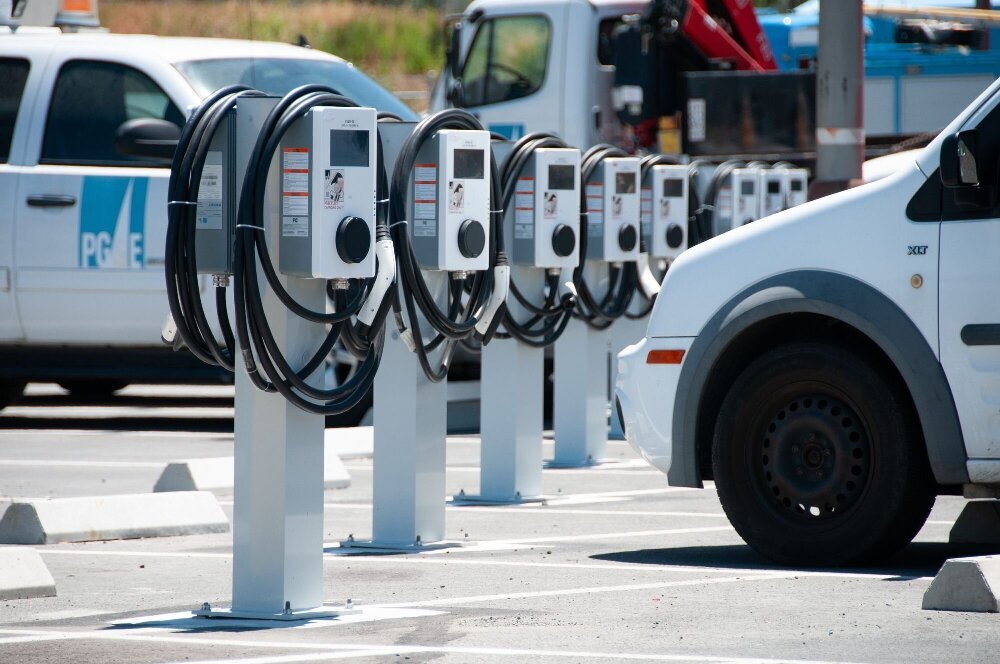
While EV adoption is growing rapidly in consumer markets, delivery fleets face a set of challenges that are unique to their operational environment. Understanding these issues is critical to planning a successful fleet electrification strategy.
Urban depots were often designed for traditional internal combustion engine vehicles, leaving limited room for high-power charging infrastructure. Adding multiple EV chargers can require major civil works, including trenching for power cabling, new electrical panels, and safety upgrades. In depots with limited space, operators must balance vehicle parking, operational flow, and the physical footprint of chargers. Modular or mobile charging solutions can help alleviate space constraints.
Delivery fleets frequently operate around the clock, with overlapping shifts to meet consumer demand. Vehicles may need to charge multiple times per day, often during very short breaks. This differs from personal EV charging, which typically occurs overnight. High turnover and tight schedules require precise planning, otherwise vehicles risk being unavailable during peak operational periods.
Many urban depots face electrical limitations. Older grid infrastructure may be unable to support the sudden increase in load required for fast fleet charging. Utility upgrades can take months or even years, which delays fleet electrification plans. Urban grid constraints can also result in high demand charges, increasing operational costs if not carefully managed.
Installing EV chargers, upgrading electrical panels, and performing civil work can be expensive. For large fleets, these costs can reach millions of dollars. Fleet operators must carefully balance upfront capital expenditures with long-term operational savings, including lower fuel costs, maintenance savings, and emissions compliance benefits.
Even when the local grid requires upgrades, the process can be slow. Utility companies may take 12–36 months to approve, design, and implement necessary improvements. For fleet operators, these delays can create operational bottlenecks and limit the ability to expand the fleet with additional EVs.
Delivery vehicles often travel many miles per shift, with stop-and-go driving patterns that differ from highway commuting. High energy consumption, combined with tight schedules, can make range anxiety a real operational concern. Fleet managers must carefully select vehicles with adequate range and ensure chargers are strategically located to maintain operational continuity.
Successfully managing fleet EV charging requires a combination of infrastructure planning, technology deployment, and operational optimization.
Depot design is critical to maximize charging efficiency:
- Charging Zones: Allocate dedicated areas for charging to avoid blocking high-traffic lanes.
- Smart Layouts: Position chargers so vehicles can connect quickly without disrupting operations.
- Scalable Infrastructure: Design for future expansion as fleets grow and battery technology evolves.
- Mobile Solutions: Deploy portable chargers for temporary or overflow needs.
Charging schedules must align with operational demands:
- Smart Charging Software: Prioritize vehicles based on shift timing and battery state.
- Load Management Systems: Distribute electricity efficiently across multiple chargers to avoid overloading circuits.
- Off-Peak Charging: Take advantage of lower electricity tariffs during off-peak hours to reduce operational costs.
- Predictive Scheduling: Use fleet telematics to anticipate which vehicles will need charging and when.
Not all vehicles require high-speed charging:
- Fast Chargers: Suitable for high-turnover vehicles that need rapid recharging during short breaks.
- Slow or Overnight Chargers: Ideal for vehicles with predictable downtime, reducing infrastructure costs.
- Hybrid Approach: Combining both types ensures operational flexibility without overspending.
Renewable energy sources, such as solar panels on depot rooftops, can reduce reliance on the grid:
- Energy Offsets: Lower electricity costs and carbon footprint.
- Energy Storage: Stationary batteries store excess renewable energy for use during peak demand.
- Grid Resilience: Reduce vulnerability to power outages or peak demand charges.
Modern telematics platforms allow fleet operators to monitor battery health, energy consumption, and charging patterns:
- Optimized Energy Use: Identify underutilized chargers and adjust schedules.
- Battery Lifecycle Management: Predictive insights extend battery life and reduce replacement costs.
- Operational Planning: Data-driven decisions for routing, shift scheduling, and energy allocation.
A major urban e-commerce company electrified 500 vans using a combination of 50 kW fast chargers for high-turnover vehicles and 22 kW AC chargers for overnight charging. Smart scheduling ensured vehicles were ready for every shift, even during unexpected delays. The fleet achieved full electrification with minimal operational disruption, demonstrating how a well-planned charging strategy can support large-scale EV adoption.
A regional grocery chain deployed electric delivery vans for last-mile delivery. Limited depot space required staggered charging schedules and off-site charging locations. By combining predictive analytics with load management, the chain reduced electricity costs by 18% and maintained timely deliveries.
A city courier service implemented a modular charging network across multiple depots, complemented by fast chargers at strategic urban locations. Real-time data analytics optimized charging schedules, ensuring vehicles remained operational while maximizing grid efficiency.
Grid constraints are a major bottleneck for urban fleet electrification. Several strategies can help:
- Grid Assessments: Conduct thorough evaluations of local grid capacity before planning charger installations.
- Demand Response Programs: Participate in utility programs to reduce peak load impact and gain financial incentives.
- Energy Storage Solutions: Install stationary batteries to manage peak demand, store renewable energy, and provide backup power.
- Phased Infrastructure Deployment: Start with smaller-scale installations and expand as grid capacity allows.
While upfront infrastructure costs are high, several financing approaches help mitigate the burden:
- Leasing Chargers: Spread costs over multiple years through equipment leasing.
- Government Incentives: Many regions offer grants, tax credits, and rebates for EV infrastructure and fleet electrification.
- Operational Savings: Reduced fuel and maintenance costs offset capital expenditures over time.
- Partnerships: Collaborate with utilities or third-party charging providers to share infrastructure costs.
Several technological and operational trends are shaping the future of fleet electrification:
Ultra-Fast Charging Technology
High-power chargers capable of delivering up to 350 kW enable large vans and trucks to recharge in less than an hour. This reduces downtime and supports fleets with intense operational schedules.
Vehicle-to-Grid (V2G) Integration
V2G technology allows EVs to feed electricity back into the grid during peak demand, creating potential revenue streams and stabilizing the local energy network.
AI-Driven Fleet Management
Artificial intelligence platforms optimize routing, charging, and energy usage across entire fleets. Predictive algorithms adjust charging schedules, improve efficiency, and reduce operational costs.
Standardization of Charging Infrastructure
With multiple vehicle brands in operation, standardized connectors, charging protocols, and software interfaces simplify fleet management and reduce operational complexity.
Battery Technology Advancements
Improved energy density and faster charging capabilities in next-generation batteries will extend range, reduce downtime, and allow more flexible depot charging strategies.
- Assess Your Fleet and Depot Needs: Evaluate vehicle types, routes, shift schedules, and parking capacity.
- Invest in Smart Charging Infrastructure: Deploy software and hardware that can dynamically allocate energy to the vehicles that need it most.
- Use Data Analytics: Monitor battery health, energy usage, and operational patterns for informed decision-making.
- Plan for Grid Limitations: Collaborate with utilities, leverage energy storage, and explore off-site charging options.
- Explore Financial Incentives: Utilize grants, tax credits, and leasing programs to offset upfront costs.
- Adopt Renewable Energy: Solar panels and energy storage can reduce operational costs and support sustainability goals.
- Prepare for Growth: Build scalable infrastructure to accommodate future fleet expansion and technology upgrades.
Electrifying delivery fleets is no longer optional—it is essential for cost efficiency, regulatory compliance, and sustainability. While challenges such as depot space, grid limitations, and high upfront costs exist, strategic planning, smart technology deployment, and proactive operational management can overcome these obstacles.
By balancing fast and slow charging, leveraging predictive analytics, integrating renewable energy, and exploring financial incentives, fleet operators can achieve a seamless transition to electric vehicles. The adoption of EVs in delivery fleets is not just a green initiative—it is a strategic business advantage in a market increasingly focused on sustainability, reliability, and operational efficiency.
Fleet electrification represents an opportunity to reduce emissions, lower operating costs, and future-proof operations. Companies that proactively embrace these strategies will lead the next era of logistics and delivery services in an electric world.
As technology evolves and supportive policies continue to expand, the electrification of delivery fleets will accelerate, setting a new standard for urban mobility, efficiency, and sustainability.
