
The global automotive industry is undergoing a transformative shift as electric vehicles (EVs) rapidly gain traction among consumers, businesses, and governments. Driven by environmental concerns, regulatory policies, and technological advancements, EV adoption has accelerated across major markets, making electric mobility an integral part of the future transportation landscape.
As EV ownership grows, so does the need for reliable and efficient charging infrastructure. While public charging networks continue to expand, they often struggle to meet rising demand, leading to challenges such as congestion, inconsistent availability, and higher charging costs. In this evolving environment, residential EV charging has emerged as a practical and strategic solution for EV owners.
Installing a home EV charger not only enhances daily convenience but also delivers long-term financial, operational, and environmental benefits. By enabling users to charge their vehicles directly at home, it transforms the charging experience from a logistical task into a seamless part of everyday life.
This article provides a comprehensive overview of home EV charging systems, explores the different types of chargers available, and examines the key advantages of installing a dedicated EV charger at home.
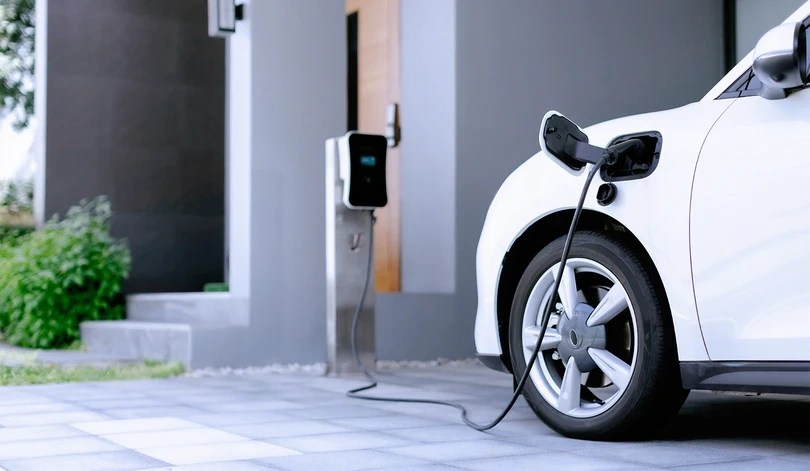
Understanding the different types of EV chargers is essential for selecting the right solution for residential use. EV chargers are generally categorized into three levels based on their charging speed, voltage requirements, and application scenarios.
Level 1 charging is the most basic form of EV charging and typically uses a standard household outlet (120 volts in the United States). Most electric vehicles come with a Level 1 charging cable, allowing users to plug directly into an existing outlet without additional installation.
While this option offers simplicity and minimal upfront cost, it is also the slowest charging method. Level 1 chargers typically provide a charging rate of 2 to 5 miles of driving range per hour. As a result, they are best suited for drivers with short daily commutes or those who can leave their vehicles plugged in for extended periods.
Although convenient as a backup solution, Level 1 charging may not meet the needs of drivers with higher mileage requirements.
Level 2 chargers are the most common choice for residential installations. These chargers operate on a 240-volt power supply, similar to large household appliances such as dryers or ovens. Installing a Level 2 charger usually requires professional electrical work, including the addition of a dedicated circuit.
Compared to Level 1 charging, Level 2 chargers offer significantly faster performance, typically delivering 10 to 60 miles of range per hour depending on the vehicle and charger specifications. This allows most EVs to be fully charged overnight, making them ideal for daily use.
Level 2 chargers strike a balance between cost, performance, and practicality. They are widely regarded as the optimal solution for homeowners seeking reliable and efficient charging.
Level 3 chargers, also known as DC fast chargers, provide the fastest charging speeds available. These systems can charge an EV battery to 80% capacity in as little as 20 to 40 minutes, depending on the vehicle.
However, due to their high power requirements and installation complexity, Level 3 chargers are not typically suitable for residential use. They are primarily deployed in commercial environments such as highways, service stations, and fleet depots.
While fast charging is valuable for long-distance travel or urgent charging needs, frequent use can contribute to increased battery wear over time. Therefore, it is generally recommended to rely on Level 1 or Level 2 charging for routine daily use.
Charging an EV at home provides a level of accessibility and control that public infrastructure cannot always guarantee. Home charging systems can be installed in various locations, including garages, exterior walls, carports, or standalone pedestals near driveways.
For fleet vehicles, depot charging may be available, but it often requires additional coordination and travel. Public charging stations, while increasingly common, may present challenges such as limited availability, queuing, and variable pricing.
In contrast, home charging offers a consistent and user-centric solution that aligns with modern lifestyles. The following sections explore the key benefits in detail.
Convenience is the most immediate and noticeable benefit of installing a home EV charger. Unlike traditional fueling or public charging, home charging allows EV owners to manage their energy needs effortlessly.
Drivers can simply plug in their vehicles at the end of the day and allow them to charge overnight. By morning, the vehicle is fully charged and ready for use. This eliminates the need for dedicated trips to charging stations and reduces downtime.
The process closely resembles charging everyday electronic devices, making it easy to integrate into daily routines. Over time, this convenience becomes a defining feature of EV ownership.
Additionally, home charging removes uncertainty. Drivers no longer need to worry about locating available chargers, dealing with out-of-service equipment, or waiting in line. This reliability enhances both efficiency and peace of mind.
One of the most compelling financial advantages of home charging is cost reduction. Public charging stations, particularly fast chargers, often charge significantly higher rates compared to residential electricity.
By charging at home, EV owners can benefit from lower utility rates. Many utility providers also offer time-of-use (TOU) pricing plans, which reduce electricity costs during off-peak hours—typically late at night or early in the morning.
Scheduling charging during these periods can result in substantial savings over time. For frequent drivers, the cumulative cost difference between home charging and public charging can be considerable.
Furthermore, home charging provides predictable energy expenses. Unlike public charging networks with fluctuating prices, residential electricity rates are generally stable and transparent.
Installing a home EV charger may also qualify homeowners for financial incentives. In the United States, federal tax credits have been available to offset a portion of the installation cost.
These incentives often cover up to 30% of the total cost, including equipment and installation expenses, with a maximum benefit per charging port. In addition to federal programs, state and local governments may offer rebates or grants to encourage EV adoption.
Utility companies frequently provide additional incentives, such as discounted electricity rates or rebates for installing energy-efficient charging equipment.
While specific policies and deadlines may vary, taking advantage of these programs can significantly reduce the initial investment required for home charging infrastructure.
Safety is a critical factor when dealing with high-power electrical equipment. Dedicated home EV chargers are designed to meet strict safety standards and provide reliable performance under continuous use.
Modern EV chargers include advanced safety features such as automatic shutoff, overcurrent protection, temperature monitoring, and ground fault detection. These features help prevent electrical hazards and ensure safe operation.
Professional installation further enhances safety by ensuring that the home’s electrical system can handle the additional load. This may involve upgrading the electrical panel or installing dedicated circuits to prevent overload.
Compared to using standard outlets or makeshift solutions, a properly installed EV charger provides a significantly safer and more efficient charging experience.
Installing an EV charger is a forward-looking investment that aligns with the rapid growth of electric mobility. As EV adoption continues to rise, homes equipped with charging infrastructure are becoming increasingly desirable.
A home EV charger not only meets current needs but also prepares homeowners for future developments in transportation technology. Many modern chargers feature smart capabilities, allowing them to receive software updates and remain compatible with evolving standards.
Additionally, properties with EV charging capabilities may see increased market value. As sustainability becomes a priority for buyers, homes with built-in charging solutions offer a competitive advantage.
Future-proofing your home with EV infrastructure ensures long-term relevance and adaptability in a changing automotive landscape.
Another key advantage of home charging is flexibility. Homeowners can choose the type of charger that best suits their driving habits, energy usage, and budget.
Level 1 chargers may be sufficient for low-mileage drivers, while Level 2 chargers provide faster and more efficient charging for daily use. The ability to upgrade systems over time adds further flexibility.
Smart chargers offer additional customization options, such as programmable charging schedules, energy monitoring, and integration with renewable energy sources. This allows users to optimize performance and reduce costs.
As technology evolves, homeowners can adapt their charging systems to meet changing needs, ensuring a scalable and future-ready solution.
While public charging infrastructure is expanding, it is not always reliable or convenient. Factors such as station availability, maintenance issues, and peak demand can affect the user experience.
Home charging reduces reliance on external networks, providing a dependable and always-available energy source. This independence is particularly valuable in areas with limited public charging options.
By charging at home, EV owners can avoid congestion and uncertainty, ensuring consistent access to energy whenever needed.
Battery performance is a key consideration for EV owners. Charging habits play an important role in maintaining battery health and extending lifespan.
Home charging, particularly at Level 2 speeds, provides a controlled and steady charging environment. This reduces thermal stress and minimizes wear compared to frequent use of high-speed DC fast chargers.
By prioritizing home charging and using fast charging only when necessary, EV owners can preserve battery efficiency and maximize long-term performance.
Modern home EV chargers are increasingly equipped with intelligent features that enhance usability and efficiency. These systems can be connected to mobile applications, allowing users to monitor and control charging remotely.
Features such as scheduling, energy tracking, and real-time notifications enable better energy management. Integration with smart home systems and renewable energy sources further enhances efficiency and sustainability.
For example, homeowners with solar panels can use excess renewable energy to charge their vehicles, reducing reliance on the grid and lowering overall energy costs.
Home EV charging contributes to environmental sustainability by supporting cleaner energy usage. Charging during off-peak hours helps balance grid demand and allows greater use of renewable energy sources.
When combined with renewable energy systems such as solar power, home charging can significantly reduce carbon emissions associated with transportation.
By enabling efficient and sustainable energy consumption, residential EV charging plays a vital role in reducing the environmental impact of personal mobility.
The adoption of electric vehicles represents a major step toward a more sustainable and efficient transportation system. However, the benefits of EV ownership are significantly enhanced when supported by reliable home charging infrastructure.
Installing a home EV charger offers numerous advantages, including unmatched convenience, lower operating costs, improved safety, and long-term adaptability. It reduces dependence on public charging networks while providing greater control over energy usage.
As the EV market continues to expand, home charging is becoming an essential component of modern living. For homeowners seeking to maximize the value of their EV investment, installing a dedicated charger is a practical, forward-thinking decision that delivers lasting benefits.