
As electric vehicles continue gaining popularity around the world, charging infrastructure has become one of the most important parts of the EV ecosystem. Among the many charging standards available today, the J1772 connector remains one of the most widely recognized and commonly used charging interfaces in North America. Also known as the SAE J1772 connector or simply the J-plug, this charging standard has played a critical role in helping electric vehicles become practical, reliable, and convenient for everyday drivers.
The J1772 connector is considered the standard Type 1 charging connector for most electric vehicles sold in the United States and Canada. Nearly all major automakers have adopted the SAE J1772 standard for Level 1 and Level 2 AC charging, making it one of the most universal charging solutions in the EV market. Although Tesla vehicles use a proprietary connector design in North America, Tesla owners can still utilize J1772 charging stations through the use of an adapter.
Understanding how the J1772 connector works, its safety features, charging capabilities, advantages, and limitations is essential for EV owners, charging station installers, fleet operators, and businesses investing in EV infrastructure. This article explores everything you need to know about the J1772 connector and why it remains a cornerstone of electric vehicle charging technology.
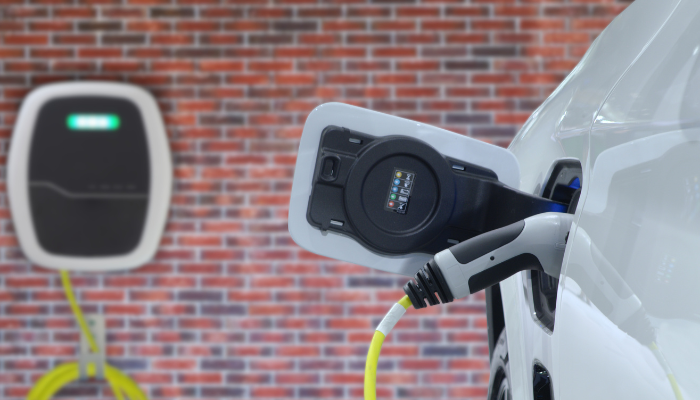
The J1772 connector is a standardized electric vehicle charging plug developed by the Society of Automotive Engineers (SAE). Officially referred to as SAE J1772, the connector was designed to create a universal charging interface for electric vehicles operating on AC power systems.
The connector supports both Level 1 and Level 2 charging, allowing EVs to charge from either a standard household outlet or a dedicated higher-voltage charging station. This versatility has made the J1772 standard highly practical for residential, commercial, and public charging applications.
The SAE J1772 standard was introduced to solve one of the early challenges facing the electric vehicle industry: charging compatibility. Before standardized charging connectors existed, different manufacturers used proprietary systems, making it difficult for drivers to access public charging infrastructure. The adoption of J1772 helped create interoperability across most EV brands, simplifying charging for consumers and encouraging infrastructure expansion.
Today, the J1772 connector is commonly found on:
- Public Level 2 charging stations
- Residential EV chargers
- Workplace charging systems
- Fleet charging facilities
- Parking garage charging stations
- Retail and hospitality charging locations
The standard has become an essential part of North America's EV charging network.
The development of the SAE J1772 standard reflects the rapid growth of the electric vehicle market over the past two decades.
Early electric vehicles used a variety of incompatible charging connectors, creating confusion and limiting charging accessibility. To address this issue, the Society of Automotive Engineers developed the J1772 specification to establish a unified charging standard.
The first version of SAE J1772 was introduced in the early 2000s. However, as EV technology advanced, the standard evolved to support higher charging speeds, enhanced communication features, and improved safety systems.
The modern J1772 connector became widely adopted after the release of popular electric vehicles such as the Nissan Leaf, Chevrolet Volt, BMW i3, and many plug-in hybrid models. Automakers recognized the importance of standardization and embraced the connector for AC charging compatibility.
Today, the SAE J1772 connector remains a critical component of North America's charging infrastructure, even as DC fast charging technologies continue to evolve.
One of the defining characteristics of the J1772 connector is its sophisticated 5-pin design. Each pin serves a specific purpose that contributes to safe and efficient charging operation.
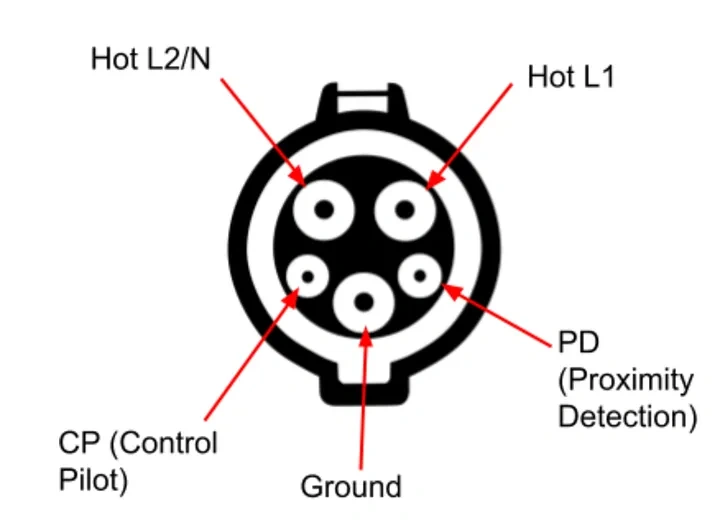
The two largest pins inside the connector carry the primary electrical current from the charging station to the vehicle's onboard charger. These pins deliver alternating current (AC) power required for battery charging.
The amount of power transferred depends on several factors, including:
- Charging station voltage
- Circuit amperage
- Vehicle charging capability
- Electrical infrastructure capacity
These power pins are engineered to handle significant electrical loads while maintaining safe thermal performance.
The ground pin provides critical electrical safety protection. It creates a grounding path that protects users and equipment from electric shock, power surges, or electrical faults.
Grounding is especially important in outdoor charging environments where moisture, temperature changes, and weather conditions may affect charging equipment.
The proximity pilot pin is a major safety feature within the J1772 system. It detects whether the connector is physically plugged into the vehicle.
Once connected, the vehicle recognizes the presence of the charging cable and prevents the car from moving while charging. This prevents accidental drive-offs that could damage charging equipment or create safety hazards.
The proximity pilot also helps the charging station determine when the connector latch is pressed, allowing charging to stop safely before unplugging.
The control pilot pin acts as the communication channel between the charging station and the vehicle.
This intelligent communication system allows the charger and vehicle to negotiate charging parameters such as:
- Maximum charging current
- Charging readiness
- Connection status
- Fault detection
- Safety monitoring
The control pilot ensures the vehicle only draws the amount of electricity the charging station can safely provide. This prevents overheating, overloaded circuits, and electrical hazards.
The communication system also enables smart charging functions and improves overall charging reliability.
Level 1 charging is the simplest and most accessible form of EV charging supported by the J1772 connector.
Level 1 charging uses a standard 120-volt household electrical outlet commonly found in homes across North America. Most EVs include a portable charging cable with a J1772 connector that plugs directly into a regular wall outlet.
This charging method requires no special installation, making it ideal for first-time EV owners or drivers with low daily mileage requirements.
Level 1 charging is relatively slow compared to other charging methods. Typical charging performance includes:
- 3 to 5 miles of range per hour
- Approximately 1.2 to 1.4 kW charging power
- Full recharge times of 24 to 48 hours for larger batteries
Although slow, Level 1 charging can still meet the needs of many drivers who travel short daily distances.
Level 1 charging offers several benefits:
Convenience
Drivers can charge their vehicles almost anywhere with a standard electrical outlet.
Low Installation Cost
No dedicated charging equipment or electrical upgrades are usually required.
Easy Accessibility
Portable chargers make EV ownership easier for apartment dwellers or temporary installations.
Reduced Electrical Demand
Level 1 charging places less strain on household electrical systems.
Despite its convenience, Level 1 charging has limitations:
- Very slow charging speed
- Not practical for long daily commutes
- Insufficient for commercial fleet operations
- Limited usefulness for large battery EVs
For many EV owners, Level 1 charging serves as a backup or supplemental charging solution.
Level 2 charging is the most common application for the J1772 connector and represents the preferred charging solution for most EV owners.
Level 2 charging uses a 240-volt electrical supply similar to the power used by large household appliances such as clothes dryers and ovens.
A dedicated Level 2 charging station delivers AC power to the vehicle through the J1772 connector, significantly increasing charging speed compared to Level 1 systems.
Level 2 charging provides much faster charging rates, including:
- 12 to 80 miles of range per hour
- Charging power from 3.3 kW to 19.2 kW
- Full overnight charging for most EVs
The actual charging speed depends on:
- Charger output capacity
- Vehicle onboard charger rating
- Electrical circuit amperage
- Battery condition
Home Level 2 charging has become increasingly popular because it offers convenience and practicality.
Benefits include:
- Overnight full charging
- Reduced dependence on public charging
- Improved daily driving flexibility
- Lower long-term charging costs
Many homeowners install dedicated Level 2 charging stations in garages or driveways to support regular EV use.
J1772 Level 2 chargers are widely used in public and commercial locations, including:
- Shopping centers
- Hotels
- Office buildings
- Airports
- Municipal parking facilities
- Universities
Public Level 2 charging stations help expand EV adoption by reducing range anxiety and improving charging accessibility.
Safety is one of the primary reasons the J1772 standard has achieved widespread acceptance.
The connector incorporates multiple protection systems designed to safeguard users, vehicles, and electrical infrastructure.
Electricity only flows when the connector is securely attached to the vehicle. This prevents accidental exposure to live electrical contacts.
The connector includes a mechanical latch that holds the plug firmly in place during charging. This reduces the risk of accidental disconnection.
The control pilot continuously monitors charging conditions and can stop charging immediately if abnormal conditions occur.
Most J1772 charging connectors are designed for outdoor operation and include protection against:
- Rain
- Dust
- Temperature fluctuations
- UV exposure
Ground fault detection systems help prevent electrical shock hazards by shutting down charging when faults are detected.
Some advanced charging stations include temperature sensors that reduce charging current or stop charging if overheating occurs.
These comprehensive safety systems make J1772 charging highly reliable for residential and public use.
One of the biggest advantages of the J1772 connector is its broad compatibility across the EV industry.
Most non-Tesla electric vehicles and plug-in hybrids sold in North America use the J1772 standard for AC charging.
Compatible brands include:
- Nissan
- Chevrolet
- Ford
- BMW
- Hyundai
- Kia
- Volkswagen
- Mercedes-Benz
- Audi
- Volvo
- Toyota
- Honda
- Subaru
- Rivian
- Lucid
Tesla vehicles can also use J1772 chargers through an adapter provided by Tesla.
This universal compatibility allows charging station operators to serve a wide range of EV models with a single charging connector type.
As EV technology advances, many drivers compare the J1772 connector with newer charging standards such as CCS (Combined Charging System).
J1772
- Supports AC charging only
- Used for Level 1 and Level 2 charging
- Widely available
- Lower installation costs
- Ideal for overnight and workplace charging
CCS
- Combines AC and DC charging capabilities
- Supports high-speed DC fast charging
- Enables rapid charging during long-distance travel
- Uses the J1772 upper section with two additional DC pins
Many modern EVs include CCS ports that remain compatible with standard J1772 charging stations for AC charging.
Tesla uses its own proprietary charging connector in North America, creating some differences compared to J1772 systems.
Tesla Connector Advantages
- Smaller physical size
- Supports AC and DC charging through one connector
- Access to Tesla Supercharger network
J1772 Advantages
- Industry-wide compatibility
- Extensive public charging availability
- Universal Level 2 infrastructure support
Tesla provides J1772 adapters that allow Tesla owners to use most public Level 2 charging stations.
Additionally, many charging station manufacturers now offer dual-connector systems supporting both J1772 and Tesla vehicles.
The J1772 connector is widely used across numerous charging applications.
Residential Charging
Home charging remains the most common use case for J1772 connectors. Drivers benefit from convenient overnight charging and lower electricity costs.
Workplace Charging
Employers increasingly install J1772 charging stations to support employee EV adoption and sustainability initiatives.
Fleet Charging
Commercial fleets use J1772 charging systems for:
- Delivery vehicles
- Municipal fleets
- Corporate transportation
- Utility vehicles
Hospitality and Retail
Hotels, restaurants, and shopping centers install J1772 chargers to attract EV-driving customers.
Public Infrastructure
Cities and governments continue expanding public Level 2 charging networks using J1772 connectors.
Installing a J1772 charging station involves several important considerations.
The property's electrical system must support the required charging load. Larger Level 2 chargers may require panel upgrades.
Dedicated breakers and proper wiring are essential for safe operation.
Outdoor installations require weatherproof equipment and appropriate environmental protection.
The charging cable should comfortably reach the vehicle's charging port.
Modern chargers may include:
- Wi-Fi connectivity
- Mobile app control
- Energy monitoring
- Scheduled charging
- Load balancing
These features improve convenience and energy management.
Although new charging technologies continue emerging, the J1772 connector will likely remain an important part of the EV ecosystem for many years.
Millions of vehicles and charging stations already rely on the standard, creating a massive installed infrastructure base.
Future developments may include:
- Smarter charging communication
- Enhanced energy management
- Vehicle-to-grid integration
- Renewable energy compatibility
- Improved charging efficiency
As EV adoption accelerates, J1772 charging systems will continue supporting daily charging needs for residential and commercial users.
Despite its success, the J1772 connector faces several industry challenges.
Rise of DC Fast Charging
Drivers increasingly demand faster charging speeds for long-distance travel. Since J1772 supports AC charging only, DC fast charging systems are gaining popularity.
Transition to NACS
Tesla's North American Charging Standard (NACS) is being adopted by several automakers, potentially reshaping future charging infrastructure.
Infrastructure Upgrades
Older charging stations may require upgrades to support modern EV charging demands.
Grid Capacity Concerns
Growing EV adoption places increased pressure on electrical infrastructure, requiring smart energy management solutions.
Even with these challenges, J1772 remains highly relevant for everyday AC charging applications.
The widespread success of the J1772 standard is driven by several important advantages.
Universal Compatibility
Drivers can access charging stations across multiple networks and locations.
Proven Reliability
Years of industry use have demonstrated dependable performance and safety.
Flexible Charging Options
Support for both Level 1 and Level 2 charging provides versatility for various applications.
Strong Safety Design
Integrated communication and protection systems ensure secure charging operation.
Cost-Effective Infrastructure
AC charging stations are generally less expensive to install and maintain than DC fast chargers.
Convenience
The connector's ergonomic design makes plugging and unplugging easy for daily use.
The J1772 connector has become one of the foundational technologies supporting electric vehicle adoption across North America. Its universal compatibility, strong safety features, flexible charging capabilities, and reliable performance have made it the standard solution for Level 1 and Level 2 EV charging.
From residential garages and workplace parking lots to public charging networks and commercial fleet operations, the J1772 connector continues to serve millions of EV drivers every day. Its intelligent 5-pin design ensures safe communication between the vehicle and charging station while delivering efficient power transfer for convenient charging.
Although newer technologies such as CCS and NACS are shaping the future of EV charging, the SAE J1772 connector remains an essential part of today's charging infrastructure. As electric mobility continues expanding worldwide, J1772 charging systems will continue playing a major role in supporting clean transportation and sustainable energy solutions.
For EV owners, businesses, and infrastructure providers, understanding the J1772 connector is essential for navigating the rapidly evolving electric vehicle industry.
