
As electric vehicles (EVs) continue to reshape global transportation, charging technology is evolving just as rapidly to meet growing energy demands. Among the available charging levels—Level 1, Level 2, and Level 3—it is Level 3 EV charging that stands at the forefront of high-speed, long-distance electric mobility. Known widely as DC fast charging, Level 3 technology represents the fastest, most powerful, and most transformative evolution in EV infrastructure. It bridges the gap between convenience and practicality, making electric travel over long distances achievable within short stopping times.
This industry news feature explores the principles behind Level 3 EV charging, its technical characteristics, charging capabilities, infrastructure requirements, compatibility considerations, and the global trends driving its rapid deployment. With the expansion of electric mobility, Level 3 chargers are becoming essential pillars supporting the transition to a cleaner and more electrified transportation ecosystem.
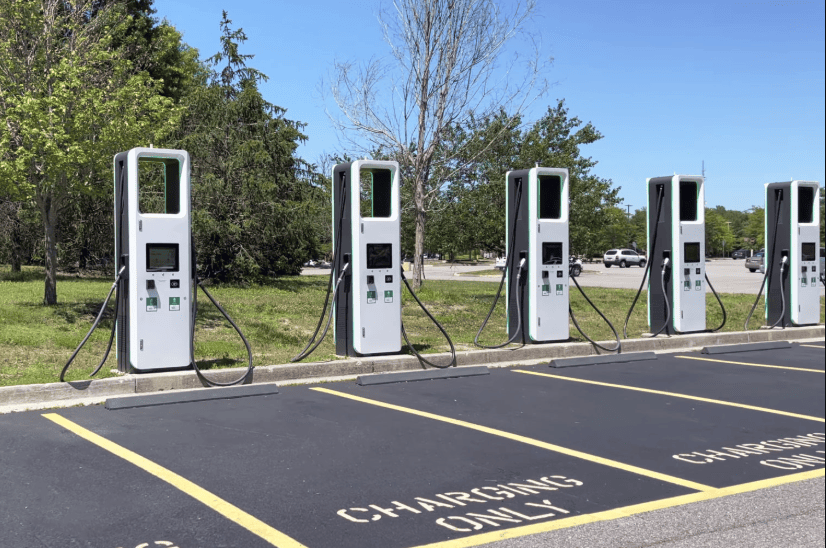
Level 3 EV charging—commonly referred to as DC fast charging or DCFC—is the highest-powered method currently available for charging electric vehicles. Unlike Level 1 and Level 2 charging, which use alternating current (AC), Level 3 chargers supply direct current (DC) directly to the vehicle's battery. This bypasses the onboard charger, enabling much higher charging power and dramatically faster charging times.
Where a Level 1 charger provides 1–1.8 kW and a Level 2 charger offers 7–19 kW, Level 3 chargers deliver anywhere from 50 kW up to 350 kW, with emerging models exceeding the 400 kW threshold. This enables EV drivers to add significant driving range in just minutes.
- Charging power: 50 kW to 350 kW (and growing)
- Voltage: Typically 400V or 800V, with future systems reaching 1,000V
- Charging time: Approximately 100–250 miles of range in 30–45 minutes
- Locations: Commercial, public, and high-traffic highway corridors
- Use case: Long-distance travel and rapid fleet turnaround
At its core, Level 3 EV charging is designed for speed, convenience, and long-range mobility—far beyond what residential charging infrastructure can support.
The fundamental difference between Level 3 charging and the lower levels lies in how the electrical current is delivered to the vehicle. Level 1 and Level 2 chargers provide AC power, which is converted by the car's onboard charger into DC power to store in the battery. The onboard charger has limited capacity, typically between 6 kW and 11 kW.
Level 3 chargers, on the other hand:
- Convert AC to DC within the charging station itself,
- Deliver the DC power straight to the battery,
Completely bypass the vehicle's onboard charger.
This process requires larger conductors, advanced cooling systems, and dedicated electrical infrastructure, which is why these chargers are not suitable for home use.
Most residential areas are equipped with single-phase electrical service and limited capacity. Level 3 chargers require:
- Three-phase commercial power
- High-voltage lines (400–800V)
- Large transformers
- Dedicated electrical rooms or equipment pads
- Significant permitting and safety systems
Installing a Level 3 charger typically costs between $40,000 to more than $250,000, depending on capacity and site conditions. The required power infrastructure simply does not exist in typical homes, making DC fast charging strictly a commercial and public service.
Level 3 chargers are exceptionally powerful, but several technical and practical factors determine how fast an EV will actually charge.
DC fast chargers come in many output capacities, including:
- 50 kW (older or smaller stations)
- 120–150 kW (standard modern DC fast charging)
- 200–350 kW (ultra-fast, suitable for next-generation EVs)
Higher-output chargers reduce charging times significantly—provided the vehicle can accept the power.
The maximum charging rate is always limited by the vehicle's onboard battery system. For example:
- If an EV is capable of a maximum DC charging rate of 50 kW, it will not charge faster even when connected to a 350 kW charger.
- High-performance EVs with 800V architecture may reach charging speeds of 250 kW to 350 kW.
Charging slows dramatically after reaching approximately 80% SOC to protect the battery. The difference is so significant that:
- Charging from 10% to 80% may take 20–30 minutes,
- While charging from 80% to 100% may take an additional 20–30 minutes.
For long-distance travel, stopping between 10–80% is usually most efficient.
Batteries charge best at moderate temperatures. EVs often use thermal management systems to heat or cool the battery before fast charging.
Temperature extremes can impact charging speed:
- Cold weather slows DC charging rates significantly.
- Hot conditions can also limit charging to protect the battery system.
Level 3 charging infrastructure is primarily deployed in areas with high traffic and strategic travel importance. Typical locations include:
Providing rapid refueling options for:
- Road trips
- Long-haul travel
- Regional commuting
These stations often resemble fuel stations, allowing quick stops for high-mileage drivers.
Many gasoline retailers are transitioning or integrating EV fast-charging infrastructure. DC fast chargers allow fuel stations to stay relevant in the evolving transportation industry.
Commercial fleets benefit greatly from Level 3 chargers, especially:
- Delivery services
- Ride-hailing operations
- Municipal fleets
- Logistics companies
Fast charging reduces downtime and improves fleet efficiency.
Urban centers, shopping malls, airports, and commercial parking areas often feature DC fast chargers to serve EV drivers who cannot charge at home.
Several DC fast charging connector standards exist globally. The three most common are:
Widely used in North America and Europe, compatible with most EVs from major automakers.
Developed in Japan; used by brands like Nissan and Mitsubishi but gradually declining in global adoption.
Tesla's proprietary system, now increasingly open to non-Tesla EVs through the North American Charging Standard (NACS).
Connector compatibility remains an important consideration when expanding Level 3 infrastructure and planning long-distance travel.
The real-world charging time depends on multiple factors:
- Battery size
- Maximum charging rate
- Power level of the charger
- Temperature conditions
- Current battery SOC
Typical time ranges:
- High-power 250–350 kW chargers: ~15–25 minutes for 10–80%
- 120–150 kW chargers: ~25–45 minutes for 10–80%
- 50 kW chargers: ~45–60 minutes for 10–80%
Though not as fast as gasoline refueling, Level 3 charging is designed to minimize waiting time for drivers during long trips.
The rapid expansion of EV adoption is pushing governments, utilities, and private companies to invest heavily in high-speed charging networks. Several trends are shaping the direction of Level 3 infrastructure:
Charging companies are racing to deploy 350 kW+ chargers that support next-generation EVs capable of ultra-fast charging.
A developing standard aimed at heavy-duty electric trucks, expected to deliver up to 1 MW or more.
Solar-powered charging hubs and battery energy storage systems (BESS) are becoming more common to reduce grid strain.
Many countries offer subsidies, grants, and tax incentives for the installation of DC fast chargers, accelerating deployment.
Roaming agreements allow drivers to use multiple networks with unified payment systems.
Tesla's NACS is becoming a dominant connector standard in North America, increasing compatibility across EV brands.
Faster charging and broader network coverage make long-distance travel more practical and predictable.
Consumers are more likely to switch to EVs when convenient fast-charging options are available.
Fuel stations, retailers, and municipalities can generate new revenue streams from EV charging services.
Fast charging enables higher operational efficiency and lower carbon emissions for commercial fleets.
Despite its many advantages, Level 3 charging infrastructure has several challenges to overcome.
DC fast chargers cost 10–20 times more than Level 2 chargers, requiring:
- Complex utility work
- Transformers
- Grid upgrades
- Permitting and inspections
High-power chargers significantly increase grid load, especially during peak hours.
Advanced cooling systems, electronics, and heavy-duty cables require routine maintenance to ensure reliability.
Not all EVs can benefit from ultra-fast charging, especially older or budget models with lower DC charging capacities.
Although standardization efforts are progressing, connector differences still affect accessibility in some regions.
The next decade is expected to bring dramatic improvements in fast-charging technology:
Increasing numbers of EVs will use 800V or even 1,000V battery systems, enabling faster charging speeds.
Electric trucks and buses will soon rely on extremely high-power charging stations capable of 1,000 kW or more.
AI-driven systems will optimize power distribution, reduce waiting times, and improve efficiency.
Energy storage, solar generation, and smart grid management will reduce strain on power networks.
Level 3 EV charging represents the cutting edge of electric mobility—delivering fast, efficient, and powerful charging capabilities that make long-distance travel possible for EV drivers. As more charging stations are deployed along highways, commercial locations, and urban centers, the EV experience becomes increasingly seamless and convenient. While Level 3 charging comes with infrastructure challenges and limitations based on vehicle design, ongoing technological innovation and widespread investment are rapidly advancing its capabilities.
The road to widespread EV adoption relies heavily on scalable, reliable fast-charging networks. With Level 3 chargers continuing to expand worldwide, the future of electric transportation looks faster, more accessible, and more sustainable than ever before.
