
As the global shift toward electrified transportation accelerates, the infrastructure that supports electric vehicle (EV) adoption is evolving just as rapidly. Among the many charging standards used around the world, the Type 2 EV charger has emerged as one of the most influential and widely adopted connectors—especially across Europe, where regulators, automakers, and charging network operators have aligned around it as the default standard. Now, as electric mobility expands into new regions and markets, the Type 2 connector is gaining momentum well beyond its original borders.
This industry news report examines the growing prominence of Type 2 EV chargers, their technical foundations, the developments shaping their expansion, and the role they play in the broader EV charging ecosystem. As global electrification strategies mature, understanding the advantages and capabilities of the Type 2 standard has become essential for policymakers, charging solution providers, automakers, and end users alike.
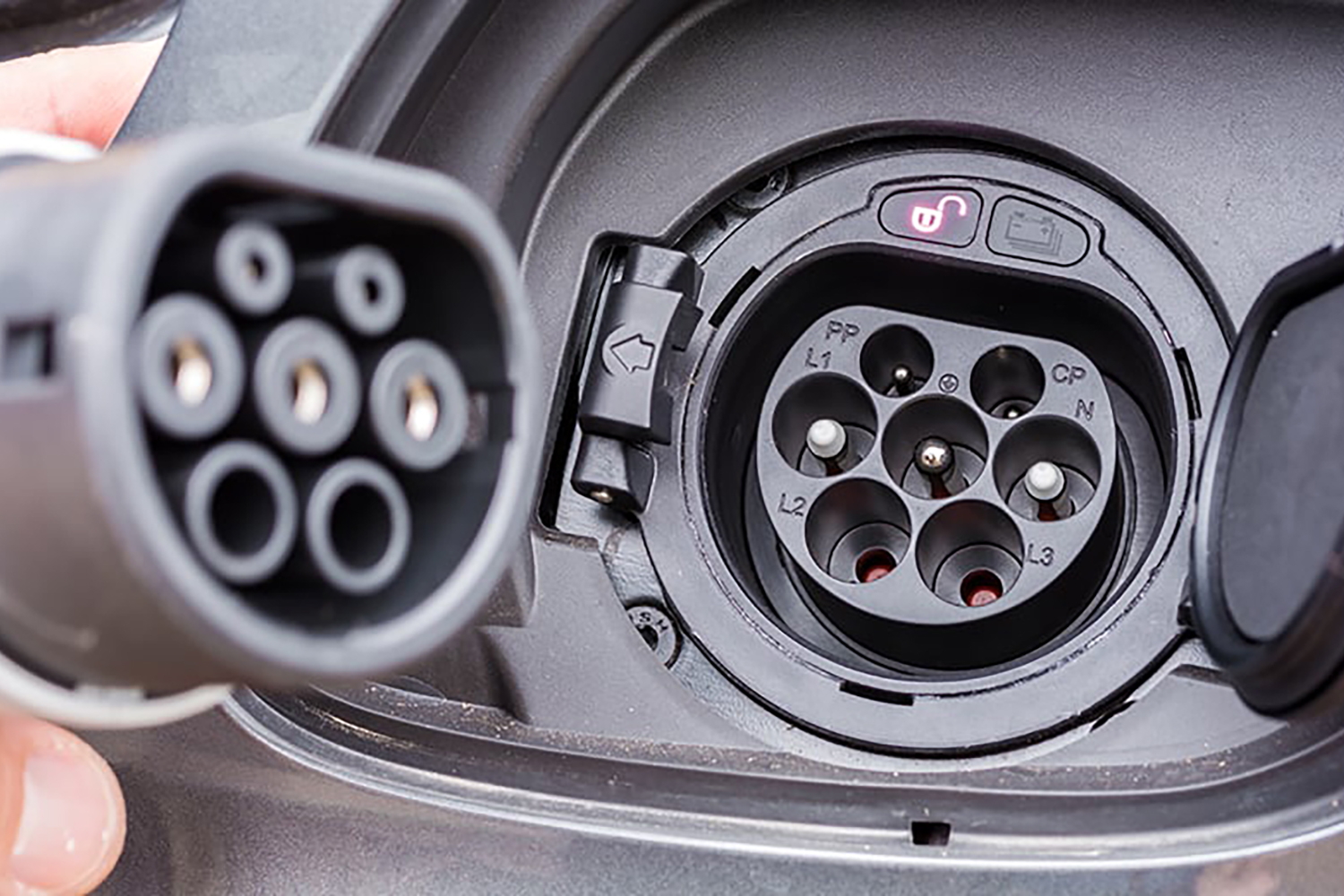
The Type 2 EV charger—sometimes referred to as the Mennekes connector—is the dominant AC charging interface used across Europe. Recognizable by its seven-pin design, the connector was developed to support both single-phase and three-phase AC charging, making it extremely flexible for different types of charging applications and energy environments.
The European Union officially endorsed the Type 2 plug as the standard for public AC charging stations under the IEC 62196-2 specification. As a result, virtually all EVs sold in Europe today are equipped with a Type 2 inlet for AC charging. The connector also plays a critical role in DC fast charging systems, where it forms the upper portion of the Combined Charging System (CCS2)—a global standard that pairs the Type 2 AC interface with two additional high-power DC pins.
In addition to its widespread use in Europe, the Type 2 standard is steadily gaining traction in Asia-Pacific, the Middle East, and parts of South America, driven by global automakers that manufacture vehicles with Type 2 ports and by the worldwide expansion of CCS2 fast charging networks.
The push for unified charging standards has become increasingly important as EV adoption accelerates. With millions of new EVs expected on the roads each year, compatibility between charging stations and vehicles is essential to ensure reliability, convenience, and cost-effective infrastructure development.
The Type 2 connector offers several key advantages:
By harmonizing the AC charging interface, the EU eliminated the confusion and incompatibility issues that plagued early EV charging networks. This standardization allows drivers to move seamlessly across borders and charge at any public station equipped with Type 2 outlets.
Although the AC port alone does not directly handle high-power DC, the Type 2 interface is the foundation for CCS2, enabling up to 350kW DC charging at high-power networks across Europe.
Type 2 chargers support:
- Single-phase AC – common in private homes
- Three-phase AC – widely used in commercial and industrial environments
This versatility makes Type 2 a practical choice for home charging, workplace charging, fleet depots, and public infrastructure.
As energy management becomes increasingly important, Type 2 chargers are frequently integrated with:
- smart metering
- load balancing systems
- renewable energy inputs
- vehicle-to-grid (V2G) pilot programs
Although the Type 2 plug appears simple at first glance, it incorporates sophisticated engineering designed to support a wide range of charging scenarios.
Type 2 chargers excel in AC charging applications, which form the backbone of everyday EV use. AC charging is the most common method for residential and workplace installations, offering stable and cost-effective energy transfer.
Type 2 AC chargers typically deliver:
- 3.7 kW – basic residential charging
- 7.4 kW – faster single-phase home charging
- 11 kW – standard three-phase charging
- 22 kW – high-speed AC charging
The charging rate depends on:
- the power rating of the charger
- the power system available at the building
- the vehicle's onboard AC charger capacity (which varies by model)
Most EVs today support 7.4 kW–11 kW AC charging, though some premium models support 22 kW AC.
Type 2 AC systems typically operate at:
- 230V single-phase
- 400V three-phase
with current ratings:
- 16A
- 32A
Higher amperage enables faster charging, provided the infrastructure and vehicle can support it.
While Type 2 itself is designed for AC, its integration into the CCS2 connector makes it a critical part of the modern DC fast charging landscape.
CCS2 fast chargers can deliver:
- 50 kW – standard DC fast charging
- 100–150 kW – highway corridor chargers
- 250–350 kW – ultra-fast public chargers
This ability to scale from AC to high-power DC gives Type 2/CCS2 a major competitive advantage over standards such as CHAdeMO, which is now being phased out in many markets.
CCS2 chargers include:
- active communication between charger and vehicle
- thermal monitoring
- real-time current regulation
- automatic shutdown in case of anomaly
These systems ensure safe delivery of high-power DC charging, even under demanding conditions.
Although the Type 2 standard originated in Europe, its influence is rapidly expanding across international markets as more automakers adopt Type 2-compatible systems.
Countries such as Australia, New Zealand, Singapore, and Thailand widely use Type 2 connectors for AC charging. China primarily uses GB/T connectors for domestic vehicles, but imported EVs with Type 2 ports are becoming more common—especially among luxury brands like Tesla, Mercedes-Benz, and BMW.
With increasing investments in sustainable transportation, Type 2 chargers are becoming the preferred choice in:
- UAE
- Saudi Arabia
- Qatar
- South Africa
Regional governments are encouraging Type 2 installation to ensure compatibility with European EV imports.
Markets such as Chile, Brazil, and Argentina have adopted Type 2 chargers to align with global EV brands and to support the rollout of CCS2 charging networks.
North America traditionally uses the Type 1 (J1772) connector for AC charging. However, the rising popularity of European-designed EVs and the increasing use of CCS1/CCS2 fast chargers have pushed some charging operators to incorporate Type 2 options into selected sites, especially in Canada.
While the U.S. market is shifting to the North American Charging Standard (NACS), Type 2 remains essential for supporting imported EVs.
Several major trends are accelerating the adoption and evolution of the Type 2 standard worldwide:
European policymakers mandated Type 2 compatibility for all public AC charging infrastructure. This decision catalyzed large-scale deployment across member states and simplified cross-border EV travel.
Other regions are now moving toward similar standardization to avoid fragmentation.
The expansion of high-power DC fast charging networks—offering 150kW to 350kW—has strengthened the role of CCS2, which uses Type 2 as its AC interface.
Networks such as:
- IONITY (Europe)
- Fastned
- BP Pulse
- Shell Recharge
- Allego
have built thousands of CCS2-compatible stations globally.
With more EV owners charging at home, the market for Type 2 AC wallbox chargers has grown significantly. Home units often offer 7.4kW to 11kW charging, allowing EV drivers to fully recharge overnight.
Key trends include:
- smart home energy management
- solar-compatible chargers
- app-controlled charging
- demand-response integration
Logistics companies, delivery services, taxi operators, and corporate fleets increasingly rely on Type 2 AC chargers for depot charging thanks to:
- low installation cost
- predictable overnight charging
- compatibility with most commercial EVs
Type 2 AC chargers pair well with renewable energy sources such as solar PV systems, especially in residential and commercial applications.
Many modern wallboxes support:
- solar-priority charging
- energy storage integration
- intelligent load balancing
To appreciate the Type 2 standard's versatility, it is useful to break down its engineering design.
The pins serve the following purposes:
- Three power pins for AC line connections
- Two communication pins for data and control
- One earth pin for grounding
- One proximity pin to detect the plug status
This arrangement ensures secure and reliable charging performance.
Type 2 chargers feature multiple safety layers:
- locking mechanisms to prevent accidental unplugging
- temperature sensors
- real-time communication with the EV
- insulation monitoring
- overvoltage and overcurrent protection
These features ensure that charging sessions remain safe in residential, commercial, and public settings.
The design of the Type 2 charger allows it to serve diverse roles in modern EV infrastructure.
Type 2 wallboxes are the most common home charging solution in Europe and many other markets. Benefits include:
- safe and controlled home charging
- ability to charge overnight
- integration with smart home systems
Businesses use Type 2 AC chargers to:
- support employee EV adoption
- reduce fleet operating costs
- achieve sustainability targets
Shopping malls, hotels, stadiums, and airports install Type 2 chargers to:
- enhance customer convenience
- attract EV drivers
- support long-duration parking
Public networks use high-power AC Type 2 chargers (up to 22kW) to support EV drivers who need top-up charging during daily activities.
In DC fast charging installations, Type 2 forms part of the CCS2 connector, enabling charging speeds suitable for long-distance travel.
Despite its widespread use, the Type 2 standard faces some challenges:
As regions such as North America shift to new charging standards like NACS, global compatibility becomes more complex.
Some EV models cannot take advantage of higher AC charging rates (e.g., 22kW) because their onboard chargers are limited to 7.4kW or 11kW.
Three-phase power may not be available in older buildings or certain regions, limiting AC charging speed.
As electric mobility continues to expand, the future of Type 2 charging looks highly promising. Key developments include:
More countries are adopting Type 2 and CCS2 to align with global automakers and high-power charging networks.
Software-driven charging features—AI-based load management, renewable integration, real-time pricing—will play a larger role.
Type 2-compatible systems may eventually support bidirectional energy flow as V2G technology matures.
The industry is moving toward unified roaming platforms, allowing EV drivers to use Type 2 chargers across multiple networks without separate accounts or apps.
The Type 2 EV charger has become one of the most important elements of the global EV charging ecosystem. Its combination of versatility, safety, scalability, and compatibility has made it the backbone of Europe's charging infrastructure and an increasingly popular standard worldwide.
As more countries adopt EVs and build out their charging networks, the Type 2 standard—especially when paired with CCS2—will continue to play a pivotal role in shaping the future of electric mobility. Whether used for residential charging, commercial facilities, public top-up stations, or high-power DC fast charging, the Type 2 charger remains a critical technology driving the transition to cleaner, more sustainable transportation.