
As electric vehicles continue to gain popularity worldwide, the demand for reliable and efficient charging infrastructure is growing rapidly. Whether for private drivers, fleet operators, apartment complexes, workplaces, or public charging networks, understanding the difference between AC and DC car chargers has become increasingly important. For many EV owners, choosing the right charging method directly affects convenience, charging costs, battery health, and daily driving efficiency.
The two main charging methods for electric vehicles are AC charging and DC charging. While both serve the same purpose—replenishing the battery of an electric vehicle—they operate differently and are designed for different applications. AC chargers are widely used in homes and offices for regular daily charging, while DC chargers are favored in commercial and public environments where speed is essential.
Knowing how these systems work can help consumers make smarter purchasing decisions, assist businesses in selecting suitable charging solutions, and support governments planning future transportation infrastructure. This article explores the key differences between AC and DC car chargers, their working principles, benefits, limitations, and ideal use cases.
AC car chargers use alternating current supplied from the electrical grid to charge electric vehicles. Since most power grids deliver electricity in AC form, AC charging is the most common and accessible charging method globally.
However, EV batteries store energy as direct current. This means that when an EV is connected to an AC charger, the alternating current must first be converted into DC power before it can be stored in the battery. This conversion is handled by the vehicle's onboard charger.
Because the conversion equipment is inside the vehicle rather than inside the charging station, AC chargers are generally simpler, smaller, and more affordable than DC chargers.
AC chargers are commonly categorized into:
Level 1 charging uses a standard household outlet, typically 110V or 120V in some regions. It is the slowest charging option and is mainly suitable for overnight charging or drivers with short daily commutes.
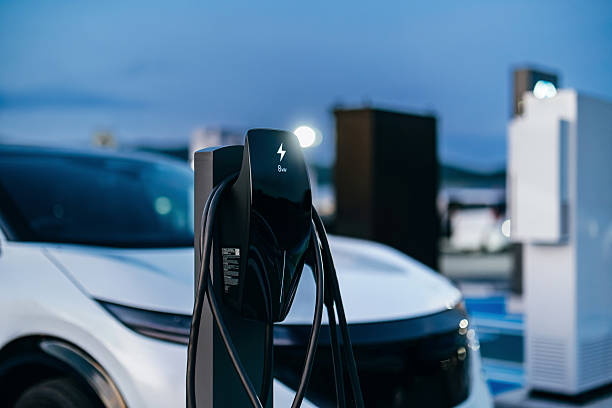
Level 2 charging uses a higher voltage supply, usually 208V to 240V. It provides much faster charging speeds than Level 1 and is commonly installed in homes, offices, apartment buildings, and parking facilities.
- Private homes
- Residential garages
- Apartment complexes
- Offices
- Hotels
- Shopping centers
- Long-term parking lots
Because EVs often remain parked for several hours, AC charging is highly practical for everyday use.
DC car chargers use direct current to charge EV batteries directly. Unlike AC chargers, DC chargers perform the AC-to-DC conversion inside the charging station itself. As a result, electricity bypasses the vehicle's onboard charger and flows straight into the battery pack.
This significantly increases charging speed, making DC chargers the preferred solution where rapid charging is required.
DC chargers are often referred to as:
- Level 3 chargers
- Fast chargers
- Rapid chargers
- Ultra-fast chargers
- 30 kW
- 50 kW
- 60 kW
- 120 kW
- 150 kW
- 180 kW
- 240 kW
- 350 kW and above
- Highway service stations
- Public fast-charging hubs
- Fleet depots
- Urban charging plazas
- Commercial parking lots
- Transit stations
- Remote charging sites
DC charging is particularly valuable for long-distance travel, rideshare fleets, taxis, delivery vehicles, and commercial EV operations.
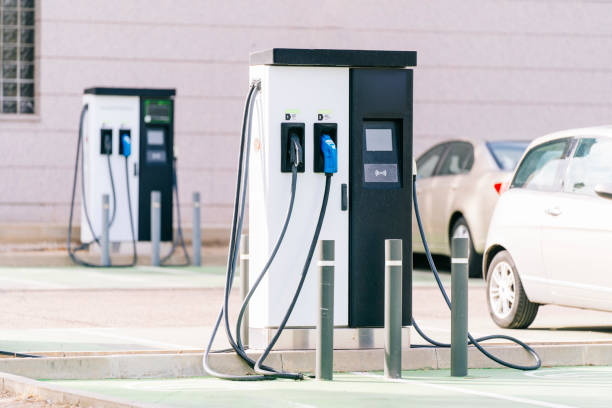
When an EV is connected to an AC charger, the charger safely delivers alternating current to the vehicle. The onboard charger then converts this AC power into DC power suitable for battery storage.
Charging speed depends on several factors:
- Charger output power
- Vehicle onboard charger capacity
- Battery size
- State of charge
- Temperature conditions
- Grid power availability
For example, even if a charging station offers 22 kW AC charging, a vehicle with a 7 kW onboard charger can only accept 7 kW.
This means onboard charger size is one of the main limitations of AC charging.
With DC charging, power conversion happens inside the charger itself. The station converts AC grid power into direct current before sending it directly to the battery.
Because the vehicle's onboard charger is bypassed, charging speeds are much higher. Many modern EVs can charge from 10% to 80% in around 20 to 40 minutes under ideal conditions.
DC charging performance depends on:
- Charger power rating
- Battery voltage architecture
- Battery temperature
- Battery management system
- Charging curve design
- Connector standard compatibility
Advanced EVs with 800V battery platforms can take better advantage of high-power DC chargers.
The most obvious difference is charging speed.
AC Chargers
Typical power range:
2 kW to 22 kW
Charging time:
Several hours to overnight
DC Chargers
Typical power range:
30 kW to 350+ kW
Charging time:
15 minutes to 1 hour depending on vehicle
For drivers who need quick turnaround, DC charging is the clear winner.
AC Chargers
AC chargers are less expensive to purchase and install. Residential wall chargers usually require modest electrical upgrades.
DC Chargers
DC chargers are significantly more expensive because they include:
- Internal power conversion systems
- Cooling systems
- Heavy-duty components
- Advanced communication hardware
- Grid upgrades or transformers
Commercial DC charging projects can involve substantial infrastructure costs.
AC Charging Best For:
- Homes
- Workplaces
- Hotels
- Apartments
- Long-duration parking
DC Charging Best For:
- Public highways
- Retail fast charging
- Fleet depots
- Urban quick-charge hubs
- Emergency top-up charging
Frequent high-speed charging generates more heat than slower charging. While modern EV batteries are engineered to handle DC fast charging, repeated exclusive use may increase long-term battery wear compared with balanced charging habits.
AC charging is generally considered gentler because it occurs at lower power levels and lower temperatures.
Many experts recommend:
- Use AC charging for daily needs
- Use DC charging when speed is necessary
AC Chargers
Usually compact wall-mounted units or pedestal chargers.
DC Chargers
Larger freestanding cabinets with integrated electronics, cooling systems, displays, and heavy charging cables.
AC Chargers
Often compatible with standard building electrical systems.
DC Chargers
May require:
- Three-phase industrial power
- Utility approval
- Dedicated transformers
- Energy management systems
Affordable and Accessible
AC chargers are the most economical solution for EV owners and property managers.
Ideal for Overnight Charging
Most private vehicles are parked for many hours each day, making slower charging practical.
Better for Routine Charging
Daily charging at moderate speeds supports convenient battery replenishment.
Easier Installation
Residential and commercial AC chargers generally require less complex electrical work than DC stations.
Lower Grid Stress
Because charging loads are smaller, AC charging often places less demand on local electrical infrastructure.
Slower Charging Speed
Not suitable when immediate charging is needed.
Dependent on Onboard Charger
Vehicle charging speed may be limited by onboard hardware.
Less Suitable for High-Mileage Fleets
Commercial fleets needing rapid turnaround may find AC charging insufficient.
Extremely Fast Charging
Major benefit for drivers who need quick recharging during travel.
Supports Long-Distance Mobility
Fast highway charging expands EV practicality for road trips.
Excellent for Commercial Fleets
Delivery vans, taxis, buses, and logistics vehicles benefit from reduced downtime.
High Power Scalability
Modern stations can deliver increasingly higher charging capacities.
Revenue Opportunities
Businesses can attract traffic and monetize charging services.
Higher Equipment Cost
Hardware and installation costs are much higher.
More Complex Maintenance
Cooling systems, power electronics, and communication modules require service.
Grid Capacity Challenges
High-power chargers may strain local infrastructure without upgrades.
Potential Battery Stress
Frequent ultra-fast charging may increase battery heat and degradation over time.
For nearly all homeowners, AC charging is the best choice.
Reasons include:
- Lower purchase cost
- Easier installation
- Safe overnight charging
- Sufficient for daily commuting
- Lower electricity demand
A Level 2 AC charger is often the preferred residential solution.
DC chargers are rarely practical for homes due to cost, power requirements, and installation complexity.
The answer depends on the business model.
AC Chargers for Businesses
Best for:
- Office buildings
- Hotels
- Apartments
- Long-stay parking
DC Chargers for Businesses
Best for:
- Fuel stations
- Retail centers
- Highway stops
- Fleet depots
- Quick-service charging hubs
Some commercial sites combine both AC and DC chargers to serve multiple user needs.
Different regions use different connector types.
Common AC Connectors
Type 1
Type 2
Common DC Connectors
CCS1
CCS2
CHAdeMO
GB/T
NACS (in some markets)
Compatibility between vehicle and charger is essential when planning infrastructure.
Modern AC and DC chargers increasingly include smart functions such as:
- Mobile app control
- RFID authentication
- Load balancing
- Dynamic power management
- Remote monitoring
- Billing integration
- OCPP networking
- Energy analytics
These features improve user experience and optimize electricity usage.
The EV charging industry continues evolving rapidly.
Faster DC Charging
Ultra-fast chargers exceeding 350 kW are expanding.
Bidirectional AC Charging
Vehicle-to-home and vehicle-to-grid systems may grow through AC platforms.
Renewable Integration
Solar-powered charging systems and battery storage are becoming more common.
AI Load Management
Smart charging networks will balance demand dynamically.
Expanded Urban Infrastructure
Cities are adding mixed AC/DC charging networks for convenience.
Consider these factors:
Choose AC Charging If You:
- Charge mainly at home
- Drive moderate daily distances
- Want lower cost charging
- Park overnight regularly
Choose DC Charging If You:
- Frequently travel long distances
- Need fast top-ups
- Operate commercial fleets
- Have limited charging time
For many EV owners, the ideal strategy is using both: AC charging for daily life and DC charging when traveling.
AC and DC charging are not competitors—they are complementary systems. A successful EV ecosystem requires both.
AC chargers provide the foundation for affordable daily charging at homes and workplaces.
DC chargers provide speed, convenience, and confidence for public mobility and commercial transportation.
Together, they create a complete charging network that supports broader EV adoption.
Understanding the differences between AC and DC car chargers is essential as electric mobility becomes mainstream. AC chargers are affordable, practical, and ideal for routine charging at homes and workplaces. They offer a convenient solution for overnight or long-duration parking.
DC chargers, on the other hand, deliver rapid charging speeds that make long-distance travel and commercial fleet operation more efficient. Their higher installation costs are justified in locations where quick turnaround is critical.
Rather than choosing one technology over the other, the most effective EV charging strategy uses both. AC charging supports daily life, while DC charging enables flexibility and speed on demand.
As battery technology, smart energy systems, and charging infrastructure continue to improve, both AC and DC chargers will play vital roles in the future of transportation.
