
In the unfolding story of electric vehicles (EVs), one of the most talked-about developments of the past year is the emergence of 5-minute charging technology — systems and batteries that could recharge an EV to a road-ready level in roughly the same time it takes to fill a conventional gasoline tank. What was once a distant dream for the auto industry is increasingly becoming a tangible reality, with innovations from major Chinese automaker BYD and cutting-edge battery developers signaling a seismic shift in EV technology.
But the implications go far beyond mere convenience. If deployed at scale, 5-minute charging could reshape consumer behavior, supercharge EV adoption, alleviate "range anxiety," and spark new competition in the global auto market. This article examines the science behind the breakthrough, the early commercial paths, infrastructure challenges, industry responses, and what's next for ultra-fast EV charging.
At the heart of any EV's performance is its battery technology — and charging speed has traditionally been one of the biggest limitations of electric mobility. For years, drivers have grown accustomed to waiting 20, 30, or even 60 minutes at fast chargers for a significant fill-up. In contrast, gasoline cars typically refuel in under five minutes, a benchmark that EV engineers long sought to match.
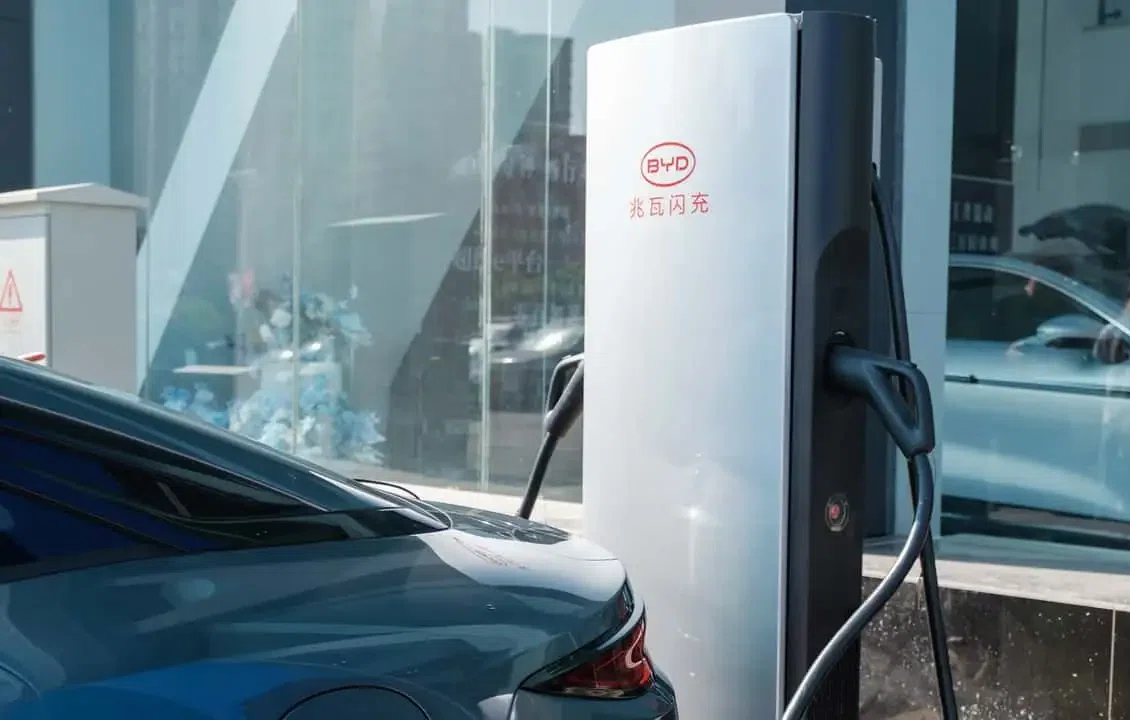
A pivotal moment came in early 2025, when BYD — already one of the world's largest EV manufacturers — unveiled a new charging platform that could deliver up to 1,000 kilowatts (1 megawatt) of power and add hundreds of kilometers of driving range in just minutes.
BYD's so-called Super e-Platform integrates a high-voltage battery architecture with a specialized "flash charging" battery capable of accepting massive charging currents. With this system, compatible EVs can absorb enough energy for approximately 400 kilometers (248 miles) of range in about five minutes of charging — a transformative milestone that echoes the convenience of a gas-pump stop.
Although BYD's advancement has stolen headlines, it's not the only contender. In early 2026, battery startup Donut Lab and others announced a production-ready solid-state battery design promising similarly fast charging while increasing energy density, longevity, and safety over current lithium-ion technology. Solid-state systems reduce internal resistance and enable rapid ion transfer, which is critical for extreme fast charging without degrading battery health.
Meanwhile, research companies like StoreDot and Enevate have been working on ultra-fast lithium-ion cells that can add 100+ miles of range every five minutes and sustain high charge cycles. StoreDot's work in particular — blending advanced materials with thermal management systems — underlines a broader industry trend toward materials that tolerate extreme charging conditions without overheating or aging prematurely.
The announcement of 5-minute charging has reverberated across the automotive and energy sectors, prompting reactions from competitors, investors, and policymakers alike.
BYD's rapid-charging revelation shook markets. Its stock rose sharply after initial announcements, reflecting investor confidence in its technological edge. In contrast, rivals like Tesla and others saw temporary dips in share prices as the market reassessed their competitive positions.
Automakers racing to catch up are exploring various strategies: some are investing heavily in proprietary battery research, while others plan to adopt third-party advanced cells or partner with charging infrastructure companies. European and U.S. carmakers that have historically trailed Chinese firms in volume and EV adoption are now pouring billions into research and strategic partnerships to close the gap.
While the fastest charging systems are initially rolling out in China, plans for international deployment are underway. BYD has announced intentions to expand its flash charging network to Europe, aiming to build a continental infrastructure of ultra-fast charging stations that could serve both its vehicles and other compatible EVs.
This global approach reflects a broader shift: companies are no longer content to limit fast charging to proprietary networks. Instead, they aim to integrate ultra-fast stations into public charging grids alongside existing DC fast chargers and emerging technologies like vehicle-to-grid (V2G) integration, dynamic billing services, and smart routing software.
Despite the optimism around 5-minute charging tech, scaling it across cities and highways will require massive investments and careful planning.
Charging a single EV at 1 megawatt is a huge power draw — roughly equivalent to the energy consumption of several homes combined. For charging depots serving multiple vehicles simultaneously, this creates a significant burden on local electrical grids. Utilities would need to upgrade transformers, substations, and distribution networks to handle peak loads reliably.
In true 5-minute charging setups, the potential for grid congestion during peak travel times — such as holidays or evening rush hours — could challenge even well-funded electricity systems. Efficient energy management, including caching energy in stationary batteries or coordinating charging during off-peak hours, will be essential to avoid blackouts or costly upgrades.
Deploying high-power charging stations across large geographies is expensive and time-consuming. Governments, utilities, and private firms must choose strategic locations — ensuring that highways, urban centers, and underserved regions all benefit from ultra-fast charging options.
In the United States, the current EV fast-charging network expanded rapidly in recent years, adding tens of thousands of new charging points. However, only a small percentage of these are ultra-fast chargers, and even fewer can deliver the kind of power needed for five-minute sessions.
Startups like Gravity are attempting to bridge this gap by building 500 kW charging sites in cities like Los Angeles — promising speeds that approach five-minute usability for compatible cars while paving the way for future upgrades.
Nevertheless, it remains to be seen how quickly such networks can be scaled. Regulatory support, adequate power infrastructure, and cross-sector collaboration will all play determining roles.
Ultra-fast charging carries significant implications for EV adoption rates and consumer behavior.
One persistent barrier to wider EV adoption has been "range anxiety" — the worry that a vehicle might not reach its destination or a charging station. If drivers can add 200–400 miles of range in five minutes, that psychological hurdle evaporates, potentially smoothing mass adoption curves and enticing hesitant consumers to choose EVs over gas cars.
For urban drivers, too, speed matters. Quick top-ups during errands or between meetings could reduce reliance on slow Level 2 chargers and make electric cars more practical for busy lifestyles.
With fast charging comes questions about cost. Ultra-fast power costs more than slower alternatives, and station operators will likely price five-minute sessions at premiums. Consumers may need to balance convenience with cost, similar to how gasoline prices fluctuate with supply and demand.
Further, battery health concerns have historically accompanied fast-charging technologies. Rapid input of high currents can accelerate cell degradation unless mitigated through advanced thermal management and chemistry. Solid-state designs and novel materials aim to address these concerns, but real-world longevity data will be crucial for consumer confidence.
As ultra-fast charging grows, regulations and environmental considerations will shape how the technology unfolds.
High-power charging systems need robust safety standards to protect users and equipment. Regulatory bodies in the U.S., Europe, and Asia are already working on guidelines for next-generation chargers and connectors, ensuring interoperability and preventing misuse.
Battery safety is also paramount. Overly aggressive charging without adequate safeguards could risk overheating, fires, or unexpected failures — outcomes that could undermine public trust in EV technology.
From an environmental perspective, ultra-fast charging aligns with climate goals by making EVs more attractive and reducing dependency on fossil fuels. However, increased electricity demand must be met with clean energy sources to maximize emissions benefits.
Utilities may need to balance EV charging demand with renewable integration, using smart grid technologies and energy storage to smooth peaks and avoid spinning reserve generation from fossil plants.
The pursuit of 5-minute charging is more than a technical achievement — it reflects a transition toward an integrated mobility ecosystem where vehicles, infrastructure, and energy systems interact intelligently.
Future EV networks may combine ultra-fast charging stations with local energy storage, solar canopies, and smart software that predicts demand and routes drivers to optimal stations. Incentives for off-peak charging, vehicle-to-grid services, and predictive routing can all enhance efficiency and user experience.
Ultra-fast charging is not just for passenger EVs. Commercial fleets, delivery vehicles, and even electric buses could benefit from rapid charging near depots or terminals — enabling high utilization without long downtimes.
Some researchers also envision dynamic wireless charging embedded in highways, though this remains in early conceptual stages.
The advent of five-minute EV charging stands as one of the most significant developments in electric mobility. From groundbreaking megawatt chargers to emerging solid-state batteries, the technology promises to redefine convenience and accelerate EV adoption globally.
Still, hurdles remain. Infrastructure deployment, grid capacity, cost dynamics, and regulatory coordination will all influence how quickly this vision becomes a widespread reality. But with major players like BYD scaling ultra-fast networks and global interest in rapid charging mounting, the future of EV charging is looking faster — and more electrifying — than ever.