
Electric vehicle (EV) adoption is accelerating worldwide, and with it, the demand for fast, reliable, and intelligent charging solutions. Among these, Direct Current (DC) Wallbox Chargers — compact, high-power wall-mounted DC fast charging units — are emerging as a pivotal technology transforming both public and private EV charging infrastructure. Unlike traditional AC wallboxes, DC Wallbox Chargers deliver direct current straight to the vehicle's battery, enabling rapid charging without the onboard AC/DC conversion limitations that slow down charging speeds. This evolution in charging technology is reshaping user expectations and redefining investment strategies in the EV ecosystem.
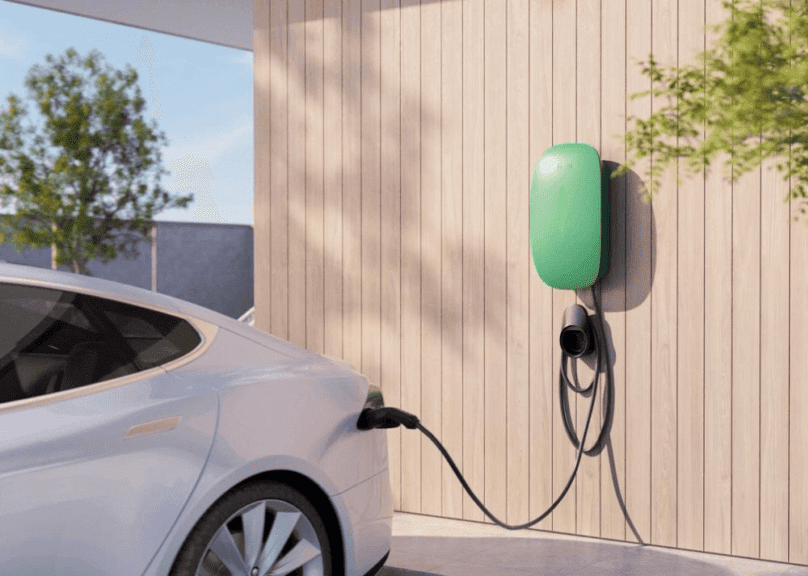
Most residential and light commercial EV chargers today use AC power, which is converted inside the car into DC for battery storage. This AC to DC conversion is limited by the vehicle's onboard charger and can typically deliver charging speeds suitable for overnight or workplace charging. DC Wallbox Chargers bypass that onboard conversion, supplying high-power DC directly to the battery and significantly reducing charging times — sometimes enabling 80% state-of-charge in under 20 minutes depending on power ratings and battery acceptance rates.
DC Wallbox Chargers traditionally occupied the realm of large public charging stations due to their cost, size, and power requirements. However, rapid improvements in power electronics, cooling technologies, and compact design — paired with software-enabled features — are bringing DC fast charging into smaller venues, fleet depots, urban lots, and even select residential settings.
The global DC Wallbox Charger market is in a phase of rapid expansion as automakers, utilities, governments, and charging service providers push to close infrastructure gaps and enable seamless travel experiences for EV drivers. Industry research suggests that more than 350,000 new DC Wallbox Chargers were installed globally in 2023, representing a near-30% year-on-year increase.
Key trends shaping the market include:
- Higher power outputs: Charging capacities once limited to 24–50 kW in early compact designs now frequently exceed 100–150 kW or above in next-gen DC wallboxes, expanding application use cases from residential to commercial and fleet charging.
- Integration of smart features: Cloud connectivity, OCPP 2.0.1 compliance, RFID authentication, predictive maintenance, and mobile app controls are increasingly common, improving usability and operator insights.
- Bidirectional charging capabilities: Over 15% of newly deployed units in some regions now support vehicle-to-grid (V2G) or vehicle-to-home (V2H) energy flows, enhancing grid flexibility and energy resilience.
- Electric fleets driving demand: With commercial fleets electrifying rapidly, smaller DC Wallbox Chargers are now integral to depot charging infrastructure, enabling faster turnaround and higher utilization of EV fleets.
Market forecasters project that these trends — coupled with continued EV adoption — will dramatically expand the addressable market for DC fast charging solutions across residential, workplace, fleet, and corridor applications throughout the remainder of the decade.
Among the key innovators pushing DC Wallbox Charger technologies is Wallbox Chargers, a global provider of EV charging and energy management solutions. The company has been consistently launching and scaling advanced DC fast charging solutions in multiple markets, illustrating the dynamism of the segment.
Wallbox's Supernova series represents a new generation of high-power, compact DC fast chargers designed for broad deployment:
The Supernova 180 is optimized for the North American market and can deliver up to 180 kW of charging power, adding roughly 100 miles of range in under 10 minutes. Its high power-to-footprint ratio enables placement in locations where space constraints previously limited fast charging deployment.
Building on that momentum, the Supernova 220 expands output up to 220 kW while maintaining a compact size of just 3.48 square feet — positioning it as one of the most powerful DC Wallbox Chargers relative to footprint in its class. This charger can charge one EV at 220 kW or two simultaneously at 110 kW each, widening use cases from passenger vehicles to fleet sites and high-traffic public stations.
These product advancements are not just about raw power — they reflect deeper industry shifts toward flexible, scalable, and cost-effective DC fast charging that meets diverse customer needs without the traditional complexities of larger, fixed infrastructure.
Certifications are critical for broader adoption of DC fast chargers, particularly in markets like Germany and the wider DACH region, where compliance with metering and safety standards is closely regulated. Wallbox's Supernova line recently achieved Eichrecht certification in Germany, opening the door for broader commercial deployment in Europe's largest EV market.
While private and fleet charging needs are expanding, public DC Wallbox Chargers are also seeing significant investment and deployment worldwide:
In the United States, EV charging infrastructure continues to grow rapidly despite macroeconomic headwinds. New rapid DC chargers increased by more than 23% in a recent quarter, with thousands of units deployed across the country.
Partnerships between technology firms and charging network operators are expanding access. For example, Wallbox's Supernova DC chargers are being integrated with GO TO-U's operating system for advanced remote control, dynamic pricing, and reservation features at public sites — supporting drivers with improved transparency and control.
In Europe, Wallbox has partnered with Hera Group to install dozens of 120 kW DC fast chargers across Central and Northern Italy, bolstering accessibility and reinforcing EV adoption under national initiatives like the EU's Next Generation recovery programs.
These deployment efforts illustrate how DC Wallbox Chargers are becoming mainstream infrastructure — bridging the gap between ultra-fast highway chargers and slower AC chargers to ensure coverage across urban, suburban, rural, and travel corridor locations.
Several technological innovations are shaping the future of DC Wallbox Chargers:
Integrating bidirectional capabilities into DC Wallbox Chargers can transform EVs into distributed energy resources, offering:
Vehicle-to-Grid (V2G) services that help stabilize electricity grids during peak demand.
Vehicle-to-Home (V2H) functionality, enabling homes to draw power from EV batteries during outages or high peak pricing.
As more chargers gain this functionality, they will play a dual role — serving mobility and energy systems simultaneously.
Smart DC Wallbox Chargers equipped with cloud connectivity and real-time control can:
Balance grid loads during peak times using dynamic power adjustments.
Optimize charging for renewable energy availability, reducing reliance on fossil fuel energy during peak decarbonization efforts.
Software plays an increasingly important role, with AI-enabled platforms optimizing charging efficiency and predictive maintenance to increase uptime.
Future DC Wallbox Chargers are expected to push beyond current power levels toward modular designs that can scale with power availability — enabling ultra-rapid charging while retaining compact installation footprints.
Despite strong momentum, DC Wallbox Chargers face a set of challenges as they scale:
High-power DC charging demands robust electrical infrastructure. In areas where grid capacity is limited, deploying multiple high-output chargers requires careful planning, utility coordination, and sometimes costly upgrades. However, integrating energy storage and renewable generation at charging sites can mitigate these constraints and provide additional revenue streams.
The EV industry continues to evolve charging standards. While CCS remains dominant in many markets, the rapid rise of Tesla's North American Charging Standard (NACS) has accelerated interoperability efforts and forced charging equipment manufacturers to support multiple connectors. This shift could introduce complexity for DC Wallbox Charger vendors but ultimately serves broader adoption by enabling drivers to access a wider network of chargers regardless of vehicle brand.
The economics of DC fast charging — especially for DC Wallbox Chargers — are improving but remain sensitive to installation costs, electricity pricing, and utilization rates. Innovative business models, such as subscription services, demand charges optimization, and revenue sharing with property owners, can improve returns for investors and operators.
For EV drivers, widespread DC Wallbox Chargers mean:
- Shorter charging times at more accessible locations.
- Greater convenience for urban dwellers and fleet operators.
- Improved reliability and user experience with software-driven features like real-time monitoring and reservation systems.
For charging network operators and businesses, these chargers provide:
- Flexible deployment options with scalable power ratings.
- Enhanced revenue potential through faster session turnover and digital services.
- Grid-interactive capabilities as part of broader energy management portfolios.
As electric mobility continues to gain market share globally, DC Wallbox Chargers are poised to become integral components of the charging landscape — bridging the gap between slow AC chargers and large, centralized DC fast charging hubs. Fueled by technological innovation, policy support, and changing consumer expectations, the DC Wallbox Charger segment is evolving rapidly, offering faster, smarter, and more scalable charging solutions than ever before.
From compact high-power designs to smart energy features and bidirectional capabilities, these chargers are not just about moving electrons faster — they’re about enabling a seamless, resilient, and sustainable future for electric transportation and energy systems worldwide.