
The rapid adoption of electric vehicles (EVs) is transforming the global transportation landscape. As governments, businesses, and consumers prioritize sustainability, the demand for fast, reliable, and convenient charging solutions is skyrocketing. Among the different types of EV chargers, DC fast chargers (DCFCs) have emerged as the game-changer for long-distance travel and high-demand EV operations.
DC fast chargers are more than just a faster way to charge—they are enabling a new era of electric mobility. By significantly reducing charging times, these systems are bridging one of the most significant barriers to widespread EV adoption: range anxiety. For drivers accustomed to the quick refueling of traditional gasoline vehicles, waiting several hours for a full battery charge can be a major deterrent. DCFC technology is solving this problem by delivering high-power charging directly to an EV's battery, often replenishing 80% of the battery in under half an hour.
This article delves into the technology, benefits, infrastructure considerations, market trends, and future outlook of DC fast chargers, providing a comprehensive overview of their role in the EV ecosystem.
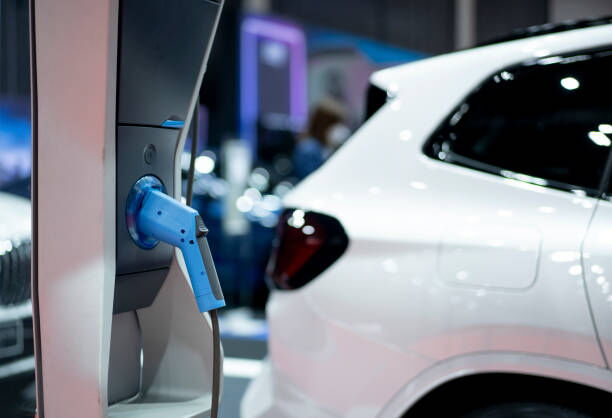
DC fast chargers, also referred to as Level 3 chargers, are high-powered charging stations designed to rapidly replenish electric vehicle batteries. Unlike Level 1 and Level 2 chargers, which supply alternating current (AC) that must be converted to direct current (DC) by the vehicle's onboard charger, DC fast chargers perform this conversion externally.
By bypassing the onboard converter, DCFCs can deliver electricity directly as DC into the vehicle's battery at much higher rates. This capability dramatically reduces charging times, making long-distance EV travel more practical and convenient. Depending on the vehicle and charger output, a DCFC can restore a typical EV battery to 80% capacity in just 20 to 30 minutes, compared to several hours for Level 2 chargers.
DCFCs are especially essential for public charging infrastructure along highways, urban centers, and commercial fleets. Their high power output and speed enable drivers to maintain tight schedules while keeping EV batteries adequately charged. However, frequent use of fast charging may contribute to battery degradation over time, so careful management and intelligent charging strategies are important to maximize battery lifespan.
Understanding the difference between Level 2 chargers and DCFCs is crucial for EV users and infrastructure planners. Level 2 chargers typically operate between 3.7 kW and 22 kW and supply AC power to the vehicle. The onboard charger then converts this AC into DC to charge the battery. While this process is safe and efficient for overnight charging or daily home use, it cannot match the speed of DC fast charging.
DC fast chargers, by contrast, supply DC power directly to the battery at much higher rates, typically ranging from 50 kW to over 350 kW for ultra-fast chargers. By eliminating the need for AC-to-DC conversion within the vehicle, DCFCs can deliver electricity more efficiently and significantly shorten charging times.
Another key distinction is vehicle compatibility. While Level 2 chargers can be used by nearly all plug-in electric vehicles, only battery electric vehicles (BEVs) can fully benefit from DC fast charging. Plug-in hybrid electric vehicles (PHEVs) generally rely on their onboard chargers, limiting their ability to take advantage of DCFC speed.
DC fast charging relies on sophisticated power electronics and high-voltage components to deliver rapid energy transfer safely. Modern DCFC stations include components such as:
- High-power rectifiers: Convert incoming AC from the grid into DC for the vehicle battery.
- Cooling systems: Liquid or air cooling prevents overheating of charging cables and connectors.
- Communication modules: Enable seamless interaction between the charger, the EV, and cloud-based management systems for billing, authentication, and monitoring.
- Safety protocols: Protect both the vehicle and charger from overvoltage, short circuits, and other electrical faults.
Charger output varies by model and vehicle compatibility. Early DCFCs delivered 50 kW, while current high-power stations can reach 350 kW or more. These ultra-fast chargers are particularly important for heavy-duty electric vehicles, buses, and commercial fleets, which require large amounts of energy in minimal time.
- Reduced Charging Time: The most obvious benefit of DCFCs is speed. Drivers can replenish the majority of their battery within 20–30 minutes, making long trips feasible without extensive downtime.
- Convenience for Public Charging: DC fast chargers are ideal for highway rest stops, urban EV hubs, and commercial fleet depots, enabling rapid top-ups during travel.
- Support for Heavy-Duty EVs: Trucks, buses, and commercial EV fleets have large battery packs that would take hours to charge with Level 2 chargers. DCFCs meet these high-power demands efficiently.
- Flexible Infrastructure Integration: DCFCs can be installed alongside renewable energy systems, such as solar or wind power, to support sustainable charging and reduce grid load during peak hours.
- Future-Proofing EV Networks: As EV adoption grows and vehicles with larger battery capacities hit the market, high-power DC fast chargers will become increasingly essential to meet consumer expectations.
While DC fast charging is convenient, it comes with considerations for battery longevity. Rapid charging generates heat, which, over time, may accelerate battery degradation if not properly managed. Manufacturers and charging operators employ strategies such as thermal management systems, adaptive charging algorithms, and battery health monitoring to mitigate these effects.
EV owners can also adopt best practices to prolong battery life, such as:
- Limiting frequent use of DCFCs for everyday charging.
- Avoiding charging to 100% at ultra-fast rates unless necessary.
- Using Level 2 or home chargers for routine overnight charging.
By balancing DC fast charging with conventional charging methods, users can maximize both convenience and battery lifespan.
DCFCs employ different connector types depending on region and vehicle compatibility. The most common standards include:
- CHAdeMO: Originally developed in Japan, widely used in early EVs.
- CCS (Combined Charging System): Increasingly adopted in Europe and North America for high-power DC charging.
- Tesla Supercharger: Proprietary connector for Tesla vehicles, with high-speed capabilities and integrated network services.
Standardization of connectors is critical for interoperability and user convenience. Many newer DCFC stations now support multiple connector types to accommodate a wide range of vehicles.
Deploying DC fast chargers involves more than installing hardware; it requires careful planning of electrical infrastructure. High-power chargers demand significant grid capacity, often necessitating upgrades to transformers, circuit breakers, and distribution networks.
Intelligent load management and smart charging strategies help balance power demands, especially when multiple chargers are installed at a single location. Renewable energy integration and battery energy storage systems can further optimize energy use, reduce costs, and enhance sustainability.
The global DC fast charger market is experiencing rapid growth, driven by government incentives, corporate sustainability goals, and rising EV adoption. Key trends include:
- Expansion of ultra-fast 150–350 kW charging networks.
- Integration with fleet management systems for commercial EV operations.
- Partnerships between automakers, charging network operators, and energy providers.
- Deployment of DCFCs in urban hubs, shopping centers, and highway corridors.
Analysts project continued growth as EVs become mainstream and battery capacities increase, requiring faster and more efficient charging solutions.
While DCFCs are transformative, they face challenges:
High Initial Costs: Installing high-power charging stations is capital-intensive due to equipment and grid upgrades. Governments and private investors often provide incentives to offset these costs.
Grid Load Management: Large-scale deployment may strain electrical grids. Smart charging algorithms, energy storage, and demand response strategies help mitigate these risks.
Standardization and Interoperability: Multiple charging protocols and connectors can confuse users. Efforts toward universal standards, multi-protocol chargers, and adaptive connectors improve accessibility.
Battery Health Concerns: Rapid charging can accelerate degradation. Integrating battery management systems, optimizing thermal control, and educating users are critical mitigation strategies.
DC fast charging technology continues to evolve rapidly. Researchers and manufacturers are developing next-generation chargers capable of 500 kW or higher, potentially charging EVs in under 10–15 minutes. Advanced cooling systems, modular designs, and renewable energy integration will make DCFCs more efficient and scalable.
Additionally, autonomous EV fleets, heavy-duty trucks, and public transit systems will rely heavily on ultra-fast charging infrastructure. As battery technology advances, DCFC networks will become more widespread, interoperable, and user-friendly, solidifying their role in the global EV ecosystem.
DC fast chargers represent a pivotal advancement in electric vehicle infrastructure, addressing one of the most critical barriers to widespread EV adoption: charging speed. By delivering high-power DC electricity directly to EV batteries, these chargers reduce downtime, support long-distance travel, and enable the growth of commercial and heavy-duty EV operations.
As technology continues to evolve, with higher charging speeds, improved battery management, and smart grid integration, DCFCs will play a central role in shaping the future of electric mobility. Public and private investments, combined with innovative solutions from the EV industry, will ensure that DC fast charging remains a cornerstone of the rapidly expanding EV ecosystem.
For drivers, fleet operators, and infrastructure planners alike, embracing DC fast charging technology is essential to meeting the demands of the modern electric vehicle era.