
Electric vehicles (EVs) are reshaping transportation worldwide — and as EV ownership grows, so does the need for faster, smarter, and more efficient home charging solutions. Among these, the 22 kW home EV charger stands out as a powerful upgrade from conventional Level 2 units, combining high charging speeds with residential convenience. Once confined to commercial and public charging stations, high-power AC charging is now entering garages, residential complexes, and private parking spaces — catalyzing faster adoption of EVs and influencing market dynamics across the automotive, energy, and construction sectors.
This industry news report explores the rise of 22 kW home EV chargers, including their technological advantages, market landscape, regulatory environment, installation and infrastructure considerations, user benefits, challenges, and future potential. It also highlights business strategies, OEM developments, competitive dynamics, and key trends shaping this emerging segment of the EV charging ecosystem.
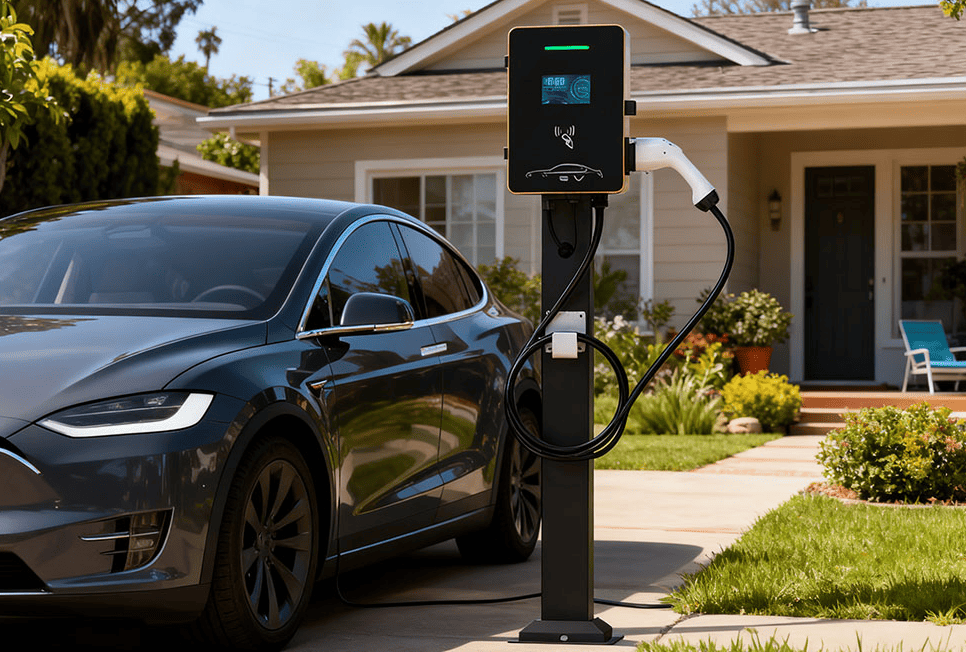
A 22 kW home EV charger is a high-power alternating current (AC) charging station capable of delivering up to 22 kilowatts (kW) of electrical power to an electric vehicle. This typically corresponds to three-phase power input — common in commercial buildings but gradually becoming more available in residential contexts, especially in multi-unit dwellings and new constructions.
By comparison:
- Standard Level 1 charging (120 V) delivers around 1–2 kW.
- Typical Level 2 home chargers (single-phase, 240 V) deliver 3.7–11 kW.
22 kW chargers push charging speeds significantly higher, shortening charging time and improving utilization for vehicles with larger batteries or users with limited dwell time at home.
In homes equipped with 22 kW chargers, EV owners can expect up to three times faster charging than many existing residential solutions, bringing overnight and even partial day charging within reach for heavier use cycles.
Global EV sales continue to surge — with many markets targeting 100% EV sales by 2035–2040. Countries in Europe, North America, and Asia are expanding incentives for EV purchases and charging infrastructure, making robust home charging more relevant than ever.
As EVs with larger batteries and higher capacity enter the mainstream, the demand for faster home chargers like 22 kW units is increasing. Drivers are no longer satisfied with slow overnight charging; they want higher throughput with shorter connection times.
Studies show that most EV charging occurs at home or work, not at public stations. As a result, the home charging market is becoming a strategic battleground for manufacturers, utilities, and energy service providers. 22 kW chargers play a key role by:
- Reducing reliance on public infrastructure
- Increasing convenience and user satisfaction
- Supporting faster turnaround for daily driving needs
Many EV owners live in apartment complexes, condominiums, and urban residences where traditional single-phase power limits charging speed. Developers and property managers are now considering three-phase infrastructure upgrades to support 22 kW charging, transforming residential planning and construction practices.
Utilities are responding with new tariffs, grid support programs, and incentives to ease the cost of electrical upgrades necessary for high-power charging deployment.
22 kW home chargers rely on three-phase AC power, which provides smoother, higher-capacity power delivery compared with single-phase systems. This enables:
- Faster charging cycles
- Better throughput for larger battery electric vehicles (BEVs)
- Improved compatibility with future EV models
In practice, a 22 kW charger can add around 80–120 km (50–75 miles) of range per hour — a significant upgrade over traditional Level 2 chargers.
Modern 22 kW chargers often include features such as:
- Wi-Fi/Bluetooth connectivity
- Mobile apps for remote control and monitoring
- Scheduled charging
- Dynamic load management
- Vehicle energy optimization
These functionalities allow users to:
- Schedule charging during off-peak rates
- Track energy usage
- Integrate with home energy systems (e.g., solar + storage)
- Remotely monitor charging sessions
Safety remains a priority for manufacturers and regulators alike. 22 kW home chargers incorporate:
- Overcurrent and overvoltage protection
- Ground fault detection
- Temperature sensors
- Ingress protection (IP) ratings
- Compliance with international standards (IEC 61851, UL, CE, etc.)
Advanced models also include self-diagnostics and fault reporting to ensure secure operation even in complex residential electrical systems.
Supporting a 22 kW charger at home requires adequate electrical capacity, typically at least a three-phase service panel and sufficient circuit capacity. For many single-family homes, this may necessitate:
- Electrical panel upgrades
- Dedicated circuit installation
- Three-phase service availability (where local utilities provide it)
In some regions, utilities are expanding residential three-phase distribution, while others offer incentives or rebates to offset the cost of upgrades.
To prevent overloads, many installations incorporate load balancing systems that distribute available power efficiently across home circuits. This is especially relevant in households with:
- High concurrent electrical loads (HVAC, appliances)
- Multiple EVs charging
- Solar inverters and battery storage
Manufacturers are offering integrated load management features that dynamically adjust charge rates to suit available capacity, ensuring safe and efficient operation.
Installing a 22 kW charger may involve careful coordination with:
- Local building codes
- Electrical permits
- Utility interconnection requirements
- Inspections before activation
Certified electricians and approved installation vendors are increasingly important partners to ensure compliance and risk mitigation.
Leading EV charger manufacturers such as ABB, Schneider Electric, and Siemens have already introduced high-power AC solutions targeting residential markets.
At the same time, startups and specialized EV charger brands are investing in:
- Smart scheduling and AI-driven algorithms
- Energy market integration
- Networked charging services
- Subscription-based energy plans
This diversity is expanding choice and accelerating innovation, while also increasing competitive pressure on legacy players.
Utilities are exploring partnerships with charger manufacturers and property developers to enable:
- Time-of-use pricing
- Demand response programs
- Grid-friendly charging
- Incentives for residential upgrades
By programming charging to occur during low-demand periods, utilities can reduce peak load stress and enhance grid stability — creating value for both users and energy providers.
While 22 kW chargers are gaining traction in homes, they are also relevant for small commercial fleets, workplaces, and shared residential parking. This cross-segment adoption drives:
- Economies of scale
- Reduced unit costs
- Stronger infrastructure deployment
Continuing to bridge residential and commercial charging networks expands opportunities for businesses and utilities alike.
With up to 22 kW power delivery, EV owners can expect significantly reduced charging times — enabling:
- Quick top-ups overnight
- Partial day charging after commuting
- Flexibility for multi-driver households
This is particularly valuable for drivers with higher daily mileage or larger battery vehicles.
Although initial installation costs may be higher, 22 kW chargers can lower operating expenses by:
- Allowing users to take advantage of off-peak electricity rates
- Reducing reliance on public fast charging (which is often pricier)
- Improving energy efficiency and vehicle utilization
- Seamless Integration with Home Energy
Advanced 22 kW chargers can integrate with:
- Solar photovoltaic (PV) systems
- Home battery storage (e.g., home ESS systems)
- Smart energy management platforms
This allows users to optimize energy use, reduce peak demand charges, and align charging with renewable generation.
As EV batteries increase in size and range, charging demand also grows. Installing a high-power home charger positions users to:
- Support next-generation EVs
- Avoid future upgrades
- Enhance overall charging flexibility
A lack of three-phase availability in many residential areas remains a significant hurdle. Utilities must extend three-phase lines to more neighborhoods or provide alternative solutions such as split-phase high-speed AC.
High-power chargers typically cost more than lower-power options. Combined with installation and electrical upgrade expenses, the initial investment may deter some users — though long-term savings and convenience often outweigh upfront costs over time.
Many EV owners are unfamiliar with 22 kW AC charging benefits and technical requirements. Education campaigns by industry associations and vendors can improve awareness and stimulate demand.
Public policies and regional incentives are shaping the adoption trajectory of high-power residential chargers:
- Rebates and tax credits for EV charger equipment and installation
- Utility incentive programs for electrical upgrades
- Building code mandates requiring EV-ready infrastructure in new construction
- Grid modernization initiatives that support residential load balance and demand response
Proactive policy environments accelerate technology adoption and reduce barriers for households transitioning to high-power home charging.
In several European cities, pilot programs have enabled multi-unit residential buildings to install shared 22 kW charging hubs in parking garages, funded through:
- Property owner associations
- Utility incentives
- Energy service contracts
These installations demonstrate higher occupant EV satisfaction and increased property appeal.
Some homeowners with solar + battery systems use 22 kW chargers to:
- Charge EVs using solar generation
- Reduce grid dependency
- Minimize energy costs
Cloud-connected chargers coordinate with home ESS controllers to optimize charging schedules.
The future of 22 kW home charging includes:
Bidirectional Charging and V2G
Emerging technologies allow EVs to feed energy back into the grid, turning parked vehicles into distributed energy resources (DERs). 22 kW systems provide the capacity to support robust bidirectional energy flows and home backup power.
AI-Driven Charging Optimization
Artificial intelligence will enable charging units to predict user habits, optimize cost-effective charging windows, and adjust dynamically for local grid conditions.
Modular and Upgradable Designs
Future 22 kW chargers may be modular, allowing incremental power upgrades or integration with renewable sources and storage without full replacement.
The rise of 22 kW home EV chargers marks a turning point in residential electric mobility infrastructure. By delivering faster charging speeds, smart energy management, and greater convenience, these chargers are helping transform how EV owners power their vehicles and interact with home energy ecosystems.
As infrastructure investments grow, utilities and regulators align incentives, and consumer awareness expands, 22 kW home chargers are poised to become a mainstream residential solution — offering tangible benefits for drivers, property developers, energy providers, and the broader electrified mobility market.
For EV adopters and stakeholders alike, understanding the strategic importance of high-power home charging is now essential — not just for today’s needs, but for the future of sustainable transportation.