
As electric vehicle (EV) adoption accelerates across the United States and globally, homeowners are demanding charging solutions that are faster, more efficient, and built for the long haul. While traditional Level 1 and single-phase Level 2 chargers have dominated the residential space, a new contender is emerging: the three-phase home EV charger.
Once reserved for commercial and industrial applications, three-phase charging technology is now entering the residential market — bringing higher power, faster charging, and grid resilience to everyday EV owners. This shift represents not just a technological upgrade, but a strategic evolution in how households prepare for widespread EV use.
In this comprehensive article, we explore the technology behind three-phase home chargers, why they are gaining traction, key benefits and considerations, installation challenges, safety standards, cost factors, and what the future holds for residential EV charging.
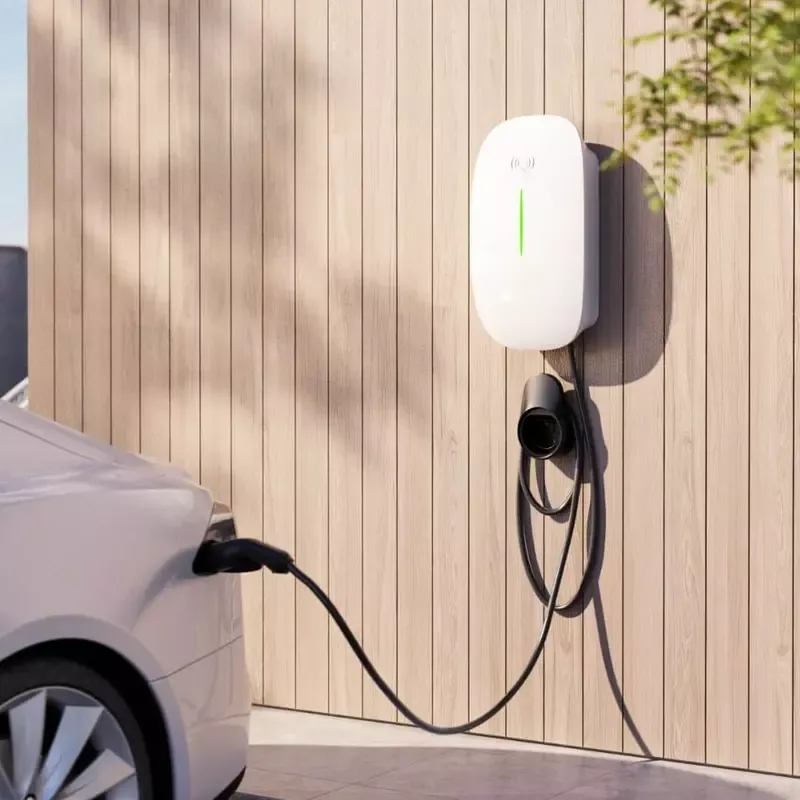
At its core, a three-phase home EV charger uses three alternating current (AC) electrical phases instead of one. In conventional single-phase systems, power is delivered via a single alternating sinusoidal waveform. Three-phase systems, by contrast, use three waveforms, each offset by 120 degrees, enabling a more efficient and balanced power transfer.
Domestic electrical infrastructure in many countries (especially in Europe and parts of Asia) is designed to support three-phase power — often for large appliances, HVAC systems, or workshop equipment. A three-phase EV charger taps into this infrastructure to deliver:
- Higher peak power output
- Reduced current per phase
- Improved efficiency and stability
- Better thermal performance
This means faster EV charging times without requiring prohibitively large current on any single phase.
Several trends are converging to bring three-phase home chargers into mainstream consideration:
EV battery capacities are increasing rapidly. Many new EV models now come with batteries exceeding 80 kWh, and some luxury or performance models approach 120–150 kWh capacities. Traditional Level 2 charging (typically 7–11 kW on single phase) is adequate for daily commutes but can be slow when charging depleted high-capacity batteries.
A three-phase charger capable of 11–22 kW or more dramatically reduces charging time — especially beneficial for high-mileage households.
Electric houses are no longer a futuristic concept — smart electrification is happening now. Homeowners are integrating:
- Solar generation
- Energy storage batteries
- Heat pumps
- EV chargers
— all competing for power capacity.
A three-phase distribution helps balance loads and maximize usable capacity without overloading any single line.
Utilities and grid planners are concerned about peak demand surges from EV charging, especially in regions with extreme weather or high summer/winter loads. Three-phase charging naturally spreads the load, decreasing strain on individual phases and the broader grid. This characteristic is especially important in areas with high EV adoption rates.
Today's single-phase Level 2 chargers might serve most households well. Yet as vehicle electrification intensifies — including the arrival of electric pickups, SUVs, and commercial fleet electrification — three-phase chargers future-proof homes for higher power demands without retrofit headaches.
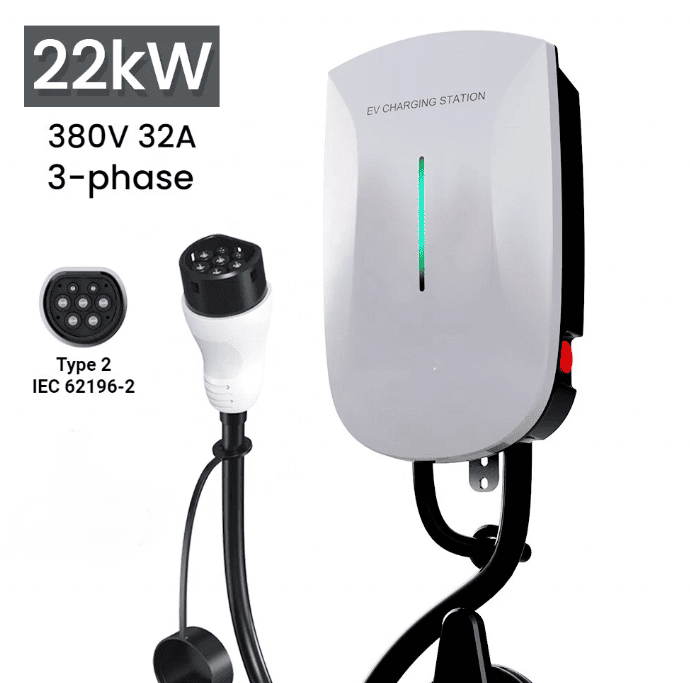
Let's break down the advantages that are attracting homeowners, builders, and policymakers:
This is the most tangible benefit. Increasing charging power from, say, 7 kW to 22 kW can cut charging time by up to 70% — a game changer for:
- Long-trip drivers
- Households with multiple EVs
- High-mileage EV owners
For example, a 70 kWh EV battery that might take 10–12 hours on a 7 kW single-phase charger could be fully charged in 4–5 hours on a 22 kW three-phase unit.
Three-phase systems reduce peak current per phase, minimizing heat buildup and allowing smaller conductors or breakers compared with single-phase chargers at equivalent power.
Electric utilities can manage distributed load better when homes adopt three-phase systems. This is especially relevant in:
- Suburban areas with older infrastructure
- High-density residential zones
- Regions transitioning to renewable energy sources
A three-phase charger installed today can support:
- Future EVs with faster onboard chargers
- Home energy storage integration
- Peak shaving algorithms
- Smart grid interaction
This eliminates the need for costly upgrades later.
In homes with heavy electrical loads (HVAC systems, workshops, EV chargers), three-phase service balances loads across the system, reducing flicker or voltage dips.
Despite its many advantages, three-phase charging isn't a drop-in replacement for single-phase units in every home. Several factors must be evaluated:
In countries like Germany, the UK, Italy, and China, many residential properties already have three-phase service. In the U.S., three-phase residential supply is less common and might require an upgrade from the utility.
A homeowner considering a three-phase charger must confirm:
- Whether three-phase is available onsite
- The service capacity (amps per phase)
- Local utility requirements and permits
Installing a three-phase charger often means upgrading or installing a new electrical panel, subpanel, or dedicated circuit. This can impact cost and timing.
Local electrical codes (NEC in the U.S., CE in Europe, GB standards in China) dictate:
- Wiring methodologies
- Safety interlocks
- Ground fault protection
- Load balancing
Professional installers and certified electricians are essential to ensure compliance.
Modern chargers offer:
- Wi-Fi/4G/5G connectivity
- App control
- Load management
- Integration with home energy systems
Three-phase chargers often include more advanced energy management features to optimize charging based on time-of-use rates or solar generation.
Safety is paramount with high-power charging systems. Three-phase chargers must adhere to rigorous standards, including:
To prevent shock or fire hazards.
To avoid overheating of cables and connectors.
Chargers destined for garages or outdoors must withstand:
Moisture
Dust
Temperature extremes
High IP ratings (e.g., IP54 or higher) are common.
Ensure the vehicle and charger establish a positive and secure connection before power delivery begins.
Manufacturers design three-phase chargers with multiple built-in redundancies to ensure that increased power doesn't compromise safety.
Cost remains one of the most discussed aspects of three-phase home charging.
Three-phase chargers typically cost more than their single-phase counterparts due to:
- Higher power components
- Advanced electronics
- Durable enclosures
- Smart features
However, as adoption increases and manufacturing scales, prices are trending downward.
These vary widely based on:
- Utility upgrades (if needed)
- Panel modifications
- Conduit and wiring lengths
- Local labor rates
In regions where three-phase is already present, installation can be comparable to a high-end single-phase setup.
Faster charging can translate to:
- Lower electricity costs (through off-peak charging)
- Reduced dependency on DC fast chargers
- Better energy management with home storage and solar
These ongoing savings can offset higher upfront costs over time.
Across Europe, three-phase home chargers are already well-established. In countries like the Netherlands and Sweden, where residential three-phase power is standard, thousands of EV owners install three-phase chargers to leverage their full charging potential.
In Asia, nations like China are also integrating three-phase solutions because of dense urban living and high EV penetration. Local manufacturers have responded with robust three-phase units that suit both urban condos and suburban homes.
In the U.S., adoption is growing as utilities begin offering incentives and pilot programs to support three-phase residential charging — particularly in newly built communities and energy-smart developments.
Governments and utilities are increasingly recognizing the benefits of advanced home charging:
Incentives and Rebates
Some regions now offer:
- Tax credits for high-power home chargers
- Rebates for grid-friendly technologies
- Grants for electrical upgrades
Smart Grid Integration
Utilities are exploring programs where three-phase EV chargers can:
- Provide demand response
- Shift loads during peak events
- Interact with home storage to support grid stability
These policies not only make installations more economical but also align with broader decarbonization goals.
Higher Power Levels at Home
Soon, residential chargers capable of 30 kW or more could become commercially viable, further closing the gap between home and public DC fast charging.
Solar + Storage + EV + Smart Charging
Instead of thinking of EV chargers in isolation, homeowners and utilities are considering integrated energy systems. Three-phase chargers are well positioned to serve as a cornerstone in this ecosystem.
Vehicle-to-Home (V2H) and Vehicle-to-Grid (V2G)
While still emerging, bidirectional charging — where EVs discharge energy back to the home or grid — is a promising application. Three-phase systems can facilitate:
Faster bidirectional power transfer
More stable energy flows
Enhanced resilience during outages
Standardization and Interoperability
Global standards bodies continue to harmonize charging protocols. As three-phase chargers become more common, standards for connectors, communications, and safety will further mature, benefiting both consumers and manufacturers.
Industry analysts point out that homeowners are becoming more educated about charging technologies. A recent survey found:
- 80% of prospective EV buyers consider charging speed important
- 65% are willing to invest more upfront for future-proofed home charging
- 50% expect smart energy features as standard
EV manufacturers are also beginning to recommend or bundle home charging solutions, often incorporating three-phase discussion into their buying guides.
Despite the optimism, barriers still exist:
Uneven Infrastructure
Not all regions have widespread three-phase supply — especially in older housing stock.
Permitting Complexity
Local permitting can vary dramatically, adding time and cost.
Consumer Awareness
Many homeowners still do not understand the differences between single and three-phase systems.
Workforce Training
Electricians and installers need training on three-phase EV charging installations to ensure safety and compliance.
Three-phase home EV chargers represent a significant technological and market advancement. They offer compelling advantages in speed, efficiency, grid compatibility, and future adaptability. As EV ownership becomes ubiquitous, and as households electrify more of their energy usage, three-phase chargers will likely move from a niche solution to a mainstream choice for many.
While challenges remain — including infrastructure availability, cost, and education — the trajectory is clear: residential charging is evolving, and three-phase technology is poised to play a central role.
For EV owners looking to charge faster, smarter, and with future growth in mind, three-phase home charging is not just an upgrade — it's a strategic investment in tomorrow's energy ecosystem.
