
As electric vehicle (EV) adoption accelerates across the globe, residential charging has become one of the most critical pillars supporting long-term market growth. While single-family homeowners often enjoy the convenience of private garages and dedicated power supplies, residents of apartments, condominiums, and other multi-family housing face a far more complex charging reality. For property owners, developers, and managers, providing EV charging in shared residential environments is no longer a forward-looking amenity—it is quickly becoming a competitive necessity.
Yet the path to implementing effective multi-family EV charging solutions is far from straightforward. Questions around installation costs, infrastructure limitations, cost recovery, billing systems, and ongoing operations present significant barriers. Navigating regulatory frameworks and incentive programs adds additional layers of complexity. This article explores the most pressing challenges facing multi-family EV charging and outlines the strategies and technologies shaping the future of shared residential electrification.
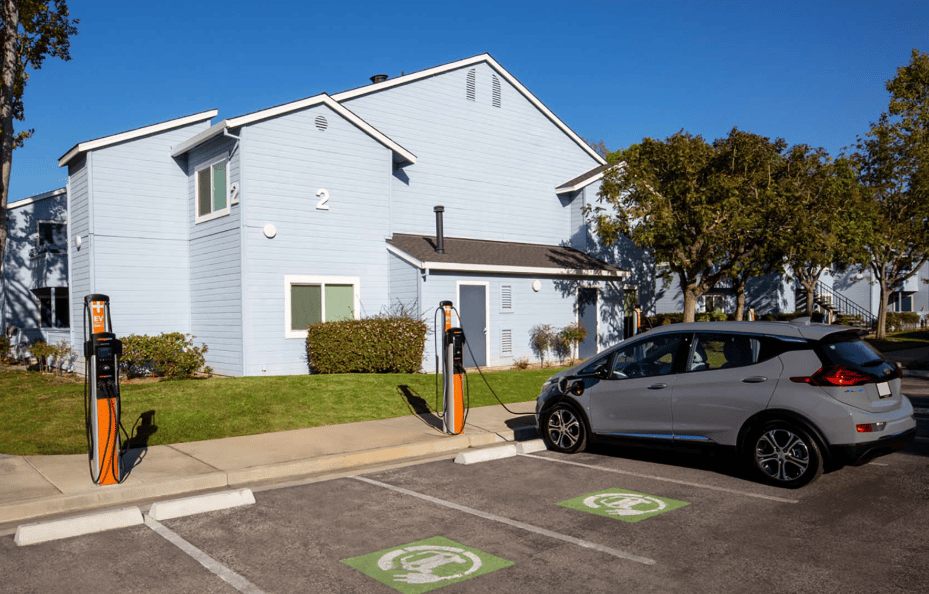
EV ownership is rising at an unprecedented pace, driven by government incentives, stricter emissions regulations, and rapid advancements in vehicle technology. However, more than one-third of U.S. households—and a growing percentage worldwide—reside in multi-family dwellings. For these residents, access to reliable, overnight charging is often limited or nonexistent.
Studies consistently show that access to home charging is a primary factor influencing EV purchasing decisions. Without it, residents must rely on public charging networks, which can be inconvenient, time-consuming, and sometimes more expensive. As a result, tenants increasingly view EV charging as an essential utility rather than a luxury amenity. Property managers who fail to provide charging options risk losing environmentally conscious tenants and missing opportunities to future-proof their assets.
Despite this demand, implementing charging infrastructure in shared residential environments presents challenges that differ significantly from those faced in commercial parking facilities or single-family homes.
One of the most fundamental questions in multi-family EV charging is financial responsibility: who should pay for the installation?
Unlike single-family homes—where the homeowner typically covers the cost—multi-family buildings involve multiple stakeholders, including property owners, homeowners' associations (HOAs), developers, tenants, and utility providers. Each group may have different financial priorities and risk tolerances.
Installing Level 2 EV chargers in a shared residential setting can be expensive. Unlike simple wall outlets, Level 2 chargers require 240V connections and often necessitate:
- Electrical panel upgrades
- New subpanels or load centers
- Conduit installation through garages or common areas
- Trenching for outdoor parking lots
- Potential transformer or service upgrades from the utility
In older buildings, existing electrical infrastructure may be undersized, leading to costly retrofits. For some properties, the cost per charging port can range from several thousand to tens of thousands of dollars, depending on site conditions and power availability.
Property owners may hesitate to invest in charging infrastructure when only a portion of residents currently own EVs. Conversely, EV-owning residents may be unwilling to bear the full cost of installation for equipment that ultimately enhances the property's long-term value.
This misalignment often leads to stalled projects. Some properties adopt cost-sharing models, where residents pay for individual chargers while the building funds core electrical upgrades. Others incorporate charging infrastructure into capital improvement budgets, treating it as a long-term asset rather than a tenant-specific amenity.
Beyond cost allocation, charger sharing presents another major challenge. In multi-family settings, parking is typically communal, and residents may not have assigned spaces. Even when spaces are designated, multiple EVs may need access to a limited number of chargers.
Without proper management, competition for charging can quickly become a source of tenant frustration. Common issues include:
- Vehicles occupying chargers long after they have finished charging
- Conflicts over scheduling or "queue jumping"
- Unequal access among residents
These challenges underscore the importance of smart charging systems that can manage access, schedule sessions, and notify users when charging is complete.
Many properties establish fair-use guidelines, such as time limits or reservation systems. However, enforcing these rules manually is time-consuming and often ineffective. Networked charging platforms offer automated solutions, including:
- App-based reservations
- Idle fees to discourage overstaying
- Usage tracking by resident account
Such features help ensure equitable access while maximizing utilization of limited charging infrastructure.
Another core concern for property managers is how to bill residents for electricity usage. Unlike commercial settings where charging may be offered as a paid service, residential environments often require individualized billing that reflects actual energy consumption.
Modern EV charging systems can incorporate submetering and user authentication, enabling:
- Per-user billing based on kWh consumed
- Monthly invoicing or integration with rent or HOA fees
- Differential pricing for peak and off-peak hours
However, installing submetered systems adds to upfront costs and requires coordination with accounting and property management software.
Utility pricing further complicates billing. Time-of-use (TOU) rates, demand charges, and peak pricing periods can significantly impact the cost of electricity. Property managers must decide whether to:
- Pass costs directly to residents
- Apply a flat rate for simplicity
- Subsidize charging as an amenity
Each approach carries trade-offs between transparency, administrative burden, and financial sustainability.
Even when budgets allow for charging installations, electrical capacity often becomes the limiting factor.
Many multi-family buildings—particularly those constructed decades ago—were not designed to support high-power EV charging. Electrical rooms may lack spare capacity, and upgrading utility service can involve:
- Lengthy permitting processes
- Coordination with utility providers
- Potential disruption to residents
- Significant capital expenditure
In some cases, the cost and complexity of upgrades discourage property owners from moving forward.
To overcome these limitations, many properties are adopting load management and dynamic power-sharing technologies. These systems:
- Distribute available power across multiple chargers
- Prioritize charging during off-peak hours
- Prevent overloads without requiring full infrastructure upgrades
By intelligently managing demand, load-sharing systems can support dozens of charging points using existing electrical capacity, dramatically reducing installation costs and complexity.
Government incentives and utility rebates can significantly offset installation costs, but accessing these programs is rarely simple.
Multi-family properties often face stricter or less favorable eligibility criteria compared to single-family homes or commercial installations. Some programs require:
- Proof of income qualification
- Specific parking configurations
- Compliance with accessibility or zoning regulations
- Commitment to public access, which may conflict with residential privacy concerns
These requirements can exclude many properties or force design compromises.
Applying for grants and rebates typically involves:
- Detailed technical documentation
- Contractor certifications
- Utility coordination
- Long approval timelines
For property managers already juggling maintenance, leasing, and compliance responsibilities, the administrative workload can be prohibitive.
Recent shifts in federal and state EV policies have added further uncertainty. Funding programs may be paused, revised, or exhausted without warning, making long-term planning difficult. As a result, many property owners hesitate to rely on incentives that may not materialize or remain stable over time.
Installing chargers is only the first step. Ongoing operation and maintenance introduce another set of challenges.
EV chargers are exposed to heavy daily use and, in outdoor installations, harsh environmental conditions. Common issues include:
- Connector wear and cable damage
- Communication failures in networked systems
- Vandalism or accidental impacts
Without regular maintenance, even minor faults can render chargers unusable, leading to tenant complaints and reputational damage.
Most modern charging systems rely on cloud-based software for:
- User authentication
- Billing and reporting
- Load management
- Remote diagnostics
While these platforms offer powerful capabilities, they also require IT oversight, software updates, and troubleshooting. Property managers without in-house technical expertise often depend on third-party service providers, which adds ongoing operational costs.
Utility monitoring is another operational complexity that directly affects both profitability and resident satisfaction.
Charging multiple vehicles simultaneously can significantly increase a property's peak demand, potentially triggering higher utility rates or demand charges. Without proper monitoring, energy costs can escalate unexpectedly.
Advanced energy management systems help property managers:
- Monitor real-time energy consumption
- Schedule charging during off-peak periods
- Identify inefficiencies or abnormal usage patterns
By optimizing charging behavior, properties can minimize operating expenses while maintaining reliable service.
High turnover is a reality in many multi-family properties, particularly in rental apartments. This creates unique administrative challenges for EV charging.
When residents move in or out, charging access must be updated. This includes:
- Deactivating departing users
- Assigning access to new tenants
- Adjusting billing records
Without automated systems, these tasks become time-consuming and error-prone.
In cases where individual residents have paid for specific chargers, questions arise when they move out:
Does the charger remain with the property?
Can it be transferred to another resident?
Who is responsible for maintenance?
Clear policies are essential to avoid disputes and ensure continuity of service.
Despite these challenges, many properties are successfully deploying EV charging by adopting strategic, future-oriented approaches.
Rather than installing a large number of chargers at once, properties can:
Begin with a pilot installation
Monitor usage patterns
Expand capacity as demand grows
This approach reduces upfront risk while providing valuable data to guide future investments.
As noted earlier, dynamic load management is a game-changer for multi-family properties. By optimizing existing electrical infrastructure, these systems minimize upgrade costs while enabling scalable expansion.
Many property owners partner with EV charging service providers that offer turnkey solutions, including:
Design and installation
Software platforms
Billing and payment processing
Ongoing maintenance
These partnerships allow property managers to offer EV charging without developing in-house technical expertise.
Despite the complexity, the long-term benefits of multi-family EV charging are substantial.
EV-ready buildings are increasingly viewed as future-proof assets. Charging infrastructure enhances property appeal to environmentally conscious tenants and investors, potentially increasing occupancy rates and long-term valuation.
In markets where charging is still limited, offering EV amenities can differentiate a property from competitors, supporting higher rents and tenant retention.
For property owners with environmental, social, and governance (ESG) commitments, EV charging aligns with carbon reduction goals and demonstrates leadership in sustainable development.
As EV adoption continues to rise, the challenges surrounding multi-family charging will only become more pressing. However, advancements in technology, evolving regulatory frameworks, and growing industry expertise are steadily lowering barriers.
Emerging trends include:
- Vehicle-to-grid (V2G) integration, allowing EVs to support building energy management
- Standardized billing platforms integrated with property management systems
- Wireless and ultra-compact charging designs for dense urban environments
- Greater collaboration between utilities, governments, and real estate stakeholders
Over time, what is currently viewed as a complex infrastructure upgrade will become a standard feature of modern residential design.
Multi-family EV charging represents one of the most critical frontiers in the transition to electric mobility. While apartment buildings, condominiums, and shared residential properties face unique challenges—ranging from high installation costs and infrastructure constraints to billing complexity and operational management—these obstacles are not insurmountable.
Through smart planning, load management technologies, strategic partnerships, and phased implementation, property owners and managers can deliver reliable, equitable charging solutions that meet resident needs while preserving financial sustainability.
As electric vehicles move from niche adoption to mainstream transportation, multi-family charging will no longer be optional. It will be a defining feature of future-ready residential communities—one that supports sustainability, enhances property value, and empowers residents to embrace a cleaner, more connected mobility ecosystem.