The global transition to electric vehicles (EVs) has brought remarkable growth in charging infrastructure, transforming how drivers power their cars and how societies reimagine mobility. At the heart of this transformation stands CHAdeMO — one of the earliest and most influential DC fast charging standards in the world. Yet today, CHAdeMO finds itself at a critical crossroads: while it remains vital in certain regions and legacy applications, its role is being reshaped by emerging technologies, shifting market dynamics, and evolving global standards.
In this in-depth news article, we explore what CHAdeMO is, how it works, its historical impact, current status, challenges ahead, and what the future may hold for this once-dominant charging protocol.
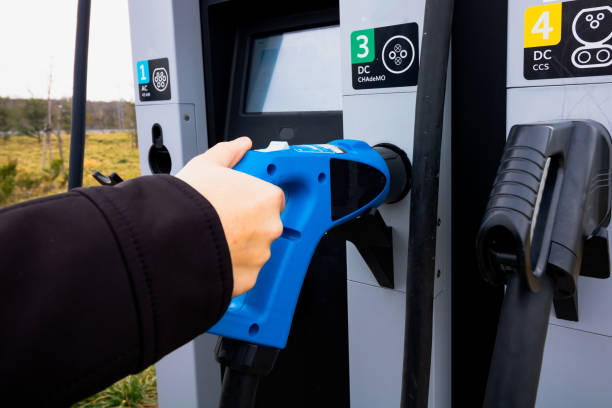
CHAdeMO — a name derived from the Japanese phrase “CHArge de MOve” — was introduced in 2010 as a dedicated DC fast charging standard. It was developed by a consortium of Japanese automakers and utility companies to meet the urgent need for rapid charging solutions that could support long-distance travel and mass EV adoption.
At the time, CHAdeMO represented a major leap forward compared with slow AC EV chargers. It delivers direct current (DC) directly to the vehicle's battery, bypassing the slower onboard AC-to-DC conversion process and dramatically reducing charging time. Early CHAdeMO chargers typically provided up to 50 kW of charging power, enabling compatible EVs — like the Nissan Leaf and Mitsubishi i-MiEV — to recharge significant amounts of range in roughly 30–60 minutes.
Unlike combined charging systems (e.g., CCS), CHAdeMO uses a dedicated DC connector, separate from a vehicle's AC inlet. This choice reflected technical priorities at the time, emphasizing fast DC charging efficiency and robust communication protocols. The CHAdeMO interface includes multiple power and signal pins that manage power delivery and coordination between the vehicle and charger.
One strength that set CHAdeMO apart early on was its built-in support for bidirectional charging, known as Vehicle-to-Grid (V2G) and Vehicle-to-Home (V2H). This technology allows the EV's battery to not only draw power from the grid but also feed power back into it — effectively turning the car into a mobile energy resource. This feature fits into broader visions of smart grids and renewable energy integration, enabling EVs to supply power during peak demand or emergencies.
While other standards like CCS have introduced bidirectional capabilities, CHAdeMO's V2G implementation was first to market and deeply integrated into its specifications. For utilities and pilots exploring grid-interactive EV charging or energy storage-as-a-service models, this feature continues to be a compelling advantage.
As battery capacities grew and EV adoption accelerated, CHAdeMO evolved. The standard advanced from early 50 kW implementations to CHAdeMO 2.0 and 3.0 specifications, which support higher power outputs — up to 400 kW in theory — enabling faster charging sessions for suitable vehicles.
In addition to power upgrades, the CHAdeMO Association has convened annual assemblies and working groups — such as the Plug & Charge Working Group launched in 2025 — to standardize features that improve user convenience and interoperability, including automated authentication and payment protocols based on modern communication standards like ISO 15118.
Beyond Japan, CHAdeMO achieved notable global penetration in its early years. Governments in multiple emerging economies — from India and Indonesia to South Africa and Thailand — formally designated CHAdeMO as a national fast-charging standard, helping expand EV infrastructure and promote cleaner transport systems.
During the 2010s, CHAdeMO was arguably the world's most widespread fast-charging standard. In Japan, it became the dominant DC fast charger, supported by OEMs such as Nissan and Mitsubishi. Nissan's flagship Leaf EV — one of the world's best-selling electric vehicles — played a major role in driving CHAdeMO adoption across public charging networks.
In Europe and North America, CHAdeMO chargers were widely installed in the first wave of DC fast-charging stations. Operators often included CHAdeMO sockets alongside other connectors (such as CCS) to accommodate the diverse fleet of EV makes on the road at the time. This inclusion helped ease range anxiety for early adopters and fostered broader confidence in EV adoption.
In infrastructure funding programs — including initial phases of the U.S. Federal EV charging initiatives — CHAdeMO was eligible for deployment, helping ensure that early charging corridors supported a mix of vehicles. Although later policy changes adjusted focus toward emerging standards, this early momentum cemented CHAdeMO's role in building critical charging capacity.
Despite its early prominence, CHAdeMO's position began to shift as the broader EV market matured and the Combined Charging System (CCS) emerged as a dominant alternative — especially in Europe and North America.
CCS integrates both AC and DC charging through a unified connector, allowing greater flexibility and typically higher power delivery. Modern CCS chargers now frequently deliver up to 350 kW or more, enabling vehicles to recharge ultra-fast in under 30 minutes — a key driver for long-distance travel and commercial operations.
In contrast, while newer CHAdeMO specifications support high power, most public CHAdeMO installations still operate at lower power levels, reflecting legacy deployment and slower upgrade cycles. This gap has created a perception — and, in many cases, a reality — of CCS offering superior charging speeds for newer EVs.
In Japan, CHAdeMO remains a cornerstone of DC fast charging infrastructure. Japanese automakers historically supported the standard, and many EV models in the region retain CHAdeMO compatibility. This entrenched base ensures that CHAdeMO chargers remain relevant for many drivers — particularly owners of legacy vehicles such as earlier Nissan Leaf models.
Some Asian markets have also embraced CHAdeMO as part of national charging frameworks, giving it continued institutional support. For legacy fleets and urban charging networks, this helps maintain a level of ongoing relevance.
In Europe and the U.S., however, CHAdeMO's share of new installations has declined significantly. Data show that CHAdeMO connectors now account for a small share of fast chargers compared with CCS — with some estimates putting CHAdeMO at less than 30 % of fast-charging points and new installations under 15 % in Europe.
In the United States and Canada, recent data suggest that new CHAdeMO stations continue to be added, but at a slowing pace. For example, multiple months in 2025 recorded three-dozen to nearly 50 new or updated CHAdeMO stations, according to charging network reports — a decline from earlier years when installation counts were higher.
This trend reflects broader market priorities: major automakers and charging network operators increasingly favor CCS compatibility, driven by economies of scale, fleet homogeneity, and regulatory frameworks promoting a unified standard.
The rise of CCS (Combined Charging System) — and, in some cases, Tesla's proprietary NACS (North American Charging Standard) — has put pressure on CHAdeMO's market share. Many new EV models are now built exclusively with CCS or NACS ports, leaving CHAdeMO as a niche offering for older vehicles.
Some U.S. charging networks (e.g., Electrify America) have stopped installing CHAdeMO connectors at new sites, citing limited usage and stronger demand for CCS. This further reinforces the trend toward CCS dominance.
Reports indicate that charging points equipped with CHAdeMO connectors often see significantly less usage compared with CCS-equipped points — in some regions up to 85 % fewer sessions — reflecting both shrinking vehicle adoption and driver preferences.
Furthermore, installation growth for CHAdeMO has lagged behind overall DC fast charger expansion. While earlier years saw healthy expansion, recent growth rates have slowed as operators prioritize the standards most widely adopted by current and future EV models.
Despite the challenges, CHAdeMO infrastructure remains critical for owners of legacy EVs that still rely exclusively on the standard. Removing CHAdeMO chargers too quickly could strand these vehicles or create significant inconvenience for drivers who depend on them for reliable fast charging.
To manage this transition, many charging stations continue to include CHAdeMO ports alongside CCS and other connectors, providing mixed-support charging hubs that serve a variety of vehicles. This approach helps protect existing users while the broader EV ecosystem evolves.
However, the diminishing number of new stations adding CHAdeMO could eventually create coverage gaps for legacy owners in certain regions. This dynamic underscores the importance of thoughtful infrastructure planning that balances support for older technologies with investments in future-proof standards.
The CHAdeMO Association continues to develop the standard, including efforts to improve high-power capabilities and integrate advanced features.
Emerging versions — often associated with initiatives like ChaoJi — aim to support power levels up to 500 kW or beyond, bringing CHAdeMO closer to the performance envelope of modern systems.
In addition, the CHAdeMO ecosystem has experimented with advanced technologies like inductive wireless charging and enhanced testing infrastructure to expand charging flexibility and convenience.
To improve usability, the CHAdeMO Association launched a Plug & Charge Working Group in 2025, focusing on standardizing automated connector authentication and payment processes. This initiative aims to make EV charging as seamless as possible — similar to “tap-and-go” experiences in other transportation and payment systems.
Such improvements could help maintain CHAdeMO's relevance by lowering friction for drivers, even as the broader infrastructure landscape evolves.
CHAdeMO's journey mirrors the broader evolution of electric mobility. It began as an early pioneer that helped build the foundation for fast charging and enabled thousands of drivers to embrace EV ownership. Its innovative features, especially bidirectional charging, showcased how EVs could serve not just as vehicles but as integrated energy assets.
Yet as the EV ecosystem has matured, market dynamics and technology trends have shifted. Unified standards like CCS — and regional adaptations of NACS — have emerged as dominant players, driven by broad automaker support, higher power capabilities, and expansive deployment plans. CHAdeMO no longer holds its former market share in many regions, but it continues to play a role — particularly in Japan, legacy networks, and niche use cases where its unique capabilities still matter.
The story of CHAdeMO is not over — but it is evolving. Balancing heritage, innovation, and interoperability will determine how this standard fits into a rapidly changing EV landscape. Whether through high-power upgrades, smart grid integration, or new collaborative ventures, CHAdeMO's legacy remains a testament to the early days of electrified mobility — and its future will be shaped by how well it can adapt to the next wave of charging innovation.
