
As commercial fleets worldwide accelerate their shift toward electric vehicles (EVs), one question increasingly dominates strategic planning: When does Level 2 charging stop being enough? For businesses at the early stages of electrification, conventional AC Level 2 (L2) charging stations seem cost-effective, easy to deploy, and operationally sufficient. But as fleet size grows, route demands intensify, and operational windows tighten, many companies quickly discover that L2 alone introduces major limitations.
Across logistics providers, parcel carriers, municipal fleets, and last-mile delivery operators, the transition toward DC fast charging (DCFC) is proving inevitable. The tipping point varies across industries, but the trend is unmistakable: fleets operating at commercial scale must adopt fast charging to maintain reliability, maximize uptime, and avoid operational bottlenecks.
This expanded news report examines three critical factors—fleet size, vehicle utilization and mileage, and geographical route characteristics—to explain when DC fast charging becomes not just beneficial but essential. It also highlights real-world examples from major logistics operators such as FedEx, UPS, and Amazon, offering a comprehensive look at how electrification strategies are evolving across the fleet industry.
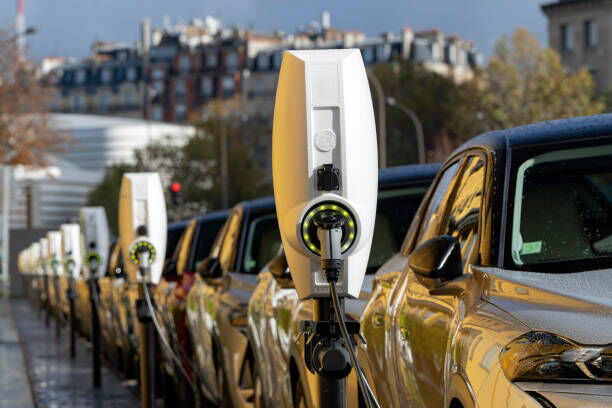
Fleet electrification typically begins with small, exploratory deployments. Companies roll out five to ten electric vans or trucks to evaluate performance under real-world conditions, gather cost data, and understand the operational impacts of electrification. At this scale, Level 2 EV charging is almost always sufficient. Vehicles return to the depot at predictable times and can recharge at relatively low power overnight.
FedEx, one of the early adopters of EV delivery vans, intentionally kept pilot fleets small to avoid triggering costly electrical infrastructure upgrades. In these early rollouts, operators often supplement depot charging with occasional public DC fast charging for emergencies or unexpected detours. But the overall charging load remains manageable with standard L2 equipment.
The transition to full-scale electrification begins when fleets reach the 10–50 vehicle range. While still not massive, a fleet of this size creates a cumulative charging demand that often exceeds the capacity of Level 2 infrastructure—especially if vehicles must support high daily mileage or operate on tight turnaround schedules.
Utilities typically require time-consuming assessments and permitting processes before providing higher-capacity service connections. As a result, fleet operators increasingly adopt stopgap solutions:
On-site battery energy storage systems (BESS)
UPS has heavily invested in battery storage at several of its urban depots. These systems store energy during off-peak hours and deliver high power during charging peaks, preventing overloads on the facility's grid connection.
Smart charging and load management systems
Intelligent controls distribute L2 charging across vehicles based on route schedules, state-of-charge priorities, and depot power constraints.
These solutions offer enough flexibility to support moderate deployment of DC fast chargers—usually one to five units—without requiring immediate grid upgrades.
Once a depot houses more than 50 electric vehicles, reliance on L2 charging becomes operationally unsustainable. Beyond this threshold, the combination of higher electric demand, denser route scheduling, and reduced parking flexibility means that fast charging is no longer optional—it becomes a core part of the fleet's infrastructure.
Amazon provides one of the clearest examples. At several of its largest delivery stations, the company has installed 70 or more charging stations to support over 100 Rivian electric vans. While many of these are advanced Level 2 units, Amazon also deploys DC fast chargers to ensure that vehicles operating on multiple shifts or covering long routes can recharge quickly between deliveries.
At this level of operation, fleet managers acknowledge that slow charging fundamentally limits productivity. Dedicated DC fast charging zones are now a standard part of the design for new EV-ready depots around the world.
Fleet size alone doesn't dictate charging requirements. A second, often more decisive factor is how intensively the vehicles are used. Different industries—from ride-hailing fleets to postal services—experience different duty cycles, making mileage calculations essential in determining whether fast charging is necessary.
A fleet with only five vehicles running 200 miles per day will require mid-day or mid-shift charging long before a larger fleet whose vehicles drive short routes. Anytime daily driving approaches or exceeds a vehicle's maximum usable range, L2 charging becomes a liability.
Even high-performance electric vans typically achieve around 120–150 miles of real-world range under mixed conditions. For a fleet operating two shifts, or one with long highway routes, vehicles may exhaust their charge before completing the required daily workload.
Fast charging fills the gap:
Vehicles can recover 80% charge in as little as 30 minutes.
Mid-shift charging becomes practical.
Downtime is minimized, increasing fleet productivity.
A useful benchmark: fleets where daily routes exceed 150–200 miles per vehicle almost always require mid-day DC fast charging.
Amazon's multi-shift logistics model illustrates the importance of utilization. Some vehicles are assigned to morning routes, return to the depot to unload, then immediately head out again for afternoon delivery blocks. With L2 charging alone, the turnaround time would be too long to keep these vehicles in operation.
In response, Amazon has strategically implemented DC fast chargers at depots with higher-mileage routes and dense delivery schedules. These chargers allow vans to recharge during short breaks or between shifts without compromising delivery timelines.
Public transportation fleets, utility service vehicles, and on-call emergency units often run heavy-duty schedules. These use cases demand:
quick turnaround times
predictable state-of-charge levels
reliable performance across multiple daily cycles
Fast charging becomes indispensable in these environments because it ensures that EVs can deliver the same level of readiness and responsiveness as traditional combustion engine vehicles.
Modern EV batteries are designed to tolerate frequent fast charging, but operators must still consider long-term battery health. Many fleets use a blended strategy:
L2 overnight charging for baseline replenishment
DCFC only when necessary for operational continuity
This mix preserves battery longevity while ensuring the fleet always has enough power to stay on schedule.
Geographical route profiles dramatically influence energy consumption. Two fleets with identical vehicles and identical sizes may have completely different charging requirements based solely on the type of terrain and environment they operate in.
In dense urban environments, delivery vehicles typically cover shorter distances but encounter frequent stop-and-go traffic. Surprisingly, this can work in favor of EVs:
regenerative braking recaptures energy during constant slowing
short urban routes rarely exceed 70–100 miles per day
access to depot charging is straightforward due to predictable schedules
As a result, many major cities have deployed large electric fleets relying primarily on L2 charging.
One well-known example is UPS's London smart depot, which operates dozens of electric delivery vehicles using a combination of L2 chargers and advanced grid management systems. With the help of load balancing and a smart energy control platform, the facility supports approximately 65 EVs without requiring a major utility upgrade.
However, urban depots have challenges of their own:
- limited depot space
- aging electrical infrastructure
- competition for grid capacity with nearby buildings
These constraints can complicate charger expansion even when route distances are manageable.
In contrast, suburban and rural operations tend to involve long distances with fewer stops, leading to higher energy consumption. Daily routes of 100 miles or more are common, and regenerative braking plays a much smaller role. Drivers spend more time at steady highway speeds, which consume energy more efficiently but offer no opportunity for partial recharge.
For suburban and rural fleets:
- mid-route depletion is a greater risk
- vehicles may need to recharge during the workday
- long, spread-out routes reduce opportunities for centralized depot charging
Even small fleets—sometimes fewer than ten vehicles—may require DC fast charging to support long-distance delivery cycles. Companies operating in spacious suburban depots often have an easier time installing fast chargers because land and electrical infrastructure are less constrained.
National and regional logistics providers often operate in both dense cities and rural areas. In these cases, fleet managers typically adopt a hybrid charging approach:
- L2 chargers at urban depots
- DC fast chargers at suburban and rural hubs
- mobile fast-charging trailers for remote or temporary locations
- battery storage for peak shaving and load control
The ability to tailor charging solutions to route characteristics is becoming a fundamental requirement for companies expanding their EV investments.
As fleet electrification accelerates, utilities are beginning to adapt their planning strategies. Increasingly, utilities are partnering with large fleet operators to build dedicated power infrastructure, offer reduced demand charges, or provide subsidies for fast-charging installations.
In many regions, the trend is clear:
- more grid capacity is being allocated for transportation
- streamlined permitting is being introduced
- utilities are testing new pricing structures to support commercial charging
These developments accelerate the integration of DC fast charging into mainstream fleet operations.
Rapid innovations in DC charging equipment also fuel adoption:
- higher-efficiency rectifiers
- modular charger designs
- cooling systems that allow sustained high-power output
- chargers with integrated battery buffers
- smart charging networks that optimize depot energy usage
Modern DC fast chargers are more reliable, more compact, and more cost-efficient than earlier models, making them accessible for mid-size fleets—not just industry giants.
Although DC fast chargers come with higher upfront costs, their impact on operational efficiency can significantly lower total cost of ownership. Benefits include:
- higher fleet uptime
- reduced vehicle downtime
- more flexible route scheduling
- improved asset utilization
- greater ability to scale fleet size
For many companies, the operational savings quickly outweigh the infrastructure investment.
The shift from Level 2 to DC fast charging is not a matter of if, but when. For small pilot fleets with limited mileage, L2 charging remains a practical starting point. But as fleet size surpasses 10–50 vehicles, route mileage increases, or operations expand into suburban and rural territories, L2 becomes insufficient. At that point, fast charging transforms from a luxury into a necessity.
Real-world examples from Amazon, UPS, and FedEx illustrate a clear path: early pilots rely on L2, mid-size fleets adopt hybrid solutions, and large-scale depots anchor their operations on robust DC fast-charging infrastructure.
As electrification progresses across logistics, municipal, and commercial sectors, DC fast charging will play an increasingly central role. The fleets that embrace fast charging early will be better positioned to scale, optimize operations, and lead the evolving mobility landscape.