
As electric vehicles (EVs) continue to shape the future of transportation, charging speed remains one of the most important considerations for both existing and prospective EV owners. Among the various charging options available today, Level 2 charging has emerged as the most practical and widely used solution for daily EV use—offering substantial speed improvements over Level 1 charging, yet remaining far more accessible and cost-effective than DC fast charging. Whether installed at home or encountered at public charging stations, Level 2 chargers play a vital role in keeping millions of EVs on the road.
Understanding how fast Level 2 charging can replenish an electric vehicle's battery is essential for planning commutes, estimating charging costs, and determining whether your home or business is ready to support EV charging needs. This news article takes a deep look at Level 2 charger speed, the factors that influence charging performance, and what EV drivers can realistically expect in everyday charging scenarios.
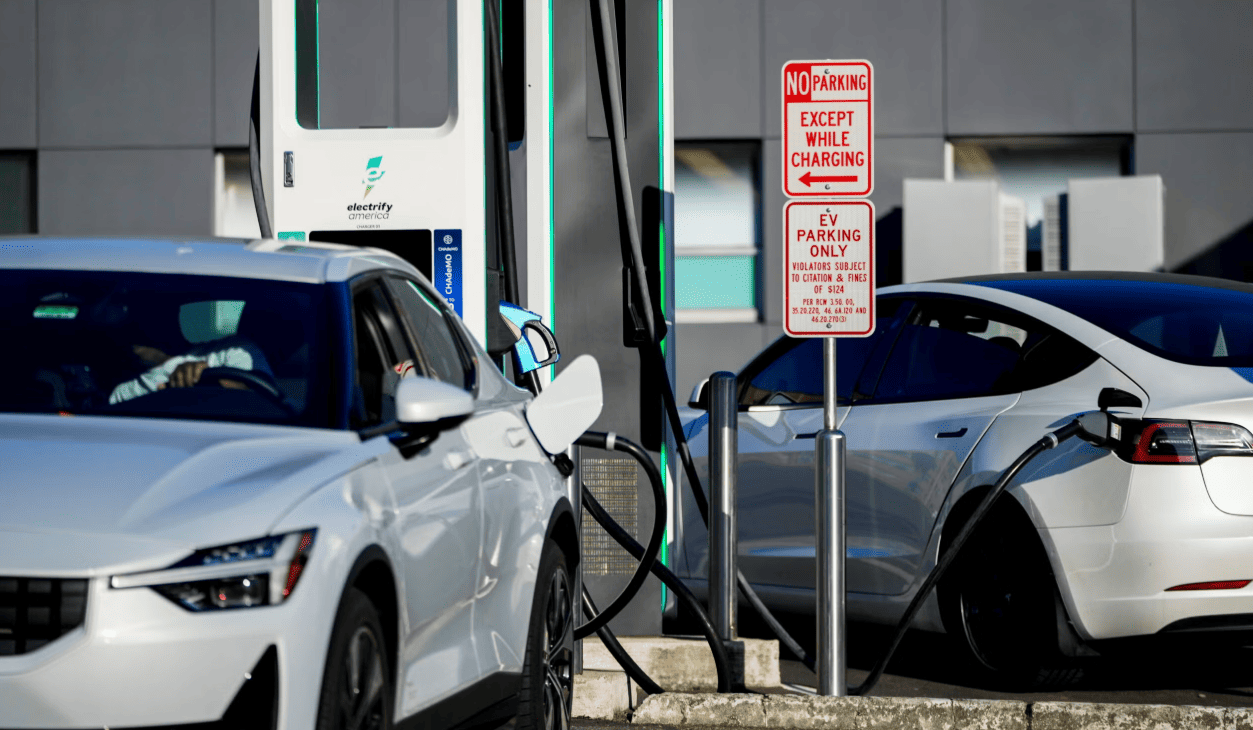
Level 2 charging uses a 240-volt electrical supply, the same voltage used by large household appliances such as electric dryers, ovens, or air conditioning units. This increased voltage makes Level 2 charging dramatically faster than Level 1 charging, which relies on a standard 120-volt household outlet.
Level 2 chargers draw power from a higher-voltage source and deliver that energy to an electric vehicle through an on-board charger, which converts AC (alternating current) from the power grid into DC (direct current) stored in the vehicle's battery.
This higher power input allows Level 2 chargers to add:
Up to 75 miles of driving range per hour under ideal conditions
Speeds typically falling between 3 kW and 19.2 kW, depending on charger capacity and the EV's onboard charging limitations
Residential Level 2 installations usually operate between 7.2 kW and 11.5 kW, while commercial units often support higher capacities.
The majority of EV owners rely on Level 2 charging for daily use because:
Level 1 charging is too slow for modern EV battery sizes.
DC fast charging, although extremely quick, is costly, less common, and not recommended for daily charging due to battery stress.
Level 2 provides an ideal middle ground—fast, accessible, affordable, and battery-friendly.
Today, approximately 75 percent of all public chargers in North America are Level 2 stations, making them a crucial part of the EV charging ecosystem. These chargers appear at workplaces, shopping centers, parks, hotels, golf courses, and entertainment venues—any place where people typically park for one to three hours.
The speed depends on a combination of the charger's power rating and the vehicle's maximum AC charging capability.
Low-power Level 2 (3.3–7.2 kW): Adds 10–25 miles of range per hour
Standard home Level 2 (7.7 kW): Adds 25–30 miles per hour
High-power Level 2 (11.5–19.2 kW): Adds 40–75 miles per hour
In real-world usage, most EV drivers with a standard 7.7 kW home charger experience enough speed to charge their vehicle completely overnight, usually in 8 to 12 hours.
While Level 2 charging is significantly faster than Level 1, the exact charging time for an EV varies widely. Several key factors influence how quickly your EV can recharge.
Battery size is one of the most important determinants of charging time. To understand this, think of battery capacity in kWh as analogous to fuel tank size in a gasoline vehicle.
A 60 kWh battery (common in compact EVs) charges faster than
A 100–130 kWh battery (common in large electric SUVs or trucks)
For example:
A 60 kWh EV charging at 7.7 kW: about 7.8 hours to fully charge
A 100 kWh EV charging at 7.7 kW: about 13 hours to fully charge
As automakers continue to increase EV range, battery sizes are growing. This makes the power output of your Level 2 charger—and your home's electrical capacity—more important than ever.
The current level of your battery affects how long charging will take.
The Charging Curve
EV batteries do not charge at a constant rate. Instead, they follow a “charging curve,” which generally works like this:
Fastest charging occurs when the battery is between 20% and 80% SoC
Charging slows down dramatically once the battery exceeds 80%
Charging from 80% to 100% may take nearly as long as charging from 20% to 80%
This slowdown is controlled by the vehicle's Battery Management System (BMS), which protects the battery from overheating or degrading prematurely.
Because of this phenomenon, many EV drivers choose to charge only to 80–90% for daily use and reserve the 100% charge for long road trips.
One of the most misunderstood aspects of EV charging is the limitation of the on-board charger (OBC). This internal component determines how much AC power your car can convert into usable battery power.
Even if your Level 2 charger can output 19.2 kW, your EV can only accept power up to the OBC's maximum rating.
Example
Charger power output: 11.5 kW
EV OBC maximum acceptance: 7.7 kW
Result: The car charges at 7.7 kW.
Many affordable or older EV models include OBCs rated at 6.6 kW or 7.2 kW, which limits their maximum Level 2 charging speed even if connected to a high-power charger.
Temperature plays a significant role in EV charging.
Cold weather slows charging because the battery becomes less chemically active.
Extremely hot weather can also reduce charging speed to prevent overheating.
Vehicles equipped with active thermal management systems (liquid heating/cooling) handle extreme temperatures better than those using passive systems.
Residential and commercial environments provide different levels of electrical infrastructure:
Typically 7.2–11.5 kW
Limited by home electrical panel capacity
Often requires electrical upgrades for high-power chargers
Often offers higher power
May provide 11.5 kW, 17 kW, or even 19.2 kW
Better suited for topping up during errands, shopping, or dining
A Level 2 charger typically adds:
12 to 60 miles of range per hour
The exact speeds depend on:
Power rating of the charging station
Your EV's maximum AC charging capability
Battery size and current state of charge
Most EVs connected to a 7.7 kW home charger see 25–30 miles per hour, which is enough to fully recharge overnight.
Level 2 charging is five to eight times faster.
Level 1: 3–5 miles of range per hour
Level 2: 25–30 miles of range per hour
A full charge from empty using Level 1 can take 40–50 hours, compared to 8–12 hours with Level 2.
This efficiency difference is why nearly all EV owners upgrade to Level 2 as soon as possible.
The total cost of purchasing and installing a home Level 2 charger typically ranges between:
$1,200 and $2,500
Higher costs—often exceeding $4,000—may occur when:
Your electrical panel requires significant upgrades
Wiring must run a long distance
Older homes need additional grounding or safety work
Government rebates, tax credits, and utility incentives may help offset installation costs in many regions.
For most EV owners, the answer is overwhelmingly yes.
Benefits include:
Full overnight charging
Convenience of charging at home
Lower charging cost compared to public fast chargers
Increased property value for homes equipped with EV infrastructure
Better long-term battery health compared to frequent DC fast charging
No. Charging speed varies by:
Battery size
On-board charger rating
Energy efficiency of the vehicle
State of charge
Temperature
This is why two vehicles plugged into the same charger often charge at different speeds.
No. EVs are equipped with advanced battery management systems that automatically regulate charging and shut it off once the battery reaches full capacity.
The expansion of Level 2 charging infrastructure is essential for the growth of EV use worldwide. Several reasons contribute to its importance:
Most EV drivers travel under 50 miles per day. Level 2 chargers easily replenish this amount within two hours.
Fast chargers are best used for long-distance travel. Level 2 stations ease congestion by handling routine charging.
Level 2 chargers at offices allow employees to top up during the workday, reducing the need for home charging upgrades.
Multi-family dwellings benefit enormously from shared Level 2 charging stations.
Commercial and municipal fleets depend on predictable overnight charging—something Level 2 systems provide reliably.
Level 2 charging strikes the perfect balance between speed, convenience, cost, and long-term battery health. With the capability to add 25–75 miles of range per hour, Level 2 chargers deliver the dependability EV drivers need for daily commuting and routine travel.
Though many factors influence charging speed—battery size, state of charge, the vehicle's on-board charger, and environmental conditions—Level 2 systems remain the backbone of modern EV charging infrastructure. As electric vehicles continue to grow in popularity, Level 2 charging will remain the most practical and accessible solution for millions of drivers across homes, businesses, and public destinations.
