
Electric vehicles (EVs) are evolving far beyond their original purpose as clean transportation tools. While early generations focused mainly on driving range, charging speed, and battery technology, a new wave of innovation is turning EVs into multifunctional energy platforms. Among these advancements, Vehicle-to-Load (V2L) technology stands out as one of the most accessible and practical features available today.
V2L transforms an EV into a portable power source capable of running everyday appliances, tools, and electronics. By using a V2L adapter, drivers can access stored energy from the vehicle's high-capacity battery through a familiar AC outlet. This turning point reflects a broader shift in how modern vehicles interact with homes, industries, and lifestyles.
Originally designed to maximize convenience for outdoor use, V2L has expanded into emergency preparedness, professional work applications, off-grid scenarios, and even temporary household support. As interest in resilient, flexible energy solutions grows globally, V2L is quickly gaining traction among drivers, adventurers, technicians, and homeowners alike.
This extended news feature examines V2L in detail—how it works, its difference from V2G and V2X systems, real-world applications, user experiences, and the rising demand for high-quality V2L adapters. From global EV trends to simple step-by-step usage guides, this report provides comprehensive insight into one of today's most exciting EV technologies.
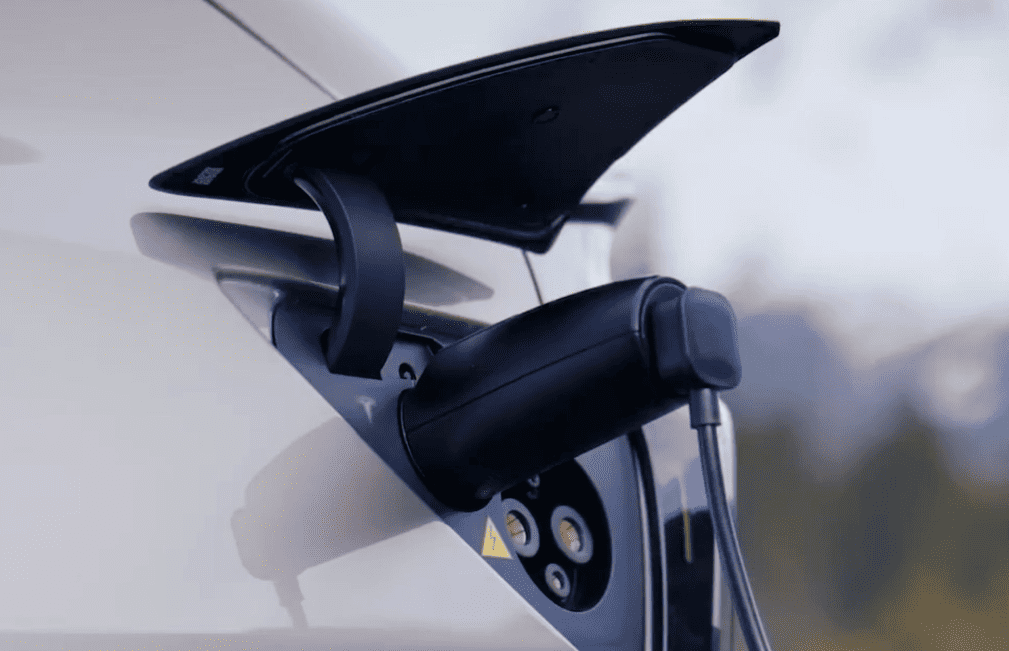
The term V2L stands for Vehicle-to-Load, a function that allows an electric vehicle to supply power to external electrical devices instead of only receiving charge from a grid or EV charging station. With a compatible V2L adapter connected to the vehicle's charging port, the EV becomes a power bank capable of providing AC electricity for household devices, tools, or off-grid equipment.
This is enabled through the car's internal inverter, which converts stored DC energy from the battery into usable AC output. Depending on the vehicle model, V2L typically delivers between 1.8 kW and 5 kW, enough to run:
Home appliances
Coffee makers and kettles
Portable refrigerators
Laptops and mobile devices
Lighting systems
Electric tools
Outdoor cooking equipment
Even slow AC charging for another EV in some cases
With most modern EV batteries ranging from 50 to 100 kWh, the available energy far exceeds what a single household appliance requires. This makes V2L a powerful, flexible, and increasingly popular feature among EV owners.
Although often used together, V2L, V2G, and V2X serve different functions and operate under different technological frameworks.
Powers standalone devices directly
Requires only a V2L adapter
Does not need grid integration
Most widely supported and easiest to use
Sends power from the EV back to the electric grid
Requires advanced bidirectional chargers and utility participation
Helps balance electrical grids, especially during peak hours
Still in early stages globally
V2X is an umbrella term that includes:
V2H (Vehicle-to-Home)
V2B (Vehicle-to-Building)
V2G (Vehicle-to-Grid)
V2L (Vehicle-to-Load)
V2H and V2B can power an entire home or building during outages or peak pricing cycles, but these require advanced two-way wall chargers and smart meters. V2G enables large-scale energy exchange between EV fleets and electrical networks, often supported by government pilot programs.
By comparison, V2L is the simplest and most accessible, requiring nothing more than the vehicle and a compatible adapter.
The rise of V2L can be attributed to several factors:
Camping, “van life,” road trips, and eco-tourism have exploded in popularity. V2L offers:
Power for cooking appliances
Heated blankets and portable heaters
Lighting and AV equipment
Device charging
Camping refrigerators
In Scandinavian countries—known for remote wilderness tourism—V2L-equipped EVs have become a favorite for travelers who want modern comfort in remote areas.
Climate-related events like storms, wildfires, and heatwaves have caused more frequent power outages. An EV with V2L can power critical devices during emergencies, making it:
A backup generator
A source of heating or cooling
A communication hub
A storage-friendly power supply (unlike gasoline generators)
During extended outages in Australia, South Korea, and parts of Europe, many EV owners used V2L to maintain essential household functions.
Compared with gas generators, V2L is:
Silent
Zero-emission
Low-maintenance
Cost-effective
Safer for indoor or enclosed environments
These advantages make V2L increasingly attractive for businesses, homeowners, and outdoor enthusiasts.
Most EVs now exceed 60 kWh of battery capacity—many exceed 80–100 kWh.
By comparison:
A typical home uses 1–3 kWh per hour for essential appliances.
This means even moderate power usage can last many hours or days using V2L.
As of 2025, several automakers have embraced V2L in their mainstream EV models:
IONIQ 5
IONIQ 6
Kona EV (select models)
EV6
EV9
These are among the most recognized V2L vehicles worldwide.
Atto 3
Dolphin
Seal
BYD's integrated V2L port is extremely popular in Asia and Australia.
MG4
MG ZS EV
Some regions now offer V2L support via a dedicated adapter.
F-150 Lightning
Ford Explorer EV
While best known for early V2G, newer Nissan EVs support V2L in certain markets.
This list continues to expand as manufacturers embrace bidirectional designs.
To illustrate the practicality of V2L, here are real-world scenarios from EV owners globally.
An outdoor enthusiast in Norway shared how his Hyundai IONIQ 5 powered a:
portable fridge (80W)
coffee machine (1,300W)
electric cooking stove (800W)
string lights (40W)
All while maintaining more than half of the battery over a weekend.
Contractors use V2L to power:
drills
circular saws
air compressors
diagnostic equipment
The reliability is especially helpful in rural or underdeveloped sites.
During blackouts, EV owners have used V2L to run:
refrigerators
routers
LED TVs
home lighting
laptop chargers
Together, these draw little energy—often under 300W total.
Food vendors and mobile businesses use V2L for:
POS systems
portable cooking equipment
lighting
small refrigerators
This eliminates the need for noisy gasoline generators.
Some EVs can even provide AC power to slowly charge another electric vehicle in emergencies.
Although the process is straightforward, safety and proper setup are essential.
Most EVs require the car to be in Park to activate power export.
The V2L adapter connects through the same port used for standard charging.
It locks in place like a regular charging connector.
Use a power strip or extension cable if needed, but ensure total load is within the EV's maximum output.
Some vehicles require navigation through the touchscreen to enable export mode.
Avoid overloading the circuit. EVs typically shut down the V2L output automatically if limits are exceeded.
The duration depends mainly on the car's battery capacity and the devices being powered. Let's examine a common scenario:
LED lights: 40W
Router: 10W
Laptop: 60W
Refrigerator: 150W
Total: 260W (0.26 kWh per hour)
A full battery would last over 250 hours—more than 10 days.
Even with heavier loads of 1,500W, you could still expect over 40 hours of continuous output.
Tesla's adapter, offering up to 5 kW, enables users to power:
microwaves
kettles
induction cookers
garden tools
This is one of the strongest outputs among consumer V2L systems.
Hyundai and Kia models frequently power whole camping sites for:
2–3 days without draining the battery
Even longer when used intermittently
These models have become icons of V2L capability worldwide.
A high-quality adapter ensures safety, efficiency, and compatibility. Poorly designed adapters risk overheating, poor voltage stability, and even electrical damage.
Key Features to Look For
Compatibility with your EV brand
Output capacity (1.8 kW, 3.6 kW, or 5 kW)
Thermal protection and overload safety
Weatherproof housing
Durable wiring and sockets
Strong locking mechanism
Certified electrical standards
Companies like LiCB offer a professionally curated selection of V2L adapters for Kia, Hyundai, Tesla, BYD, MG, and other EV brands. Their line includes adapters built with robust materials, smart safety features, and price-to-performance ratios suitable for both home and outdoor use.
LiCB also supplies charging stations, EV cables, and accessories, making it a one-stop solution for both consumer and commercial EV needs.
Industry analysts project strong growth for bidirectional technology in the coming years. Several trends support this:
Consumers are seeking energy-saving strategies beyond traditional home upgrades.
V2L aligns with the movement toward:
off-grid homes
home battery systems
renewable energy integration
Many countries encourage bidirectional charging research and pilot programs.
Manufacturers across Asia, Europe, and North America are integrating V2L into new platforms.
Floods, storms, and power shortages have increased consumer awareness of emergency power needs.
Delivery fleets, mobile workshops, construction teams, and emergency responders increasingly rely on EVs with V2L capability.
Within the next decade, V2L is expected to become a standard feature in nearly all mid- to high-range EVs.
V2L adapters and Vehicle-to-Load technology are redefining what electric vehicles can offer. From powering equipment in remote locations to supporting households during emergencies, V2L turns the EV from a simple mode of transport into a versatile and dependable portable energy station.
As the technology continues to mature and as more automakers incorporate bidirectional capabilities, V2L will likely become an essential feature for EV owners. Whether for camping, outdoor work, travel, backup power, or daily convenience, V2L represents a practical and empowering evolution in automotive technology.
For drivers looking to fully unlock this potential, choosing a safe, high-quality V2L adapter—such as those offered by LiCB—is the key to maximizing functionality, efficiency, and peace of mind.
