
As electric vehicles (EVs) continue to gain traction worldwide, charging convenience has become one of the most critical factors influencing EV adoption. For many potential buyers, questions about charger compatibility, charging speed, and infrastructure availability remain top concerns. This is where the concept of a universal EV charger comes into focus.
A universal EV charger is designed to charge most electric vehicles regardless of brand, model, or regional charging standard. While not every charger is truly “one-size-fits-all,” modern charging solutions increasingly support multiple connectors, power levels, and intelligent communication protocols that make cross-brand charging simpler than ever before.
In the early days of electric mobility, charging networks were fragmented, and many chargers worked only with specific vehicles. Today, the industry is rapidly moving toward standardization. Even Tesla—once considered an exception due to its proprietary connector—has opened much of its Supercharger network to non-Tesla vehicles through updated connector designs and adapters.
This article explores what a universal EV charger is, how EV charging levels work, the main connector types in use globally, and the key features that define modern universal charging solutions, including Tesla’s universal charging technology.
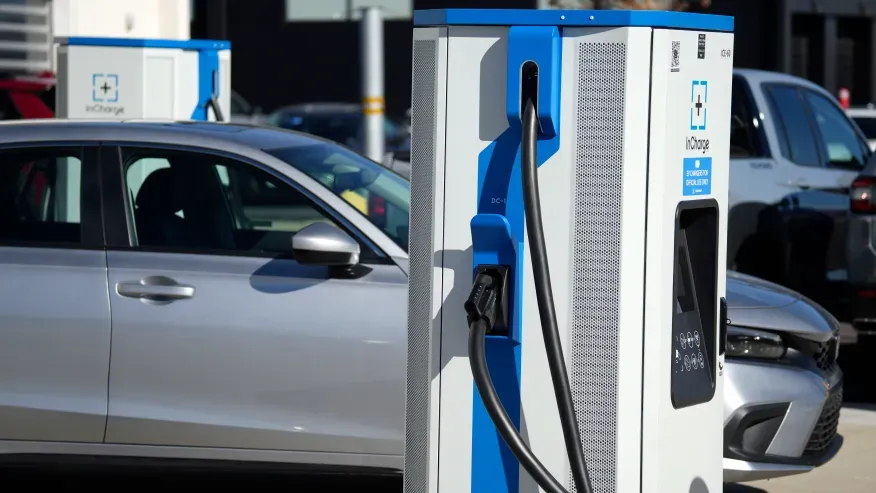
Although many EV chargers are described as “universal,” charging capability is typically categorized into three charging levels. Each level differs in power output, charging speed, and typical use cases. Understanding these levels is essential to grasp how universal chargers function across different vehicles.
Level 1 charging uses a standard household electrical outlet, typically delivering 120V AC power in North America or equivalent low-voltage power in other regions. This is the most basic form of EV charging and usually requires no special installation.
Key characteristics:
Charging speed: 3–5 miles of range per hour
Best suited for: Overnight home charging
Equipment: Standard outlet with a portable charging cable
While Level 1 charging is universally compatible with EVs that support AC charging, it is slow and not ideal for drivers with long daily commutes.
Level 2 charging operates at 208–240V AC and is widely used in homes, workplaces, and public charging stations. This level represents the sweet spot between affordability, speed, and compatibility.
Key characteristics:
Charging speed: 20–40 miles of range per hour
Best suited for: Daily home charging and public use
Equipment: Dedicated wall-mounted or pedestal chargers
Most universal EV chargers fall into the Level 2 category because nearly all modern EVs support AC charging at this level. Connector standards such as Type 1 and Type 2 dominate this segment.
Level 3 charging, also known as DC fast charging, bypasses the vehicle’s onboard charger and delivers high-voltage direct current directly to the battery.
Key characteristics:
Charging speed: 80% charge in 20–40 minutes
Best suited for: Highway corridors and commercial stations
Equipment: Large, high-power charging units
Universal DC fast chargers typically support multiple connector types, making them critical for long-distance EV travel and public charging networks.
A universal EV charger is not defined by a single connector or power rating. Instead, it is characterized by flexibility and interoperability. A charger is considered universal when it can:
- Support multiple connector standards
- Adapt charging power to different vehicle requirements
- Communicate effectively with various EV brands
- Comply with international charging protocols and safety standards
Modern universal chargers rely heavily on intelligent software, modular hardware design, and standardized communication protocols to ensure compatibility across a wide range of vehicles.
Although universal chargers aim to support many EVs, connector diversity still exists due to regional standards and historical development. Below are the most widely used connector types found on universal charging stations.
Type 1 connectors are primarily used in North America and parts of Asia. They support both Level 1 and Level 2 AC charging.
Key features:
- Single-phase AC charging
- Power output up to 19.2 kW
- Commonly used by brands such as Chevrolet, Nissan, and Ford
Many universal AC chargers include a Type 1 cable or socket to serve the North American market.
Type 2 connectors are the standard across Europe and are increasingly adopted in other regions.
Key features:
- Single- and three-phase AC charging
- Power output up to 43 kW (AC)
- Widely used by BMW, Volkswagen, Mercedes-Benz, and Tesla (in Europe)
Type 2 is often considered the most versatile AC connector, making it a cornerstone of universal charging infrastructure.
CCS is one of the most important standards for universal fast charging. It combines AC and DC charging capabilities into a single connector.
Key features:
CCS1 (North America) and CCS2 (Europe)
Supports ultra-fast DC charging up to 350 kW
Used by most modern EV manufacturers worldwide
Because of its high power capability and broad industry support, CCS has become the dominant standard for public DC fast chargers.
CHAdeMO originated in Japan and was widely used in early EVs.
Key features:
DC fast charging standard
Commonly used by Nissan and Mitsubishi
Power levels typically up to 62.5 kW, with newer versions supporting higher output
Although CHAdeMO adoption is declining in some regions, many universal chargers still include CHAdeMO connectors to support legacy vehicles.
For many years, Tesla vehicles used proprietary charging connectors, creating a perception that Tesla charging was incompatible with other EVs. However, this has changed significantly.
Tesla has introduced a more open charging ecosystem, including:
Adapter solutions for CCS and CHAdeMO
Expansion of Supercharger access to non-Tesla vehicles
Adoption of standardized connectors in various markets
This shift has played a major role in accelerating the adoption of universal EV charging and reducing fragmentation across charging networks.
Modern universal EV chargers are defined not only by connector compatibility but also by advanced technology and user-focused design. Below are the core features that distinguish high-quality universal charging solutions.
At the heart of a universal EV charger is adaptive charging technology. This intelligent system allows the charger to communicate with the vehicle and automatically adjust power output based on:
Battery capacity
State of charge
Vehicle charging limits
Grid conditions
By optimizing charging parameters in real time, adaptive charging ensures safety, efficiency, and battery longevity for a wide range of EV models.
Universal chargers often include:
Multiple built-in cables
Interchangeable connector modules
Adapter-based compatibility
This design enables a single charging station to serve different vehicles without requiring separate installations. Multi-connector compatibility is especially valuable for public charging networks and commercial fleet operators.
Charging speed remains one of the most important factors for EV users. Universal chargers are increasingly capable of delivering:
High-power AC charging for daily use
Ultra-fast DC charging for long-distance travel
By supporting a wide range of power outputs, universal chargers accommodate both entry-level EVs and high-performance electric vehicles.
Modern universal chargers are as much software platforms as they are hardware devices. Common smart features include:
Mobile app control
Remote monitoring and diagnostics
RFID or app-based user authentication
Integration with payment systems
Over-the-air software updates
These capabilities improve reliability, reduce maintenance costs, and enhance the overall charging experience.
Ease of use is essential for widespread EV adoption. Universal chargers typically feature:
Clear LED indicators or touchscreen displays
Simple plug-and-charge operation
Real-time charging status updates
Automatic session start and stop
A user-friendly interface lowers the learning curve for new EV drivers and makes charging accessible to a broader audience.
The rise of universal EV chargers offers significant advantages for individuals, businesses, and governments.
Greater charging convenience
Reduced range anxiety
Freedom to switch vehicle brands without changing chargers
One charger serves multiple vehicle types
Lower infrastructure costs
Higher utilization rates
Simplified infrastructure planning
Faster EV adoption
Better use of public charging investments
The EV industry is moving steadily toward greater standardization and interoperability. Future trends in universal charging include:
Wider adoption of high-power DC charging
Increased use of smart grid integration
Vehicle-to-grid (V2G) and bidirectional charging
Continued collaboration between automakers and charging providers
As technology evolves, universal EV chargers will play a central role in creating a seamless, global charging ecosystem.
A universal EV charger represents far more than just a charging cable or connector—it is a key enabler of the electric mobility revolution. By supporting multiple charging levels, connector standards, and intelligent communication systems, universal chargers remove compatibility barriers and make EV ownership more practical and appealing.
With advancements in adaptive charging technology, high-speed power delivery, and smart connectivity, today’s universal EV chargers are designed to meet the needs of a diverse and rapidly growing EV market. As the industry continues to mature, universal charging solutions will remain essential to building a reliable, efficient, and user-friendly electric transportation infrastructure.
