
As electric vehicles (EVs) continue to gain popularity worldwide, charging convenience has become one of the most important factors influencing consumer adoption. While high-power AC wallboxes and DC fast chargers often dominate discussions around EV infrastructure, the 3 pin EV charger remains one of the most widely used and accessible charging solutions, especially for new EV owners and residential users.
Often referred to as Level 1 charging, a 3 pin EV charger allows electric vehicles to be charged directly from a standard household socket. Although it offers slower charging speeds compared to dedicated EV chargers, its simplicity, affordability, and universal availability make it an essential part of the EV charging ecosystem.
This article provides a comprehensive overview of what a 3 pin EV charger is, how it works, its advantages and limitations, safety considerations, typical applications, and its role in the future of EV charging. By understanding these factors, EV users, installers, and industry stakeholders can make informed decisions about when and how to use 3 pin charging effectively.
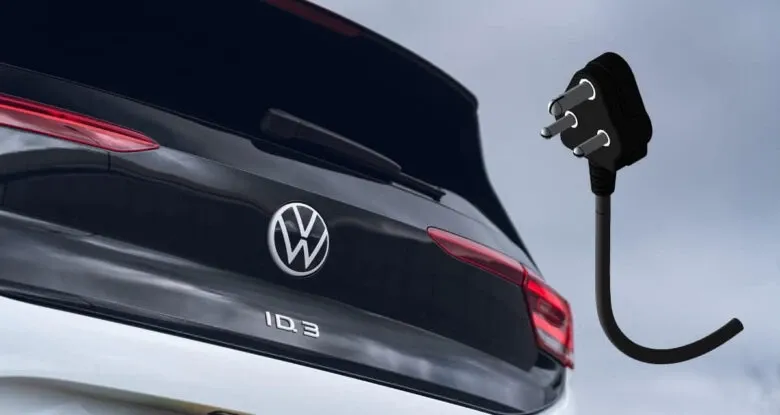
A 3 pin EV charger is a basic EV charging solution that connects an electric vehicle to a standard three-pin household power outlet. The charger typically consists of a portable charging cable equipped with an in-cable control and protection device (IC-CPD), which manages power delivery and provides essential safety functions.
Unlike dedicated wall-mounted EV chargers, a 3 pin charger does not require specialized installation. It simply plugs into an existing socket, making it the most convenient and widely accessible charging option for EV owners.
Depending on regional standards, a 3 pin EV charger usually operates at:
220–240V AC in many parts of Europe, Asia, and other regions
110–120V AC in North America and select markets
Charging power is generally limited to 1.8 kW to 3.0 kW, depending on the socket rating and charger design.
The operation of a 3 pin EV charger is straightforward but incorporates multiple safety layers to ensure secure charging.
The charger draws power from a standard household outlet through a three-pin plug, typically consisting of live, neutral, and earth connections.
The IC-CPD built into the charging cable communicates with the vehicle, controls the charging current, and continuously monitors for faults such as overcurrent, overtemperature, and leakage currents.
On the vehicle side, the charger connects via a standard EV connector such as Type 1 or Type 2, depending on the vehicle and region.
The vehicle's onboard charger converts AC power into DC power to charge the battery. The charging rate is limited by both the household socket and the vehicle's onboard charging capacity.
This simple process allows EV owners to charge their vehicles safely using existing electrical infrastructure.
One of the defining characteristics of a 3 pin EV charger is its slow charging speed. While this may seem like a disadvantage, it can be perfectly adequate for certain use cases.
Charging Power
Standard household socket: 10–13A
Typical output: 2.0–2.3 kW (in 230V regions)
Charging Time
Charging time depends on battery capacity and state of charge. For example:
A small EV with a 20–30 kWh battery may require 10–15 hours for a full charge.
A mid-size EV with a 50–60 kWh battery may take 20–30 hours.
As a result, 3 pin charging is best suited for overnight charging or emergency top-ups, rather than daily high-mileage use.
Despite their limitations, 3 pin EV chargers offer several important advantages that keep them relevant in today's EV market.
One of the greatest benefits of 3 pin charging is that almost every home already has compatible sockets. This eliminates the need for additional electrical upgrades or charger installations.
3 pin EV chargers are typically:
Included with the vehicle at purchase
Less expensive than wall-mounted chargers
Free from installation costs
This makes them an economical entry point for first-time EV owners.
Most 3 pin EV chargers are lightweight and portable, allowing drivers to:
Charge at home
Use the charger while traveling
Charge at friends’ or relatives’ homes
This flexibility provides peace of mind, especially in areas with limited public charging infrastructure.
With no complex configuration or networking requirements, 3 pin chargers are extremely easy to use. Simply plug in and charge.
While convenient, 3 pin EV chargers are not suitable for all scenarios.
The low power output significantly limits charging speed, making it impractical for drivers who:
- Travel long distances daily
- Require frequent fast charging
- Have large battery capacity vehicles
Standard household sockets are not designed for prolonged high-current use. Continuous charging over many hours can lead to:
- Socket overheating
- Cable wear
- Reduced electrical safety if wiring is outdated
Compared to modern wall-mounted chargers, 3 pin chargers typically lack:
- Smart scheduling
- Energy monitoring
- Load balancing
- Remote control via apps
Safety is a critical concern when using 3 pin EV chargers, particularly because they rely on general-purpose household outlets.
Most modern 3 pin EV chargers include:
- Overcurrent protection
- Overvoltage and undervoltage protection
- Overtemperature protection
- Residual current protection (AC and DC leakage detection)
- Ground fault detection
These features significantly reduce risks when used correctly.
EV owners should ensure:
- The socket is in good condition
- Wiring meets local electrical standards
- No extension cords are used
- The plug fits firmly without looseness
Dedicated sockets with higher current ratings are strongly recommended where possible.
Proper earthing and residual current protection are essential. In some regions, additional RCD protection in the distribution board may be required to meet electrical codes.
For EV owners with low daily mileage, a 3 pin charger can fully meet charging needs through overnight charging.
Even EV owners with wall-mounted chargers often keep a 3 pin charger as a backup solution in case of equipment failure or while traveling.
3 pin chargers are ideal for:
- Rental properties
- Temporary accommodation
- Construction sites
- Short-term EV use
Feature | 3 Pin EV Charger | AC Wallbox Charger |
Power Output | 2–3 kW | 7–22 kW |
Installation | None | Professional installation |
Charging Speed | Slow | Moderate to fast |
Cost | Low | Higher |
Portability | High | Fixed |
Smart Features | Limited | Advanced |
While wall-mounted chargers offer superior performance, 3 pin chargers remain an essential complement rather than a replacement.
3 pin EV chargers must comply with regional electrical and EV charging standards, such as:
IEC 61851 for EV conductive charging systems
IEC 62752 for in-cable control and protection devices
National wiring regulations and safety certifications
Compliance ensures safety, reliability, and compatibility across different markets.
Proper maintenance of a 3 pin EV charger is essential to ensure safe operation, reliable performance, and a long service life. Although these chargers are simple and portable, they are often used for extended charging periods, making regular inspection and care especially important.
Routine visual checks should be carried out before use. The charging cable, plug, and vehicle connector should be free from cuts, cracks, deformation, or exposed wires. Any signs of overheating, such as discoloration of the plug pins or a burning smell, indicate that the charger should be stopped immediately and inspected or replaced. The household socket used for charging must be in good condition, firmly mounted, and compliant with local electrical standards.
It is also important to keep the charger clean and dry. Dust, moisture, and dirt can affect electrical contacts and increase the risk of leakage currents. When not in use, the charger should be stored in a dry, ventilated area and protected from mechanical damage.
In addition, users should periodically test the built-in safety functions, such as residual current and overtemperature protection, following the manufacturer's instructions. If the charger trips frequently or behaves abnormally, professional inspection is recommended. Regular maintenance not only improves safety but also ensures consistent and dependable EV charging.
3 pin EV chargers play a crucial role in:
Lowering the barrier to EV ownership
Supporting early-stage EV markets
Providing universal charging access
In regions where charging infrastructure is still developing, 3 pin charging often serves as the first and most accessible charging option.
While fast charging technology continues to advance, 3 pin EV chargers are unlikely to disappear. Instead, they will evolve with:
Improved safety features
More durable connectors
Better thermal management
Enhanced compatibility with smart energy systems
They will continue to serve as entry-level and backup charging solutions, complementing more powerful chargers.
The 3 pin EV charger remains a fundamental component of the electric vehicle charging ecosystem. While it cannot replace high-power AC or DC chargers, it offers unmatched convenience, affordability, and accessibility.
For many EV owners, especially those with predictable driving patterns and access to overnight charging, a 3 pin charger provides a reliable and practical solution. When used correctly and safely, it supports the broader goal of making electric mobility accessible to everyone.
As EV adoption accelerates worldwide, 3 pin EV chargers will continue to play an important supporting role, ensuring that charging is always within reach—anytime, anywhere.