
As electric vehicles (EVs) continue their rapid rise from niche innovation to mainstream transportation, home charging has become a central part of daily driving life. For most EV owners, the convenience of plugging in at home overnight is one of the biggest advantages of going electric. But not all home charging options are created equal. Among the available solutions, Level 2 EV home chargers have emerged as the preferred choice for drivers seeking faster charging, greater flexibility, and long-term reliability.
Understanding how EVs differ, how home charging works, and why Level 2 EV home chargers have become the industry standard is essential for both new and experienced EV owners. This article explores the types of electric vehicles on the market, explains the fundamentals of EV charging, and takes a deep dive into why Level 2 charging is the most practical home solution for the majority of drivers.
Before choosing a home charging setup, it is important to understand the different types of electric vehicles currently on the road. While all are part of the EV family, their charging needs and driving behaviors vary significantly.
Battery Electric Vehicles, often referred to as fully electric vehicles, operate exclusively on electricity. They are powered by large onboard battery packs that supply energy to electric motors, with no internal combustion engine and no tailpipe emissions. Popular examples include the Tesla Model 3, Nissan Leaf, Chevrolet Bolt, and many newer models from global automakers.
Because BEVs rely entirely on stored electricity, regular charging is essential. Drivers must replenish the battery frequently, whether at home, at public charging stations, or at fast-charging networks during longer trips. For BEV owners, home charging is not simply a convenience—it is a necessity. This makes charging speed, reliability, and ease of use critical factors in daily ownership.
Hybrid Electric Vehicles combine a traditional gasoline engine with an electric motor and a small battery. Unlike fully electric vehicles, HEVs do not plug into the electrical grid. Instead, the battery is charged through regenerative braking and by the internal combustion engine.
While HEVs improve fuel efficiency and reduce emissions compared to conventional vehicles, they do not require home charging infrastructure. As a result, Level 1 or Level 2 charging solutions are not relevant for this category of vehicle owners.
Plug-In Hybrid Electric Vehicles represent a bridge between fully electric and traditional gasoline-powered cars. PHEVs use both an electric motor and a gasoline engine, but unlike HEVs, they can be charged by plugging into an external power source.
PHEVs typically offer a limited all-electric driving range—often between 20 and 50 miles—before switching to gasoline. This makes home charging especially valuable for drivers who want to maximize electric-only driving for daily commutes. While PHEV batteries are smaller than those in BEVs, faster charging still adds convenience, particularly for drivers with longer daily travel needs.
Charging an electric vehicle is fundamentally different from refueling a gasoline car. Instead of visiting a fuel station for a few minutes, most EV owners charge their vehicles over several hours, often while they sleep. Home charging has therefore become the most common and convenient method for replenishing an EV battery.
Home charging is generally divided into two categories:
- Level 1 Charging: Uses a standard household outlet (typically 120 volts in North America).
- Level 2 Charging: Uses a dedicated 240-volt electrical circuit and specialized charging equipment.
While both methods deliver electricity to the vehicle safely, they differ dramatically in speed, efficiency, and practicality.
Level 1 charging is the simplest form of EV charging. It involves plugging the vehicle into a standard household electrical outlet using the charging cable typically provided by the manufacturer.
Advantages of Level 1 Charging
- No additional equipment required
- No electrical upgrades needed
- Suitable for emergency or occasional charging
Limitations of Level 1 Charging
Despite its simplicity, Level 1 charging is slow. Most Level 1 setups provide 2 to 5 miles of driving range per hour of charging. For drivers with long commutes or fully electric vehicles, this often means overnight charging may not replenish the battery sufficiently.
Level 1 charging may be acceptable for:
- PHEV owners with short daily driving needs
- Drivers with access to workplace or public charging
- Occasional top-ups when no other options are available
However, for most BEV owners, Level 1 charging is not a practical long-term solution.
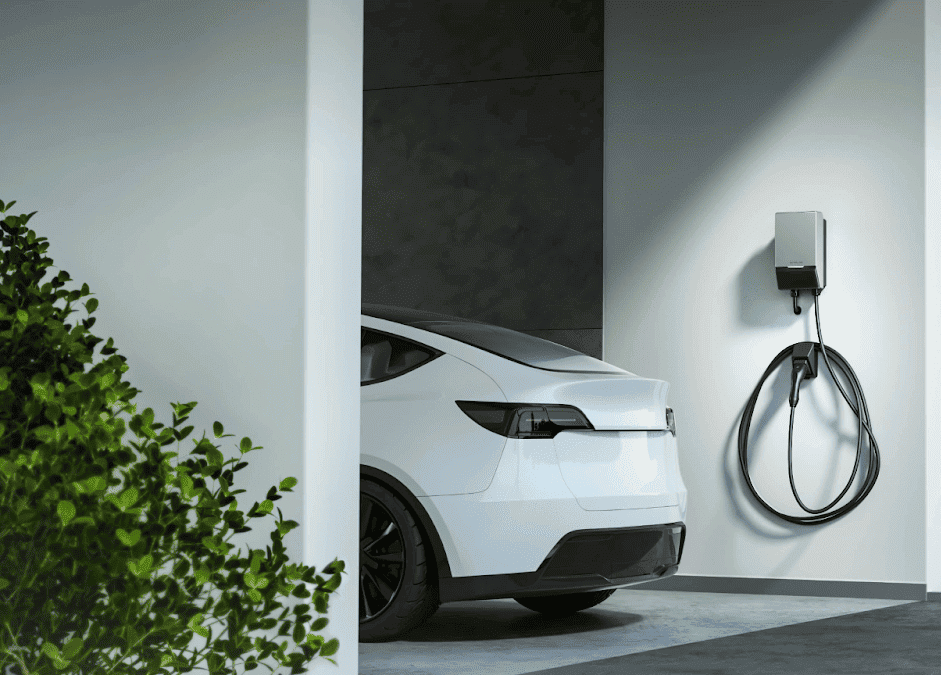
Level 2 charging, also known as EVSE (Electric Vehicle Supply Equipment), represents the next step up in home charging capability. These chargers operate on a 240-volt power supply, the same type of electrical service used by large household appliances such as electric dryers, ovens, and air conditioners.
A Level 2 charger can be installed in:
- Residential garages
- Driveways
- Carports
- Outdoor walls
The charger is either hardwired directly into the home’s electrical panel or connected via a dedicated 240-volt outlet.
One of the biggest advantages of Level 2 charging is speed. Compared to Level 1:
Level 1: ~2–5 miles of range per hour
Level 2: 15–40+ miles of range per hour
This means a vehicle that might take 24–48 hours to fully recharge on Level 1 can often be fully charged overnight with a Level 2 charger.
For BEV owners, this eliminates “range anxiety” and ensures that the vehicle is ready each morning. For PHEV drivers, faster charging allows them to maximize electric-only driving, even with multiple trips in a single day.
Modern electric vehicles are designed with Level 2 charging in mind. Many automakers recommend or even assume that owners will install a Level 2 charger at home. This is especially true as battery capacities continue to increase and driving ranges extend beyond 250 or 300 miles.
With Level 2 charging, most drivers can:
Replenish their daily mileage in just a few hours
Take advantage of off-peak electricity rates at night
Avoid frequent visits to public charging stations
Level 2 chargers are typically wall-mounted and permanently installed, making them far more convenient than portable cables. Many models include features such as:
Scheduled charging
Smartphone app control
Real-time energy monitoring
Automatic power adjustment
These features allow drivers to plug in, walk away, and trust that their vehicle will be charged efficiently and safely.
While Level 2 charging offers clear advantages, it does require some preparation. Understanding the installation process helps homeowners plan effectively.
A Level 2 charger requires a 240-volt circuit, similar to those used by major household appliances. Before installation, a qualified electrician typically evaluates:
The home’s electrical panel capacity
Available circuit space
Overall load management
In some cases, a panel upgrade may be necessary, especially in older homes. However, many modern homes can accommodate Level 2 charging with minimal modifications.
Level 2 chargers can be installed both indoors and outdoors. For outdoor installations, it is essential to choose equipment with:
Weather-resistant enclosures
Appropriate IP or NEMA ratings
Durable cables designed for varying temperatures
This allows homeowners without garages to enjoy the same benefits as those with indoor parking.
Professional installation ensures compliance with:
Local electrical codes
Utility requirements
Manufacturer guidelines
Certified installation also enhances safety by reducing risks such as overheating, electrical faults, or improper grounding.
For owners of fully electric vehicles, Level 2 charging is not just a convenience—it is the backbone of daily operation. With larger battery packs and longer driving ranges, BEVs benefit most from faster home charging.
Key benefits for BEV drivers include:
- Reliable overnight charging
- Reduced dependence on public charging infrastructure
- Greater flexibility for spontaneous travel
While PHEVs have smaller batteries, Level 2 charging still provides meaningful advantages:
- Faster turnaround between trips
- More time driving in electric-only mode
- Lower fuel consumption and emissions
Drivers who commute frequently or make multiple short trips per day will find Level 2 charging especially valuable.
One of the major appeals of EV ownership is reduced operating cost. Charging at home, particularly during off-peak hours, is often significantly cheaper than purchasing gasoline or diesel.
With Level 2 charging:
Vehicles charge faster, reducing total energy losses
Smart chargers can be programmed to use the lowest-cost electricity periods
Homeowners can integrate renewable energy sources such as solar panels
The upfront cost of a Level 2 charger typically includes:
- The charging unit itself
- Electrical wiring and breaker installation
- Labor from a licensed electrician
While the initial investment may seem significant, many regions offer:
- Government incentives
- Utility rebates
- Tax credits for EV charging equipment
Over time, the savings on fuel and maintenance often offset the installation expense.
Level 2 home charging supports broader sustainability goals by:
Encouraging the adoption of zero-emission vehicles
Reducing reliance on fossil fuels
Supporting grid optimization through off-peak charging
When combined with renewable energy sources such as rooftop solar, home EV charging can significantly lower a household’s carbon footprint.
Modern Level 2 chargers are increasingly integrated with digital technology. Many models now offer:
- Wi-Fi or Bluetooth connectivity
- Remote monitoring via mobile apps
- Load balancing for multi-vehicle households
- Integration with home energy management systems
As smart grids evolve, Level 2 chargers are expected to play a role in:
Demand response programs
Vehicle-to-home (V2H) energy sharing
Grid stabilization during peak usage periods
These developments further strengthen the case for Level 2 charging as a long-term investment.
“Level 2 Is Only for High-End EVs”
In reality, most modern electric vehicles—across all price ranges—are compatible with Level 2 charging. From compact city cars to luxury sedans and SUVs, Level 2 charging is widely supported.
“Installation Is Too Complicated”
While installation requires professional work, it is usually straightforward and completed within a day. Many homeowners are surprised by how quickly they can begin using their charger.
“Public Charging Is Enough”
Public charging networks are expanding, but they cannot match the convenience of home charging. Relying solely on public stations can be time-consuming and unpredictable, especially during peak hours.
As EV adoption accelerates, Level 2 charging is becoming a standard feature in:
- New residential developments
- Multi-family housing projects
- Workplace parking facilities
For homeowners, installing a Level 2 charger not only improves daily convenience but also adds long-term value to the property, aligning it with the future of transportation.
The transition to electric mobility is reshaping how people think about transportation, energy, and everyday convenience. Among the many technological advancements driving this shift, Level 2 EV home chargers stand out as the most practical and widely adopted solution for home charging.
By offering faster charging, enhanced convenience, and compatibility with nearly all modern electric vehicles, Level 2 chargers empower drivers to fully embrace electric driving without compromise. Whether you own a fully electric vehicle or a plug-in hybrid, a Level 2 charging station transforms your home into a personal fueling hub—reliable, efficient, and ready whenever you are.
As the EV market continues to grow and charging technology evolves, Level 2 home charging will remain at the heart of the electric driving experience, supporting a cleaner, smarter, and more connected future for transportation.
