
The rise of electric vehicles (EVs) has driven a surge in demand for robust, reliable, and long-lasting charging infrastructure. As EV adoption grows, businesses, municipalities, and property developers are investing heavily in public and private charging stations. While much attention is given to electrical specifications, connector types, and charging speeds, another equally important factor often goes overlooked: the physical durability of the charger.
EV chargers, especially those installed in public areas or exposed environments, face a variety of mechanical stresses. These can range from accidental knocks and collisions to deliberate acts of vandalism. Even indoor chargers are not immune to impacts from maintenance equipment, carts, or tools. Ensuring that chargers can withstand such challenges is critical for their operational longevity, safety, and reliability.
This is where IK ratings come into play. While most businesses are familiar with Ingress Protection (IP) ratings, which define a device's resistance to dust and water, IK ratings focus on a charger's ability to withstand mechanical impacts. Together, IP and IK ratings provide a complete picture of a charger's resilience, guiding businesses in selecting devices that deliver consistent performance under both environmental and mechanical stress.
This article explores the significance of IK ratings for EV chargers, explains the rating system in detail, examines common industry standards, and provides guidance for businesses looking to make informed infrastructure investments.
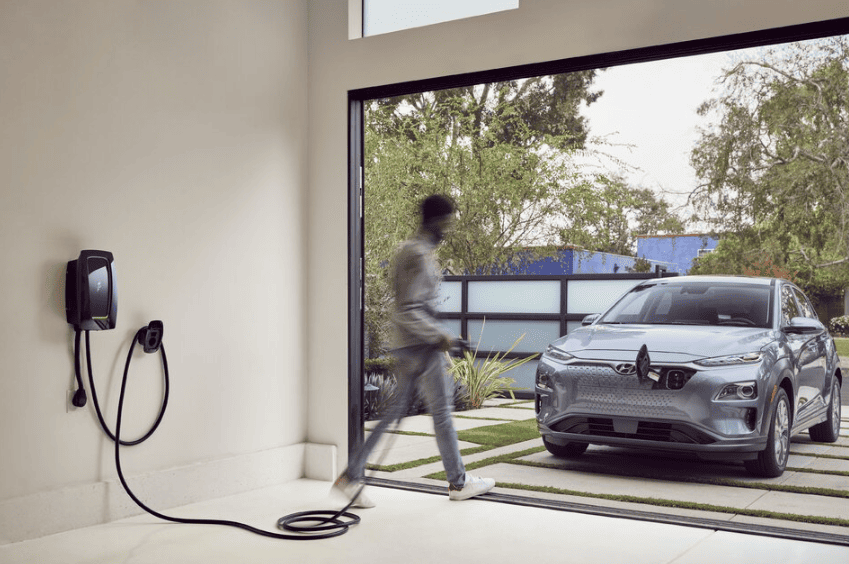
The IK rating system is an internationally recognized standard (IEC 62262) that measures the resistance of an enclosure to mechanical impact. Unlike IP ratings, which focus on environmental protection such as dust and water ingress, IK ratings evaluate how well a device can withstand physical force without sustaining structural damage or compromising its internal components.
Each IK rating corresponds to a specific amount of energy, measured in joules, that the device can absorb. The scale ranges from IK00, which provides no protection, to IK10, which offers the highest level of impact resistance commonly used in commercial equipment. By understanding these ratings, businesses can assess whether a charger will withstand everyday bumps, accidents, or deliberate attacks, ensuring continued safe operation.
- IK00 – No protection against impact.
- IK01 to IK06 – Low-level protection for minor impacts, such as light objects accidentally striking the enclosure.
- IK07 – Absorbs 2 joules of energy, equivalent to a small object weighing 500 grams dropped from about 40 centimeters.
- IK08 – Absorbs 5 joules, roughly a 1.7-kilogram object dropped from 30 centimeters.
- IK09 – Absorbs 10 joules, equivalent to a 5-kilogram object dropped from 20 centimeters.
- IK10 – Absorbs 20 joules, equivalent to a 5-kilogram object dropped from 40 centimeters, representing the highest standard for commercial EV chargers.
By knowing these thresholds, EV infrastructure planners can select chargers that withstand expected levels of impact, minimizing downtime, repairs, and potential hazards.
EV chargers are often installed in environments where mechanical impacts are unavoidable. Public parking lots, commercial garages, and outdoor service areas expose chargers to potential collisions, vandalism, and incidental knocks. Even indoor installations are vulnerable to impacts from maintenance tools, moving vehicles, or other equipment.
Selecting chargers with appropriate IK ratings provides several key benefits:
Public charging stations may be subjected to intentional damage. Choosing chargers with high IK ratings, such as IK10, ensures the enclosure can absorb forceful blows without compromising functionality or safety. This reduces downtime and protects the investment.
Mechanical impacts can damage critical internal components, including wiring, circuit boards, and connectors. A robust IK-rated enclosure safeguards these elements, maintaining reliable operation over the charger's lifespan.
Damaged enclosures may expose users to electrical hazards. IK-rated chargers maintain structural integrity even under impact, reducing the risk of electric shock or fire.
Municipal regulations and safety standards increasingly reference durability metrics for public infrastructure. Choosing chargers with verified IK ratings helps businesses comply with regulations while mitigating liability in the event of damage or accidents.
The choice of IK rating depends heavily on the installation environment and the level of impact risk. Two ratings are most commonly used in EV charging infrastructure: IK08 and IK10.
IK08-rated chargers can absorb moderate impacts, such as accidental bumps from carts or tools. These chargers are ideal for indoor environments with controlled access, including:
- Office parking garages
- Residential complexes
- Corporate fleet facilities
They provide a balance between cost and durability, ensuring sufficient protection without the higher manufacturing costs associated with IK10-rated enclosures.
IK10-rated chargers are engineered to withstand high-energy impacts, including deliberate attacks or accidental collisions from vehicles. Common outdoor installations where IK10 is advisable include:
- Public parking lots
- Highway service areas
- Shopping centers and commercial hubs
- Urban on-street parking stations
IK10 enclosures minimize the risk of damage and reduce maintenance requirements, offering long-term reliability in challenging environments.
While IK ratings address mechanical impacts, IP ratings evaluate environmental protection against dust and water ingress. Together, they form a comprehensive durability assessment. For example:
- IP65 + IK08: A robust indoor or covered outdoor charger, resistant to dust, low-pressure water jets, and moderate impacts.
- IP66 + IK10: A heavy-duty outdoor charger capable of withstanding high-pressure water jets, extreme weather, and deliberate mechanical force.
Businesses should consider both ratings when selecting chargers to ensure full resilience against both environmental and physical challenges.
The effectiveness of IK-rated enclosures also depends on materials and design. Common factors include:
Metal enclosures such as stainless steel or aluminum offer superior impact resistance.
Reinforced plastics and composites can achieve high IK ratings while reducing weight and installation complexity.
Panels with internal bracing and double-layer construction improve shock absorption.
Rounded edges reduce stress points that may crack under impact.
Tamper-proof screws, locks, and security seals protect against unauthorized access and vandalism.
Wall-mounted or bollard-mounted chargers can minimize the likelihood of impact from vehicles.
Proper anchoring ensures that even in high-impact scenarios, the charger remains securely in place.
In a city parking facility, IK10-rated chargers with IP66 protection were installed at multiple outdoor locations. Over a year, the chargers withstood accidental collisions from shopping carts, minor vehicle bumps, and extreme weather conditions without requiring repairs. The high IK rating ensured uninterrupted service and prevented costly downtime.
A medium-sized residential building installed IK08-rated chargers in its underground garage. These chargers absorbed occasional impacts from maintenance equipment and low-speed vehicle bumps. The rating provided sufficient protection while reducing the overall cost of installation.
Highway fast-charging stations face extreme usage and potential vandalism. Installing IK10-rated chargers ensures that the devices can withstand heavy use, accidental impacts, and deliberate force. Combined with IP66 environmental protection, these chargers provide safe, long-term operation in high-traffic locations.
Proper installation is just as important as selecting the right IK-rated charger. Even the most durable enclosure can underperform if installed incorrectly. Here are key considerations to ensure your EV chargers deliver maximum durability, safety, and long-term reliability:
- High-Traffic Areas: For public or commercial sites, select spots with minimal risk of vehicle collisions or heavy machinery contact.
- Accessibility: Ensure chargers are easily accessible for EV users while leaving enough space around the unit to prevent accidental impacts.
- Weather Exposure: Outdoor chargers should be installed in areas where exposure to rain, snow, or direct sunlight does not compromise electrical safety.
- Ground-Mounted Chargers: Use reinforced concrete pads or bollards to prevent tipping or movement during accidental impact.
- Wall-Mounted Chargers: Ensure the wall structure is strong enough to support the charger's weight and absorb potential impacts.
- Bollard Protection: For outdoor public installations, consider adding protective bollards around chargers to shield them from vehicle collisions.
Always adhere to the manufacturer's instructions for spacing, clearance, and environmental protection.
Check that mounting brackets, screws, and fasteners are compatible with the IK-rated enclosure.
Keep cables off the ground and out of pathways to avoid trip hazards and accidental pulling.
Use reinforced cable holders or retractable cable reels to reduce wear and minimize mechanical strain on connectors.
Regularly inspect chargers for signs of mechanical damage, loose fasteners, or tampering.
Clean enclosures and connectors to prevent dirt accumulation, which can reduce impact resistance over time.
Install IK-rated chargers alongside CCTV cameras or alarm systems in public areas to deter vandalism.
Consider tamper-proof locks and secure housing to enhance both mechanical and operational safety.
By combining high IK-rated enclosures with careful site selection, secure mounting, and proactive maintenance, businesses can maximize the lifespan, safety, and reliability of their EV charging infrastructure.
The EV charging industry is increasingly emphasizing physical durability as installations expand into high-risk environments. Emerging trends include:
Some chargers now feature built-in sensors that detect mechanical impacts and automatically alert maintenance teams.
Composite enclosures offer high IK ratings without adding excessive weight, simplifying installation.
Tamper-proof locks, reinforced panels, and strategic placement reduce the likelihood of vandalism or theft.
Governments and local authorities are increasingly including durability standards in public charging regulations, making IK ratings a critical selection factor for compliance.
As the EV industry continues to grow, ensuring the durability and reliability of charging infrastructure is paramount. IK ratings provide a clear, standardized measure of a charger's resistance to mechanical impacts, helping businesses select devices suited to their installation environment.
For low-risk indoor settings, IK08-rated chargers offer sufficient protection at a reasonable cost. For high-traffic, outdoor, or publicly accessible locations, IK10-rated chargers provide the durability necessary to withstand accidental and deliberate impacts, ensuring safety, reliability, and long-term operational efficiency.
When combined with appropriate IP ratings, robust materials, secure mounting, and tamper-resistant designs, IK-rated chargers form a resilient foundation for modern EV infrastructure. For businesses, municipalities, and property developers, understanding and prioritizing IK ratings is not just a technical choice—it's a strategic investment in safety, reliability, and customer satisfaction.
